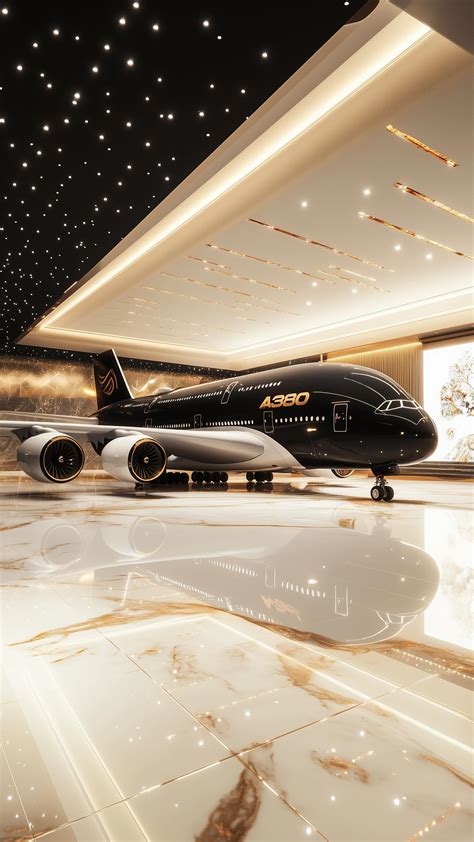
The Airbus A380 is the world’s largest passenger airliner, a double-deck colossus that defines excess and ambition in modern aviation. Yet beyond commercial skies, one story elevates the A380 into mythical luxury — the unrealized private jet conversion commissioned by Saudi Prince Al Waleed bin Talal Al Saud. Branded the Flying Palace, this airborne mansion was to be the most extravagant private aircraft ever conceived. What unfolded was an audacious vision fueled by wealth, design, and aviation marvel — and its eventual descent into vaporware status only sharpened its legendary allure.
The Origins of the Flying Palace
In October 2007, at the Dubai Airshow, Prince Al Waleed encountered the A380 and made a decisive statement: this aircraft would be his next private jet. Already in possession of a converted Boeing 747, Airbus A321, and Hawker Siddeley 125, the Prince was no stranger to airborne opulence. But this new ambition would eclipse all others. He signed a deal with Airbus, sparking global media buzz and a wave of speculation that framed the A380 as a canvas for unimaginable indulgence.
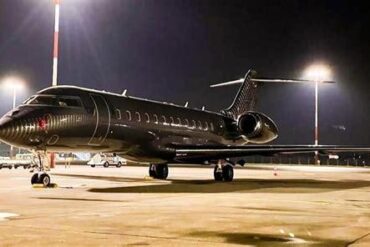
The aircraft in question was the Airbus A380-800, briefly designated the ACJ380-800 Prestige. Airbus promoted it as a serious offering, even estimating that a dozen billionaires might soon follow suit. But the Prince would remain its only client, and even his plan never reached the runway.
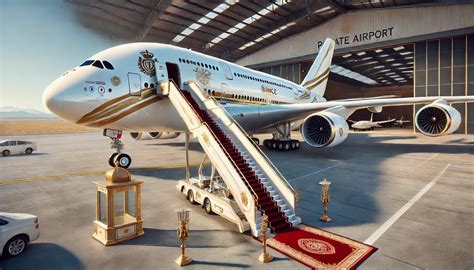
A Three-Deck Marvel of Aviation Luxury
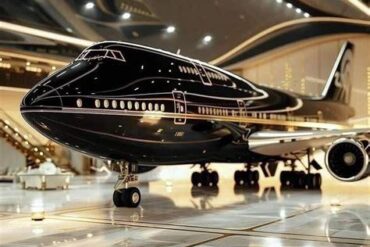
To translate fantasy into design, Prince Al Waleed contracted two elite design firms: Edese Doret Industrial Design and Design Q. Their vision? A three-deck aerial mansion — at once a personal palace, executive headquarters, wellness sanctuary, and cultural stage.
The lower deck, traditionally used for cargo, was transformed into a garage and spa area. This was no ordinary cargo hold. The Prince’s luxury cars were to be stored here, allowing him to drive directly off the plane upon arrival. A glass-walled elevator connected all three decks and could descend to ground level, unspooling a red carpet automatically — an entrance fit for royalty.
In this wellness zone, designers included a Turkish bath constructed with genuine marble flooring, mimicking a terrestrial mansion’s grandeur. Due to aviation weight constraints, the tiles were thinner than residential ones. The flooring doubled as giant video displays, streaming live footage from under the aircraft — a surreal simulation of flying above the Earth like Superman.
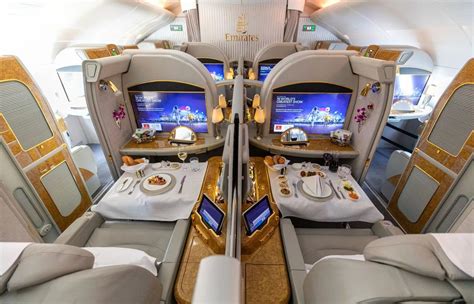
The Business and Entertainment Deck
The middle level balanced business and pleasure. It was to host:
-
Two conference rooms equipped with holographic tables, allowing real-time interaction with virtual guests.
-
Two VIP suites with full-size beds and luxury bathrooms.
-
A concert hall, seating ten, with advanced acoustics and a proper performance stage.
-
A prayer room, complete with smart prayer mats that would automatically orient themselves towards Mecca.
This floor also housed the cockpit and crew quarters, though in far more elegant surroundings than even first-class cabins of standard commercial A380s.
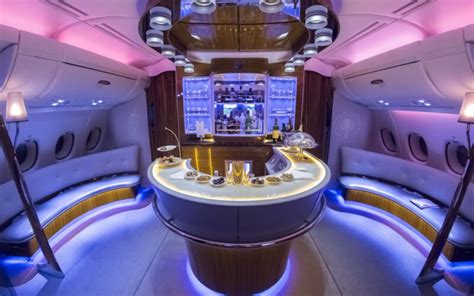
The Owner’s Private Sanctuary
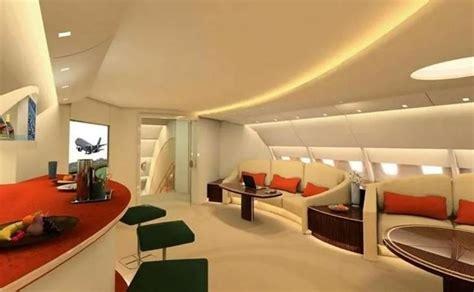
The uppermost deck was the owner’s retreat. Dominated by five master bedrooms, each equipped with lavish bathrooms, the space rivaled the suites of royal palaces. The deck also included a private dining room, a majestic lounge, and a gold-trimmed spiral staircase that wrapped around the glass elevator. This golden ascent wasn’t merely functional—it was a theatrical centerpiece.
And in one of the lounge areas, the Prince had planned a literal throne, cementing the monarchical aesthetic. The jet was not just a means of travel—it was an airborne monument to personal power.
Technical Capabilities and Cost Estimates
The Flying Palace was slated for significant structural and performance upgrades:
-
Maximum range of 17,500 km (9,400 nautical miles) — significantly greater than the commercial variant.
-
Guest capacity limited to just 50 passengers, ensuring that space and luxury were never compromised.
-
Estimated cost: between $380 million and $500 million, with Airbus marketing a price tag on the higher end to accentuate the exclusivity.
Yet despite its grandeur, there were always whispers that the jet was more myth than reality. The Prince ultimately acquired a test-flight A380, serial number 002, for a discounted $130 million — far below the projected cost for a full custom conversion.
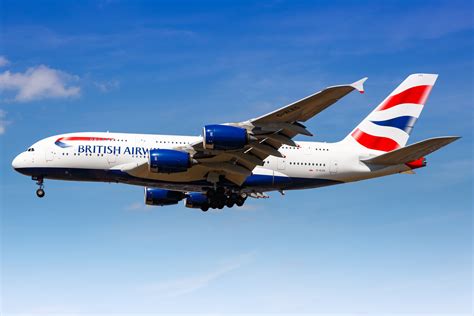
The Fall of the Flying Palace
By 2009, the Flying Palace was expected to take flight. But delays mounted. The extravagant features continued to pile up — hawk pens, horse stables, advanced aromatherapy diffusion systems — and it became clear that ambition was outpacing feasibility. The cost became a floating target, even allegedly inflated to boost the Prince’s ranking on Forbes’ billionaire list.
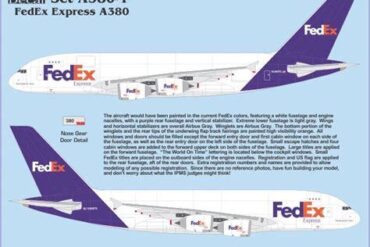
Eventually, the aircraft was never delivered. The Prince backed away from the purchase. In 2013, Airbus sold the plane to a commercial airline, and its interior remained factory-standard. Not a single component of the bespoke interior was ever installed.
The Flying Palace thus became aviation’s greatest ‘what if’, a tale of how even unlimited wealth can falter against logistical complexity, cost overruns, and the limits of feasibility.
A Symbol of Aspirational Excess
Despite its failure, the Airbus A380 private jet project changed how the world viewed luxury aviation. It set a benchmark not through execution, but through concept. Designers and billionaires alike were inspired to push the boundaries further — influencing VIP configurations in jets like the Boeing 747-8, Boeing 787 Dreamliner, and Airbus A350 XWB.
More importantly, it positioned the A380 not just as a passenger aircraft, but as a status symbol. Even unused, the Flying Palace transformed the A380’s narrative into something mythical, elusive, and deeply iconic.
Legacy and Final Disposition
Today, the idea of a private A380 remains technically possible but commercially improbable. The aircraft is expensive to operate, requires specialized infrastructure, and is being retired from several commercial fleets due to operating costs.
Yet among luxury circles, the dream lives on. Like owning a private island or commissioning a superyacht over 150 meters, owning a private A380 is the ultimate aviation flex — an unreachable pinnacle, precisely because it was never reached.
FAQ
Who was supposed to own the Airbus A380 private jet known as the Flying Palace?
Prince Al Waleed bin Talal Al Saud of Saudi Arabia commissioned the aircraft in 2007. Known for his lavish lifestyle and existing fleet of private jets, he intended to create the most luxurious personal aircraft in history.
How much was the Flying Palace supposed to cost?
Estimates ranged between $380 million and $500 million, not including long-term operational and maintenance costs. The final acquisition of the test aircraft was negotiated for around $130 million, but it was never converted.
Why was the Airbus A380 private jet never completed?
The Flying Palace faced challenges in design feasibility, escalating costs, and perhaps a shift in the Prince’s priorities. Ultimately, the complexity and ambition of the project exceeded practical limits, and the aircraft was sold to a commercial airline without modifications.