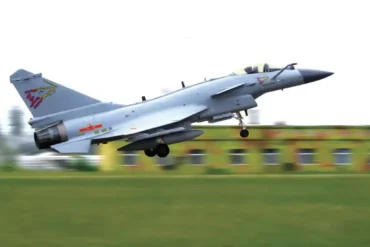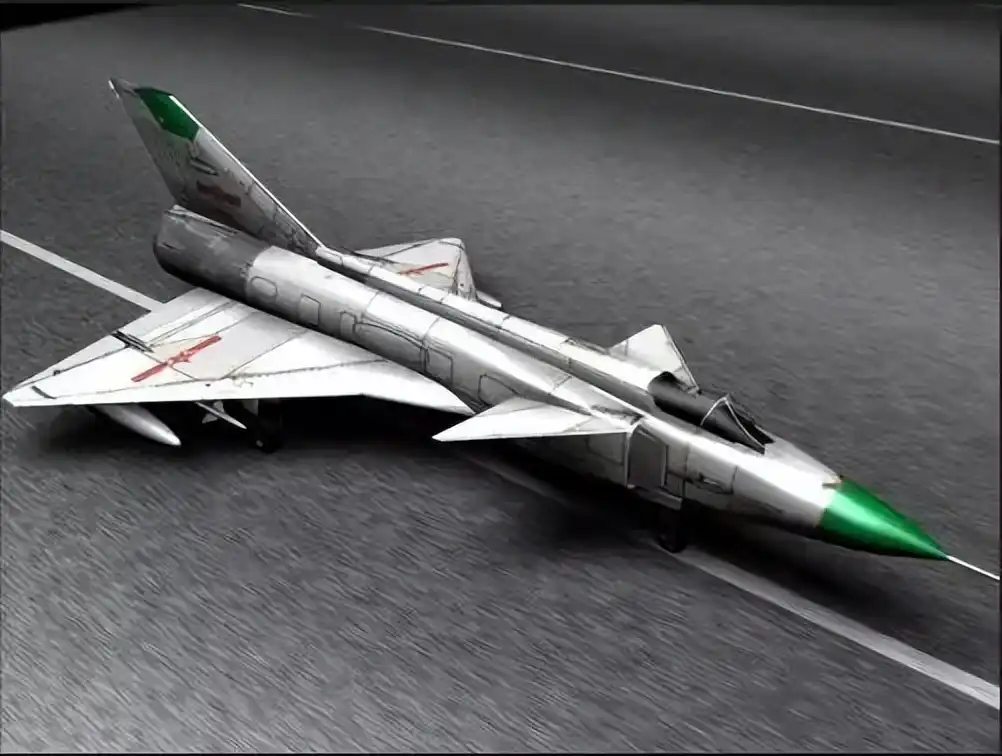
The Chengdu J-9 represents one of the most ambitious yet ultimately unrealized aircraft programs in the history of Chinese military aviation. Conceived during the height of the Cold War, the project aimed to create a high-speed, high-altitude interceptor capable of neutralizing strategic bombers from the Soviet Union and the United States. Although the J-9 never advanced beyond the design stage, its conceptual breakthroughs and the institutional knowledge gained during its development played a pivotal role in shaping China’s modern fighter aircraft, including the J-10 and J-20.
Development Background and Objectives
The J-9 project began in 1964, initially under the Shenyang 601 Institute, before transferring to the Chengdu 611 Institute in 1970. This transition was a strategic move to strengthen Chengdu’s fighter design capabilities, paving the way for the institute’s future successes with advanced platforms. The program emerged as a direct response to growing threats posed by supersonic bombers such as the Soviet Tu-22M “Backfire” and the U.S. B-1B, both capable of penetrating deep into Chinese airspace.
The “Dual 26” Ambition
The core objective for the J-9 was captured in its “Dual 26” performance target:
- Maximum speed: Mach 2.6 (\~3,200 km/h)
- Service ceiling: 26,000 meters
These performance goals far outstripped existing Chinese fighters of the time, such as the J-7 and J-8, and placed the J-9 in a conceptual league closer to cutting-edge interceptors like the Soviet MiG-25 Foxbat.
Strategic Role
Designed primarily as a territorial air-defense platform, the J-9’s mission was to intercept and destroy incoming bombers at extreme altitudes and speeds, before they could release their payloads over Chinese targets. It was envisioned as a long-range, missile-centric interceptor rather than a dogfighting aircraft, which reflected China’s evolving air defense doctrine during the late 20th century.
Design Evolution and Technical Specifications
Early Designs: 1965–1970
Initial J-9 designs, completed by 1965, incorporated a twin-engine layout (intended for the Wopen-7 engines) and a delta wing planform. This configuration promised Mach 2.4 performance and acceptable climb rates, though it lacked the extreme maneuverability needed for close-range engagements.
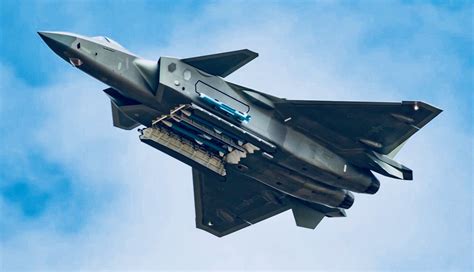
Advanced Canard-Delta Configuration: 1976
By 1976, engineers significantly reimagined the J-9. They transitioned to a canard-delta design featuring a 60° swept main delta wing coupled with a 55° fore-mounted canard. This unstable aerodynamic layout, while complex, was chosen to improve maneuverability and lift-to-drag ratios at high speeds.
The updated design aimed to incorporate the WS-6 turbofan engine, which promised 13.8 tons of thrust, pushing the J-9 to Mach 2.6–2.8. In theory, this would give the aircraft interception performance on par with elite Western and Soviet platforms.
Planned Armament and Avionics
The J-9’s planned weapons suite reflected its interceptor role:
- PL-4 and PL-5 air-to-air missiles for long-range interception
- 23mm twin-barrel cannons for close-in engagements
- A Type 204 fire-control radar to support beyond-visual-range targeting
This combination aimed to enable all-weather interception and engagement of high-speed bomber targets.
Technical Specifications Table
| Specification | Details |
|---|---|
| Role | High-altitude interceptor |
| First Design Year | 1964 |
| Primary Developer | Chengdu 611 Institute |
| Max Speed | Mach 2.6 (target) |
| Service Ceiling | 26,000 m |
| Engine | WS-6 Turbofan (planned) |
| Thrust | 13.8 tons |
| Wingspan | \~9.2 m (estimated) |
| Armament | PL-4/PL-5 missiles, 23mm cannons |
| Radar | Type 204 (planned) |
| Status | Canceled (1980) |
Key Challenges Leading to Cancellation
Despite its bold vision, the Chengdu J-9 faced insurmountable technical and economic hurdles, which ultimately led to the project’s cancellation in 1980.
Aerodynamic Instability
The canard-delta design, while aerodynamically efficient at high speeds, introduced significant control complexities. At that time, China lacked the fly-by-wire technology necessary to manage these unstable flight dynamics, leaving the aircraft’s design fundamentally unworkable with existing systems.
Engine Development Failure
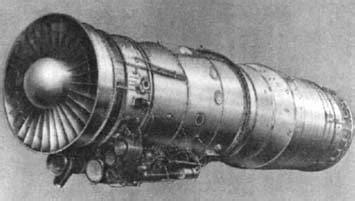
The J-9’s performance goals hinged on the WS-6 turbofan engine—a project that ultimately failed. The engine never reached operational reliability or the thrust levels required, leaving the J-9 without a viable powerplant.
Thermal and Structural Barriers
Operating at Mach 2.6 subjected the J-9’s airframe to temperatures exceeding 350°C. However, China in the 1970s lacked access to advanced heat-resistant titanium alloys and composite materials needed to withstand such conditions.
Radar and Avionics Limitations
The Type 204 radar could not deliver the necessary detection range and targeting accuracy for beyond-visual-range engagements at high speeds and altitudes. This gap made it impossible for the J-9 to achieve its mission objectives.
Economic and Policy Factors
By the late 1970s, China’s economic reforms prioritized cost-effective, practical defense solutions over ambitious but unproven projects. The J-9’s ballooning costs made it a casualty of these new strategic priorities.
Legacy and Impact on Chinese Aviation
While the J-9 never reached production, its legacy profoundly influenced the trajectory of Chinese military aviation.
Shaping Future Designs
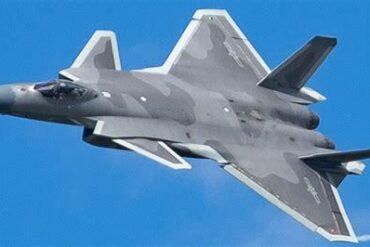
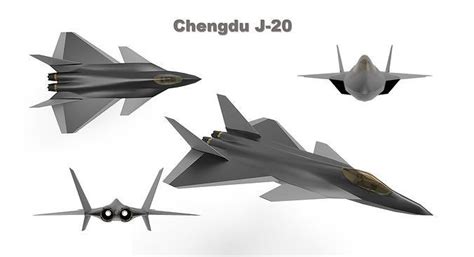
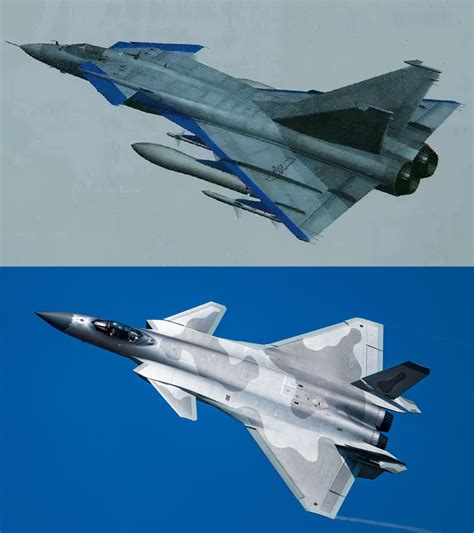
The canard-delta configuration pioneered by the J-9 laid the groundwork for the Chengdu J-10, which first flew in 1998, and even influenced the stealth J-20. Both aircraft benefited from aerodynamic research initiated under the J-9 program.
Advancing Beyond-Visual-Range Combat
The J-9 emphasized missile-centric interception, marking a strategic shift in Chinese air combat philosophy toward beyond-visual-range engagements—a doctrine that continues to guide the development of modern PLA Air Force fighters.
Building Institutional Expertise
Perhaps the J-9’s most enduring contribution was the establishment of the Chengdu 611 Institute as China’s premier fighter design hub. The transfer of over 300 engineers from Shenyang strengthened Chengdu’s capabilities, leading directly to later successes.
As chief designer Song Wencong noted, “Without the J-9 as a foundation, there would be no J-7III or J-10.” The J-9 became a crucial stepping stone for China’s journey from reverse-engineering foreign designs to producing world-class indigenous fighters.

Conclusion
The Chengdu J-9 remains one of China’s most intriguing “what if” aircraft projects—an ambitious vision that exceeded the technological and economic realities of its time. Yet, far from being a failure, the program seeded innovations in aerodynamics, propulsion, and systems design that shaped the evolution of Chinese fighters for decades. Today, every J-10 sortie and J-20 mission carries forward the lessons learned from the J-9, proving that even unrealized projects can leave an indelible mark on aerospace history.
FAQ
What was the primary mission of the Chengdu J-9?
The J-9 was designed as a high-altitude, high-speed interceptor intended to defend Chinese airspace by intercepting Soviet and U.S. supersonic bombers before they could release their payloads.
Why was the Chengdu J-9 canceled?
The project faced engine development failures, aerodynamic instability, material limitations, and budgetary constraints. By 1980, these challenges, combined with shifting economic priorities, led to its cancellation.
How did the J-9 influence modern Chinese fighter jets?
The J-9’s canard-delta layout and missile-centric design philosophy directly influenced the Chengdu J-10 and later contributed to the design of the stealth J-20, cementing its role as a technological precursor to modern Chinese fighters.