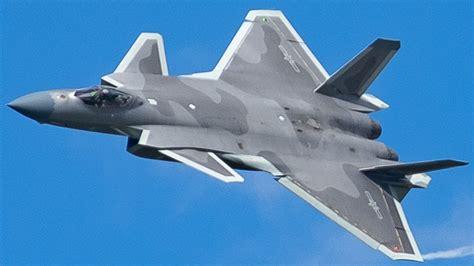
The Chengdu J-20 “Mighty Dragon” represents a bold leap in China’s military aviation capabilities, establishing the People’s Liberation Army Air Force (PLAAF) as the second air force globally—after the United States—to operationally deploy a fifth-generation stealth fighter. With a production total now exceeding 300 airframes, the J-20 is more than a technological statement; it is a fully integrated instrument of Chinese airpower doctrine.
Origins of the J-20: From J-XX to Dominance
The roots of the J-20 trace back to China’s J-XX program, launched in the late 1990s as a response to U.S. developments like the F-22 Raptor. By 2008, Project 718 was formally approved, and development intensified. The maiden flight of the first prototype—tail number “2001”—occurred on 11 January 2011, signaling to the world that China had entered the stealth era. This was followed by subsequent prototypes “2002” and “2011,” which introduced more refined stealth features such as Divertless Supersonic Inlets (DSI) and advanced coatings.
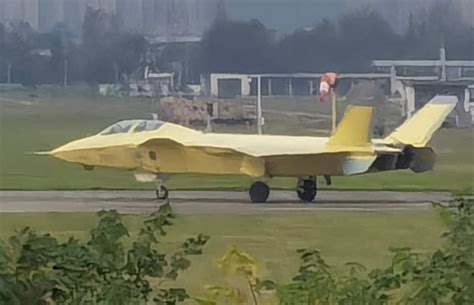
Low-rate initial production (LRIP) began in December 2015, leading to mass production following design finalization in October 2017. The PLAAF officially inducted the J-20 into service on 9 March 2017, with the first combat unit declared operational by February 2018. Development then focused on upgrades, including thrust-vectoring engines and a dual-seat variant.
Aerodynamic Design and Stealth Characteristics
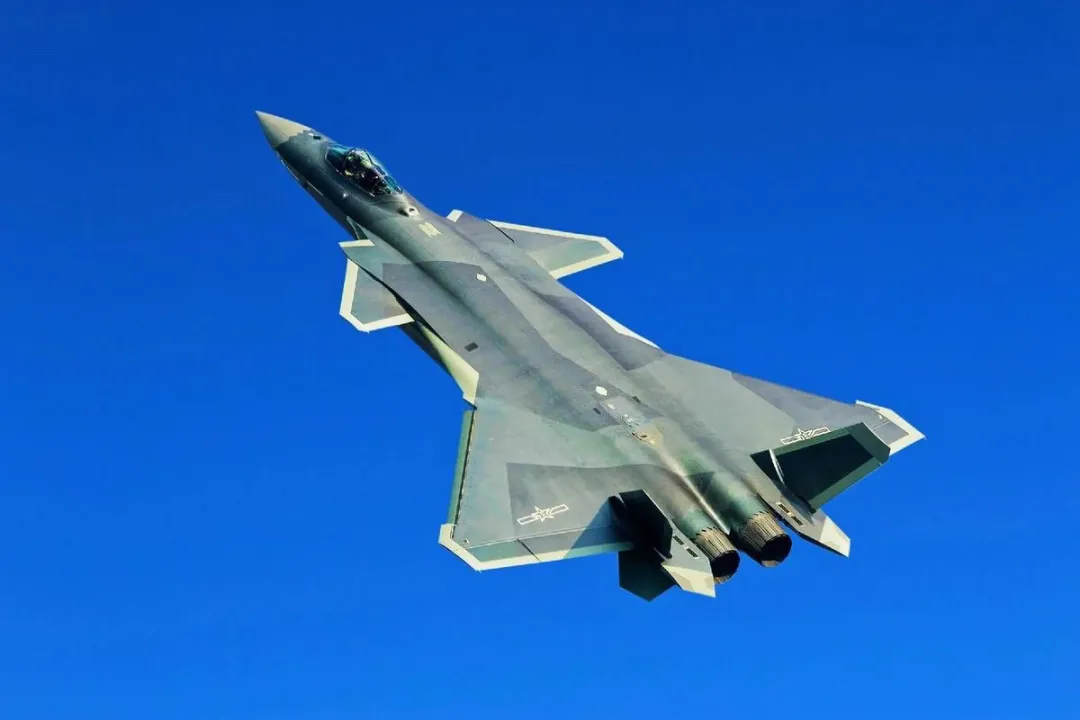
The J-20’s design prioritizes a low radar cross-section while retaining excellent aerodynamics. Its airframe features a blended fuselage, canard-delta wing configuration, chiseled nose, and frameless bubble canopy. The use of canted twin vertical stabilizers, ventral strakes, and DSI inlets allows the airframe to reduce radar signature while enhancing high-speed airflow efficiency.
The canard-delta layout enhances lift and agility, providing a 1.2× increase in lift over conventional canards, and up to 1.8× lift compared to pure delta wings. This geometry also contributes to shorter takeoff and landing runs and enhanced supersonic turn rates. The result is an airframe optimized for supercruise and high-angle-of-attack maneuvers.
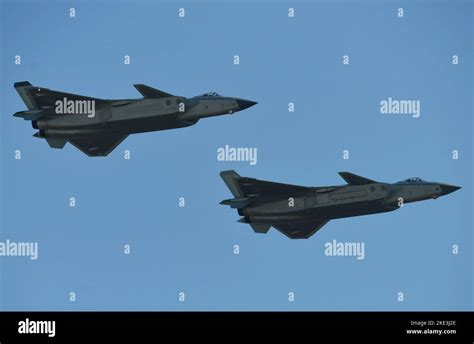
Stealth measures are extensive and holistic. The aircraft incorporates S-duct engine intakes, sawtooth panel edges, RAM coatings, mesh-covered cooling ports, and internal weapon bays. Even the retractable aerial refueling probe and Luneburg lens are designed with stealth considerations in mind. The use of serrated exhaust nozzles and carefully tuned canard flight control software further mitigates radar reflections.
Advanced Cockpit and Sensor Fusion Avionics
The J-20’s avionics suite is believed to include a high-power Active Electronically Scanned Array (AESA) radar, likely composed of 2,000–2,200 T/R modules, granting significant detection and tracking range. Supplementing this is a chin-mounted Electro-Optical Targeting System (EOTS-89) and EORD-31 IRST, comparable in function to the F-35’s Distributed Aperture System.
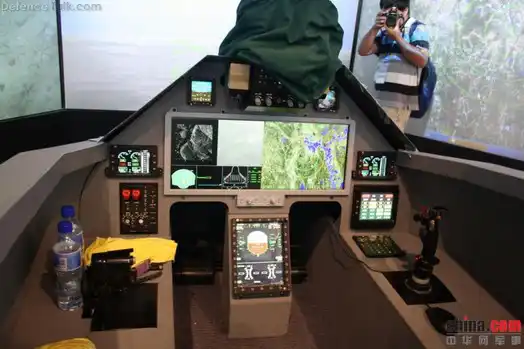
Within the glass cockpit, pilots are presented with a 24×9 inch main touchscreen display, three auxiliary displays, a wide-angle Head-Up Display (HUD), and a helmet-mounted display (HMD). These elements support seamless sensor fusion, enabling the pilot to interpret massive data streams from multiple platforms. The J-20 reportedly also possesses AEW&C-style tracking capabilities, offering powerful situational awareness in contested environments.
Weapons Systems and Internal Payload Configuration
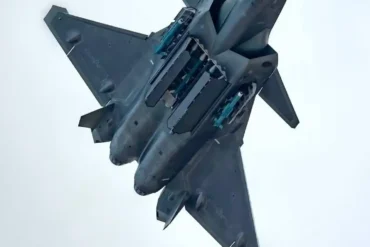
In terms of weaponry, the J-20 is designed primarily for beyond-visual-range (BVR) engagements. The aircraft’s internal weapons bays preserve stealth while enabling significant firepower:
- Main internal bay: Carries four long-range PL-15 or developmental PL-21 air-to-air missiles, or precision-guided bombs like LS-6 and FT-7.
- Lateral side bays: House short-range PL-10 missiles for close-in dogfights.
- External pylons: Four underwing hardpoints for auxiliary fuel tanks or up to eight PL-15s, used when stealth is less critical.
A notable omission is any internal cannon, reflecting a doctrinal shift toward long-range, radar-guided missile duels over traditional close-range engagements.
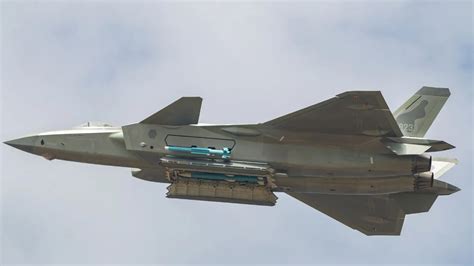
The PL-16, a next-generation BVR missile with compressed storage footprint, is reportedly under development for enhanced loadout versatility.
Propulsion: From Russian Powerplants to Indigenous Supremacy
Initial prototypes utilized Russian AL-31FM2 engines, but the drive toward independence and higher performance led to successive Chinese designs. By 2015, the WS-10B powered LRIP airframes, followed by the WS-10C with serrated nozzles and thrust vector control (TVC).
In 2022, flight trials began with the WS-15 engine—a transformational system offering 180 kN of thrust, supercruise capability, and potential support for future directed energy weapons (DEW) or high-power sensors. Serial production of WS-15 began in March 2023, representing a milestone in China’s aero-engine development.
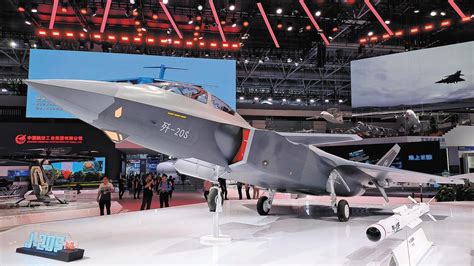
A twin-seat variant, the J-20S, was unveiled by AVIC in November 2024, with prototypes flying as early as January 2021. This configuration allows advanced mission flexibility, such as loyal wingman operations, electronic warfare, and airborne command of unmanned systems.
Operational History and Theater Integration
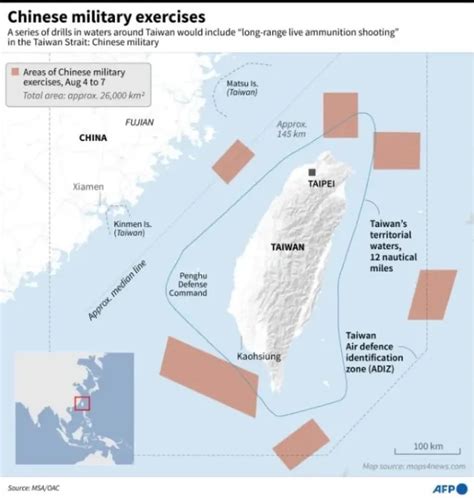
The J-20’s flight testing regime spanned 2010–2015, involving six distinct prototypes. By 2017, the aircraft achieved initial operational capability, and by 2022, it was fielded across all five PLAAF theater commands. It is stationed especially along China’s eastern and southern maritime borders, where it performs air defense interception and long-range maritime strike roles.
J-20 units have participated in night operations, multi-generational air combat drills, and over-water patrols across the East and South China Seas. Its deployment reflects a doctrine that prioritizes strategic air denial, airborne early warning suppression, and rapid interception of hostile strike packages.
Notably, U.S. Air Force F-35s have encountered J-20s in the Indo-Pacific, with both aircraft reportedly operating in a cat-and-mouse dynamic—a first in fifth-gen peer interaction outside of simulations.
Strategic Implications and Future Development Trajectories
The Chengdu J-20 is more than a tactical asset; it is a pillar of China’s evolving strategic posture. By enabling stealth dominance, electronic warfare coordination, and long-range strike capabilities, it transforms the PLAAF into a force capable of deterrence beyond its borders.
Looking forward, enhancements such as the WS-15-powered production blocks, AI-integrated mission planning, and swarming drone command via J-20S variants will position the aircraft as a persistent and adaptive threat to regional air superiority.
The aircraft’s maturation path also suggests a long-term lifecycle, with future iterations possibly integrating quantum radar immunity, hypersonic missile compatibility, and space-linked battlefield awareness.
Conclusion
The Chengdu J-20 “Mighty Dragon” exemplifies China’s ambition to achieve full-spectrum military aviation supremacy. With sophisticated avionics, cutting-edge stealth design, evolving propulsion technology, and seamless integration into operational commands, it redefines the modern air dominance equation. As the aircraft continues to evolve, its shadow over Asia-Pacific skies will only grow darker and more pronounced.