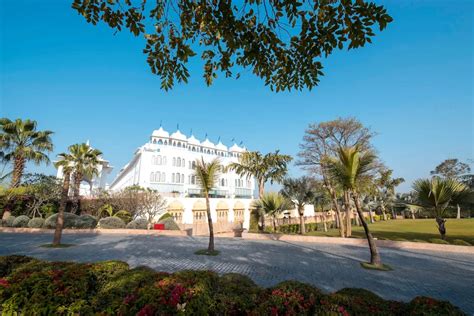
Nestled within the breathtaking landscape of the Aravalli hills and serene lakes of Rajasthan, the Radisson Blu Palace Resort and Spa, Udaipur is not just a luxury retreat; it is a beacon of sustainability and environmental responsibility. In June 2025, the resort launched a remarkable month-long plantation drive, demonstrating its deep commitment to the local environment and setting a benchmark for responsible tourism in India. This initiative reflects a proactive approach to rejuvenating the green cover of the region while addressing rising concerns surrounding urbanization and climate change.
The inspiration behind this initiative stems from the resort’s intrinsic connection to its natural surroundings. Mr. Mahesh Singh Jasrotia, Vice President of the resort, emphasizes that the plantation drive is far more than a symbolic event; it is a carefully orchestrated campaign aimed at fostering long-term ecological impact. The drive involved meticulous tracking and maintenance of each sapling, community engagement, and collaboration with local horticulturists, ensuring that the planted trees not only survive but thrive.
The month-long initiative coincided with World Environment Day, reinforcing the resort’s commitment to sustainable practices beyond mere token gestures. By engaging local communities, the resort ensured that the benefits of the plantation drive extended beyond its premises. The involvement of Union Minister Shri Bhupender Yadav and Minister of State Shri Sanjay Sharma further elevated the campaign, drawing public attention to the importance of public-private partnerships in environmental sustainability. Their participation underscored the collective effort needed to address environmental challenges and encouraged broader involvement from local authorities and citizens.
Beyond the initial plantation efforts, the Radisson Blu Palace Resort & Spa has embedded sustainability into its daily operations. The resort has implemented a range of eco-friendly practices, such as rainwater harvesting, energy-efficient lighting, and solar heating systems. These measures not only help minimize the resort’s ecological footprint but also demonstrate a commitment to reducing reliance on non-renewable resources. For instance, the resort has established a power purchase agreement with a solar plant near Bikaner, significantly cutting down its dependency on conventional electricity sources and aligning with the government’s green energy goals.
The focus of the plantation drive was on native tree species, including neem, amaltas, gulmohar, bamboo, sheesham, and banyan. Each species was meticulously chosen for its adaptability to the local climate, biodiversity value, and ecological functions. These trees are instrumental in improving air quality, preventing soil erosion, and providing habitats for wildlife, thereby enriching the overall environmental health of the region.
Architecturally, the resort has integrated several energy-efficient features. The grand atrium lobby is designed to maximize natural light, reducing the need for artificial lighting during the day. The use of high-reflectivity exterior paint helps lower heat absorption, thus decreasing reliance on air conditioning. Insulated roofs and double-glazed windows enhance thermal efficiency, creating a comfortable atmosphere for guests while minimizing energy consumption.
The resort’s Environmental, Social, and Governance (ESG) mission aligns seamlessly with the Radisson Hotel Group’s global sustainability strategy. Goals such as achieving Net Zero by 2050 and reducing energy and water usage by 30% by 2028 reflect the resort’s commitment to responsible business practices. Regular ESG audits and reporting ensure that these targets are consistently pursued, with measurable progress documented to maintain accountability.
Engagement with guests and local communities is a cornerstone of the Radisson Blu Udaipur’s sustainability initiatives. Guests are invited to participate in tree-planting activities, linen reuse programs, and sustainability walks throughout the resort. Informational signage educates visitors about eco-friendly practices they can adopt during their stay, fostering a culture of environmental awareness. Collaborations with local schools further extend the resort’s impact, offering workshops and plantation days that involve children and teachers in environmental education.
The resort also actively supports local artisans and farmers, sourcing organic produce and handicrafts, thereby creating a sustainable ecosystem where both guests and local communities are integral to positive environmental action. This commitment to community engagement not only enhances the guest experience but also strengthens the social and economic fabric of the region.
In conclusion, the Radisson Blu Palace Resort & Spa, Udaipur is setting a gold standard for responsible tourism in India. By harmonizing luxury with purpose, the resort illustrates that environmental stewardship can coexist beautifully with high-end hospitality. Its month-long plantation drive and holistic sustainability model serve as an inspiring example for the hospitality industry, proving that luxury and responsibility can thrive together in the pursuit of a more sustainable future.