The slow collapse of the United States Air Force’s airborne early warning capability is no longer a distant concern—it is an unfolding operational crisis. For decades, the Boeing E-3 Sentry has served as the airborne nerve center of American airpower, orchestrating battles from high altitude with unmatched situational awareness. Today, that once-dominant “eye in the sky” is fading, and replacing it has proven far more difficult than anticipated.
The problem is not simply that the fleet is aging. It is that every pathway forward—whether modernization, replacement, or reinvention—comes with costs, risks, or technological gaps so severe that none offers a clean solution. What remains is a strategic dilemma: how to replace a system that is simultaneously obsolete and indispensable.
The result is a paradox that has left planners trapped between escalating maintenance costs, shrinking readiness, and an uncertain technological future.

The E-3 Sentry: A Cold War Titan at the Edge of Obsolescence
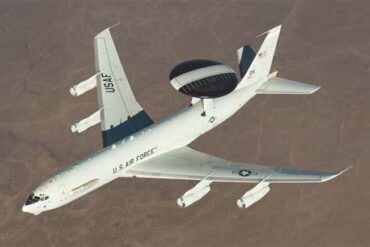
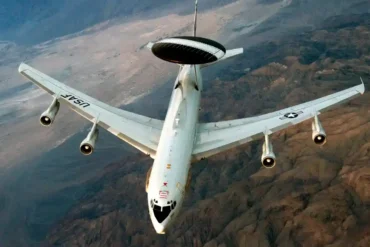
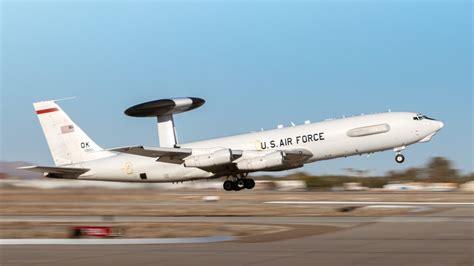
The E-3 Sentry was born in an era when air superiority depended on centralized command and long-range radar dominance. Built on the aging Boeing 707 airframe, it combined a massive rotating radar dome with sophisticated battle management systems, enabling it to detect, track, and coordinate aircraft across vast distances.
At its peak, the fleet numbered 31 aircraft. Today, barely half remain, and even fewer are mission-capable at any given time. The aircraft’s decline has been described in stark terms by senior leadership—less like a combat asset and more like a patient in intensive care.
This deterioration is not merely mechanical. It is systemic. The E-3’s architecture is a patchwork of analog and digital systems layered across decades of upgrades. Programs like Block 30/35 and Block 40/45 extended its life, but they also increased complexity, turning the aircraft into a fragile hybrid that is difficult to maintain and nearly impossible to modernize further.
What once represented cutting-edge capability has become a technological relic struggling to survive in a digital battlespace.
Maintenance Nightmares and the Collapse of the Supply Chain
Sustaining the E-3 is no longer a matter of routine upkeep—it is an exercise in industrial archaeology. The underlying Boeing 707 platform is long out of production, forcing maintainers to source parts from aircraft boneyards or fabricate them from scratch.
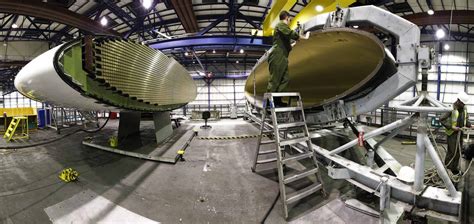
Even more problematic is the aircraft’s defining feature: its radar dome. Manufactured by Northrop Grumman, the rotodome is a highly specialized system that relies on production methods and expertise that no longer exist. In fact, replacing a damaged dome has effectively been deemed impossible, regardless of cost or timeline.
The risks extend beyond availability. Structural work on the aircraft—especially involving the dome—carries the danger of airframe failure. Contractors now demand enormous premiums to even attempt such repairs, reflecting both the technical difficulty and liability exposure.
The result is a fleet that is not only aging but also fundamentally unsustainable. Every additional year of operation increases costs exponentially while reducing operational readiness.
The Boeing E-7 Wedgetail: A Replacement That Became a Problem
For years, the Boeing E-7 Wedgetail appeared to be the logical successor. Built on the modern Boeing 737 platform and equipped with advanced AESA radar, it promised improved capability, reduced maintenance burdens, and compatibility with existing infrastructure.
But that promise has eroded.
Costs for the E-7 have surged dramatically, exceeding $700 million per aircraft. Delays, certification issues, and supply chain disruptions have further undermined confidence. Even close allies have encountered significant difficulties acquiring and fielding the platform.
The United Kingdom, expecting a mature, off-the-shelf solution, instead faced prolonged delays and technical hurdles. Australia—the program’s original champion—has already begun exploring alternatives despite having only recently operationalized its fleet.
This erosion of trust has transformed the E-7 from a solution into a risk. For the U.S. Air Force, committing to the platform now carries not just financial implications but strategic uncertainty.
The E-2D Hawkeye: A Cost-Effective Compromise with Limitations
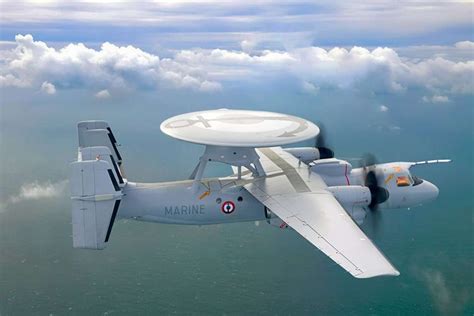
In response to rising costs, the Pentagon has turned toward the Northrop Grumman E-2D Hawkeye, a carrier-based airborne early warning aircraft already in service with the U.S. Navy.
On paper, the advantages are clear. At roughly half the cost of the E-7, the E-2D offers a proven platform with modern sensors and lower acquisition risk. It can be fielded quickly, providing an immediate bridge as the E-3 fleet retires.
But the trade-offs are significant.
The E-2D is a turboprop aircraft with shorter range, lower altitude, and smaller crew capacity than its jet-powered counterparts. Its endurance and coverage area are inherently limited, making it less suitable for large-scale, land-based operations.
Critics argue that adopting the E-2D represents not a replacement but a downgrade—a step backward in capability at a time when threats are becoming more sophisticated.
Modern Warfare Has Turned AWACS into Targets
Beyond cost and logistics lies a deeper issue: survivability.
Aircraft like the E-3 and E-7 are built around powerful radar emissions that make them highly visible in the electromagnetic spectrum. In modern warfare, this visibility translates into vulnerability.
Advanced adversaries have developed long-range missiles specifically designed to target high-value assets like AWACS aircraft. Systems such as China’s PL-15 and Russia’s S-500 can engage targets at extreme distances, potentially threatening these aircraft even within friendly airspace.
This reality has led to a fundamental reassessment of the AWACS concept. Large, non-stealthy aircraft operating near contested environments may no longer be viable.
Even bases are not safe. Recent attacks on forward airfields have demonstrated that these aircraft can be targeted on the ground, further complicating their deployment.
The implication is stark: the very design principles that made AWACS indispensable in the past may now render them liabilities in future conflicts.
The Shift Toward Space-Based Surveillance
As airborne solutions face growing challenges, attention has turned upward—to space.
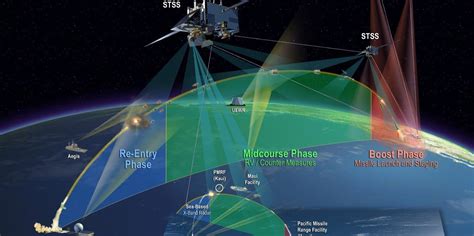
Satellite-based systems offer several compelling advantages. They are immune to traditional air defenses, provide global coverage, and are not constrained by geography or basing requirements. Emerging technologies, such as hypersonic tracking sensors, promise capabilities that airborne platforms cannot easily match.
Yet space is not a panacea.
Distance remains a critical limitation. Sensors in orbit must operate at far greater ranges than those on aircraft, reducing resolution and increasing power requirements. More importantly, the latency between detection and action introduces delays that can be unacceptable in fast-moving combat scenarios.
Cost is another barrier. Building a comprehensive space-based surveillance network could require hundreds of billions—if not trillions—of dollars.
The vision is compelling, but the technology is not yet ready to fully replace airborne command and control.
A Fragmented Future: The Rise of Hybrid Airpower Networks
With no single solution viable, the future of airborne early warning is likely to be fragmented.
The emerging concept is a hybrid architecture that distributes capability across multiple platforms. Instead of relying on a single, large AWACS aircraft, the system would integrate:
- High-end platforms like the E-7 for specialized missions
- Lower-cost aircraft like the E-2D for routine coverage
- Space-based sensors for global awareness
- Advanced fighters and bombers equipped with powerful radars
- Networked data links to fuse information in real time
This approach reduces reliance on any single asset while increasing resilience. It also aligns with broader trends in military technology, emphasizing distributed operations and network-centric warfare.
Aircraft such as the Lockheed Martin F-35 Lightning II and the Northrop Grumman B-21 Raider are already contributing to this shift, acting as both sensors and shooters within a connected battlespace.
The Strategic Deadlock: Why Replacement Remains Elusive
The difficulty in replacing the E-3 Sentry ultimately stems from a convergence of factors:
The legacy system is too old to sustain, yet still operationally critical. Replacement platforms are either too expensive, insufficiently capable, or both. Emerging technologies offer promise but lack maturity.
Meanwhile, institutional constraints complicate decision-making. Congressional mandates have prevented the retirement of E-3 aircraft without a replacement, while also preserving funding for programs the Air Force itself has questioned.
The result is a strategic deadlock. Resources are divided, timelines are uncertain, and the capability gap continues to widen.
Conclusion: The End of an Era, and the Uncertain Beginning of Another
The story of the E-3 Sentry is not just about an aging aircraft—it is about the evolution of warfare itself. The platform that once defined airborne command and control is now struggling to remain relevant in an era of stealth, hypersonics, and distributed networks.
Replacing it is not simply a procurement challenge. It is a transformation of doctrine, technology, and strategy.
What emerges next will likely look nothing like the E-3. It will not be a single aircraft, nor even a single system, but a complex web of interconnected capabilities spanning air, space, and beyond.
Until that vision becomes reality, the U.S. Air Force remains caught between the past and the future—flying an aircraft it can no longer sustain, while searching for a replacement it cannot yet build.