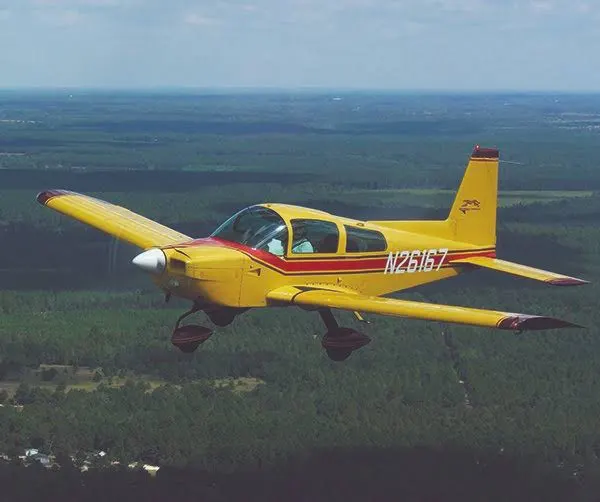
The Grumman Tiger is far more than just a light aircraft—it is a product of strategic design evolution, aggressive aerodynamics, and a persistent push toward performance in general aviation. Born from a lineage rooted in innovation and shaped by some of the most storied names in American aircraft manufacturing—Grumman American, Gulfstream Aerospace, American General Aviation Corporation, and later Tiger Aircraft—the Tiger represents the culmination of decades of aerodynamic refinement.
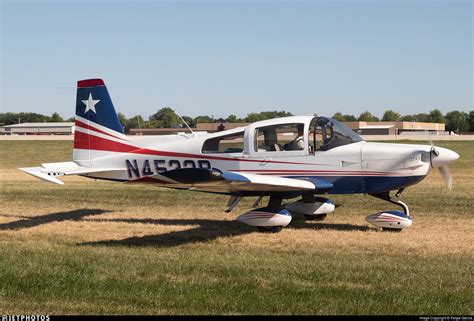
While the general aviation market of the 1970s and ’80s was dominated by familiar names like Cessna and Piper, the Tiger offered something distinctly different: performance with personality. From its bonded aluminum fuselage and sliding canopy to its 180-horsepower Lycoming engine and sleek lines, the Tiger promised speed, simplicity, and sheer flying pleasure.

Origins and Evolution: From the AA-5 Traveler to the AA-5B Tiger
The story of the Grumman Tiger begins with the American Aviation AA-1 Yankee Clipper, a small, sporty two-seater that gained popularity for its handling and design simplicity. The desire to expand into the four-seat market resulted in the AA-5 Traveler, essentially an enlarged version of the AA-1 with 2/3 parts commonality—a move that slashed production costs and accelerated certification under FAR Part 23.
Initially introduced in 1971 and powered by a Lycoming O-320-E2G engine producing 150 hp, the AA-5 Traveler offered a modest cruising speed of 121 knots. Its all-metal construction, fixed tricycle landing gear, and side-by-side four-seat configuration positioned it well in the market, but Grumman’s engineers knew there was more potential waiting to be unlocked.
By 1975, the line had evolved into two distinct variants:
- The AA-5A Cheetah, which retained the 150 hp engine but benefitted from aerodynamic refinements like a redesigned cowling, deleted ventral fin, and larger horizontal stabilizer.
- The AA-5B Tiger, which took the design philosophy a leap forward with a 180 hp Lycoming O-360-A4K engine and an increased gross weight of 2,400 lbs.
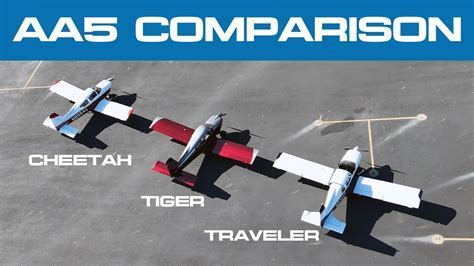
The Tiger’s cruise speed of 139 knots (later improved to 143 knots in the AG-5B) instantly made it one of the fastest fixed-gear, four-seat aircraft in its class. In a market where performance, payload, and simplicity often traded off against one another, the Tiger delivered on all fronts.
Grumman American’s Aerodynamic Edge
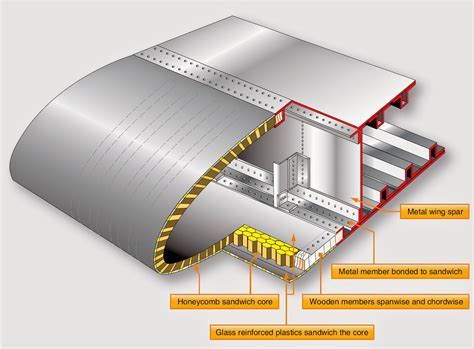
One of the most distinct characteristics of the AA-5 series, including the Tiger, is its bonded aluminum construction. Unlike riveted aircraft, the Tiger’s wings and fuselage were bonded using aerospace-grade adhesives, which not only reduced drag but also improved laminar flow across the airframe. This allowed Grumman to create a sleek, aerodynamically clean design without the added weight or turbulence-inducing edges of rivets.
The fiberglass main landing gear and spring-steel free-castering nosewheel reinforced the aircraft’s design ethos: reduce complexity and maximize performance. While the lack of nosewheel steering initially challenged new pilots, the differential braking system—activated via the tops of the rudder pedals—offered responsive ground handling once mastered.
Refinements and Revivals: The AG-5B Tiger
After Gulfstream Aerospace exited piston aircraft production in 1979, the Tiger was shelved despite its popularity. The design lay dormant until the late 1980s, when the American General Aviation Corporation resurrected the aircraft as the AG-5B Tiger.
This reborn variant introduced several substantial upgrades:
- A split nose cowling for easier engine access
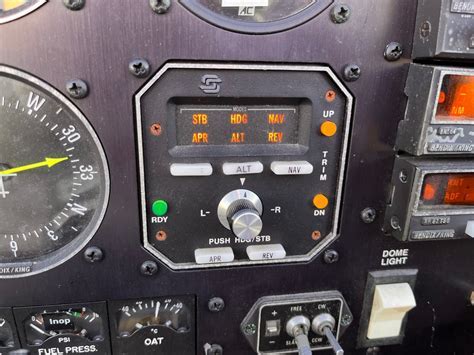
- A modernized instrument panel
- Upgraded 28-volt electrical system
- Redesigned throttle quadrant
- Enhanced heating and ventilation
- Improved fuel indication systems and lighting
These changes enhanced not just pilot comfort and convenience, but also increased the aircraft’s appeal in an era of advancing avionics and customer expectations. The AG-5B Tiger’s cruise speed rose to 143 knots TAS at 8,500 feet—placing it well ahead of contemporaries like the Piper Archer and Cessna 172.
Between 1990 and 1993, American General built 181 AG-5B Tigers before shutting down operations. But the Tiger’s legacy didn’t end there. In 1999, Tiger Aircraft LLC restarted production in Martinsburg, West Virginia, producing 51 more units between 2001 and 2006.
Despite financial difficulties that culminated in bankruptcy in 2007, Tiger Aircraft’s relaunch demonstrated the aircraft’s lasting appeal. In 2007, True Flight Holdings LLC acquired the type certificate and expressed intent to resume production, though as of 2021, no new Tigers have been manufactured.
Flight Experience: Handling and Performance in the Real World
What truly sets the Grumman Tiger apart from its peers is the flying experience. Its light control inputs and sporty responsiveness make it feel closer to a high-performance trainer than a typical four-seater utility aircraft.
The Tiger’s canopy sliding design, which can be partially opened in flight, offers superb ventilation and visibility. Combined with the aircraft’s impressive wing dihedral for lateral stability, the result is an aircraft that feels stable in cruise yet lively in maneuvering.
Here are the performance highlights of the AG-5B Tiger (2005 model):
- Engine: Lycoming O-360-A4K, 180 hp
- Cruise Speed: 143 knots at 75% power, 8,500 ft
- Stall Speed (flaps down): 53 knots
- Range: 681 nautical miles
- Service Ceiling: 13,800 ft
- Rate of Climb: 850 ft/min
- Takeoff Distance: ~1,000 ft (sea level, standard conditions)
These numbers may not rival complex retractable gear aircraft, but for a fixed-gear, four-seat cruiser, the Tiger remains a standout.
Market and Legacy
With a total of 3,289 units built across five manufacturers from 1971 to 2006, the Grumman Tiger family remains a fixture on airport ramps across the United States. Its loyal pilot base is well-supported by aftermarket parts suppliers and active type clubs like the American Yankee Association (AYA).
In recent years, the Tiger has also become a popular platform for modern avionics upgrades. In 2019, Garmin received an STC for a full G3X Touch glass cockpit, further extending the aircraft’s usability into the 21st century.
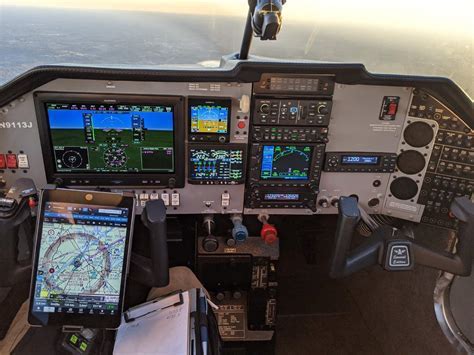
As a result, many aircraft that rolled out of the factory decades ago are still flying with modern instrumentation, making the Tiger a relevant option for flight schools, private pilots, and cross-country flyers alike.
FAQ: Grumman Tiger
How fast is the Grumman Tiger compared to other four-seat planes?
The Grumman Tiger boasts a cruise speed of 143 knots, which places it significantly ahead of competitors like the Cessna 172 (122 knots) or Piper Archer (128 knots). Its sleek aerodynamics and 180 hp engine make it one of the fastest fixed-gear four-seat aircraft ever produced.
Is the Grumman Tiger suitable for student pilots or training?
Yes. Despite its sporty handling, the Tiger is used by several flight schools thanks to its straightforward systems and strong performance. However, its free-castering nosewheel and differential braking may take new students a few flights to master on the ground.
Are parts still available for the Grumman Tiger series?
Yes. Though production has ceased, parts are still manufactured and distributed through suppliers, and several companies continue to support airframe and engine components. In addition, the aircraft’s bonded construction means fewer mechanical fasteners are subject to fatigue or wear, reducing long-term maintenance needs.
In conclusion, the Grumman Tiger is not just a footnote in American aviation—it is a living testament to smart engineering, pilot-centric design, and enduring appeal. As long as pilots seek a balance of speed, simplicity, and responsive flight, the Tiger’s roar will echo through the skies.