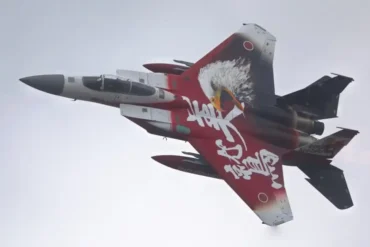
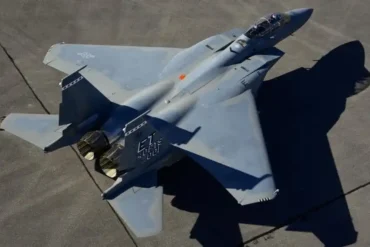
The McDonnell Douglas F-15 Eagle is one of the most dominant air superiority fighters in history. Among its variants, the two-seater versions provide enhanced training, operational flexibility, and advanced mission capabilities. These dual-seat configurations enable instructor pilots, mission specialists, and weapons officers to operate effectively in combat and training scenarios.
F-15B and F-15D: Training and Combat-Capable Variants
Design and Role
The F-15B was the first dual-seat version of the F-15A, serving as both a trainer and a fully capable combat aircraft. Following this, the F-15D, based on the more advanced F-15C, incorporated improved avionics, increased fuel capacity, and superior radar systems.
Key Features
- Dual-Cockpit Configuration: The second seat allows an instructor pilot or mission specialist to operate alongside the pilot.
- Fully Combat-Capable: Unlike some trainers, both variants retain their air-to-air combat capabilities.
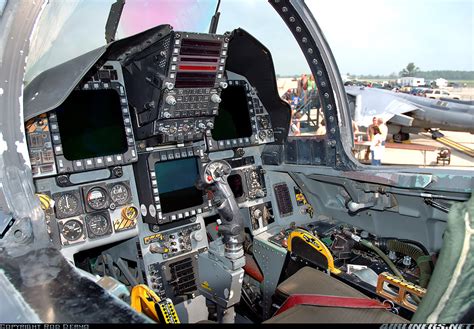
- Upgraded Avionics: The F-15D features advanced radar systems, digital avionics, and improved cockpit displays.
- Increased Fuel Capacity: Extended range for combat missions, allowing deeper penetration into enemy territory.
F-15E Strike Eagle: The Ultimate Multirole Fighter-Bomber
Advanced Capabilities
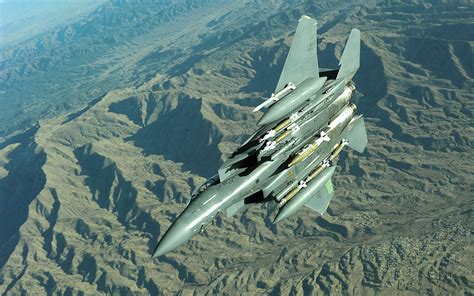
The F-15E Strike Eagle is a dual-seat fighter designed for deep strike missions, air-to-air combat, and close air support. Unlike earlier two-seat variants, it was built for front-line combat, featuring advanced avionics and high payload capacity.
Performance and Armament
- Maximum Payload: Can carry 11,113 kg (24,500 lbs) of mixed ordnance, including AIM-9 Sidewinder, AIM-120 AMRAAM, GBU-28 bunker-buster bombs, and a 20mm M61A1 Vulcan cannon.
- Conformal Fuel Tanks (CFTs): Extended range without sacrificing weapons hardpoints.
- Radar & Targeting: Equipped with AN/APG-82 AESA radar, Low-Altitude Navigation and Targeting Infrared for Night (LANTIRN) pods, and digital fly-by-wire controls.
- Speed & Range: Can reach speeds of Mach 2.5 with a combat radius of 1,270 km.
Combat History
The F-15E Strike Eagle has been deployed in multiple conflicts, including the Gulf War, Afghanistan, Kosovo, and Iraq. It has successfully executed precision strikes, air superiority missions, and deep interdiction operations.
F-15EX Eagle II: The Future of Air Dominance
Modernized Two-Seater Variant
The F-15EX Eagle II represents the most advanced iteration of the F-15 platform, designed to replace aging F-15C/D models while incorporating next-generation warfare capabilities.
Upgrades and Features
- Unprecedented Weapons Load: Can carry up to 22 air-to-air missiles, including AIM-120 AMRAAM and AIM-9X Sidewinder, along with hypersonic weapons.
- Advanced Avionics & Radar: Features the AN/APG-82 radar, Eagle Passive/Active Warning Survivability System (EPAWSS), and enhanced electronic warfare suites.
- High-Power Engines: Powered by F100-PW-229 engines producing 29,000 lbs of thrust each, enabling superior maneuverability and speed.
- AI & Drone Integration: Capable of operating alongside loyal wingman drones, enhancing situational awareness and mission effectiveness.
Export Variants: Global Success of the F-15 Two-Seater
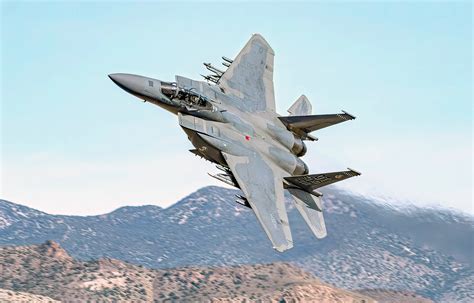
Several countries operate customized two-seater F-15 variants, tailored for regional defense requirements:
- F-15I Ra’am (Israel): Designed for long-range strike missions, featuring Israeli-made avionics and advanced electronic warfare systems.
- F-15K Slam Eagle (South Korea): Features increased fuel capacity, improved radar, and compatibility with indigenous weapons systems.
- F-15QA Ababil (Qatar): Serves as the basis for the F-15EX, featuring a digital cockpit, upgraded AESA radar, and enhanced survivability systems.
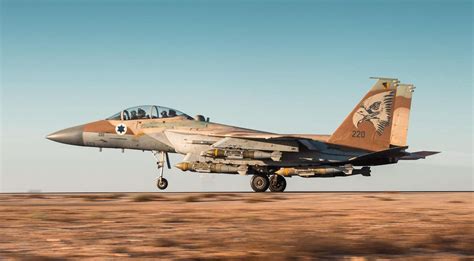
Technical Advancements in Two-Seater F-15 Variants
Electronic Warfare Systems
The Eagle Passive/Active Warning Survivability System (EPAWSS) is a revolutionary upgrade in the F-15E and F-15EX, providing enhanced threat detection, radar jamming, and countermeasure deployment. This ensures survivability in modern electronic warfare environments.
Crew Roles and Mission Effectiveness
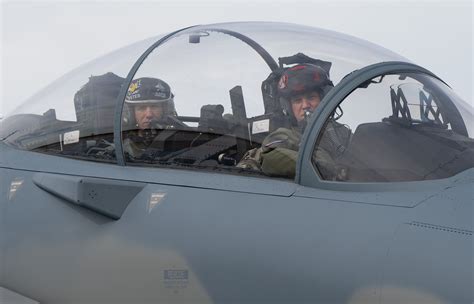
Unlike single-seat F-15 models, the dual-seater versions divide workload efficiently:
- Pilot: Handles flight operations, maneuvering, and engagement tactics.
- Weapons Systems Officer (WSO): Manages targeting, navigation, electronic warfare, and mission coordination.
This optimized workload distribution significantly enhances combat effectiveness, particularly in multirole strike operations.
Frequently Asked Questions (FAQ)
1. Why does the F-15 have two-seater versions?
Two-seat variants serve multiple purposes, including pilot training, mission specialization, and enhanced operational flexibility. In combat versions like the F-15E and F-15EX, the rear seat allows a Weapons Systems Officer (WSO) to manage complex systems, improving overall mission efficiency.
2. What is the main difference between the F-15C and F-15E?
The F-15C is a single-seat air superiority fighter, optimized for air-to-air combat, while the F-15E Strike Eagle is a two-seat multirole fighter-bomber designed for deep-strike missions and ground attack capabilities in addition to air combat.
3. How does the F-15EX compare to modern stealth fighters?
While the F-15EX lacks stealth, it compensates with superior weapons capacity, advanced electronic warfare capabilities, and high-speed performance, making it ideal for missile truck roles, stand-off engagements, and networked warfare alongside stealth aircraft like the F-35.
The F-15 Eagle two-seater variants continue to evolve, demonstrating their combat prowess, adaptability, and technological advancements, ensuring dominance in the skies for decades to come.