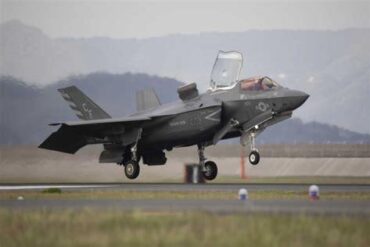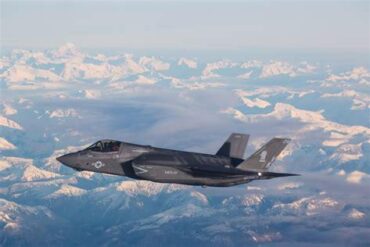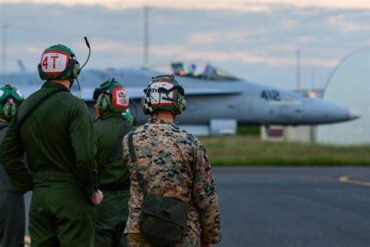
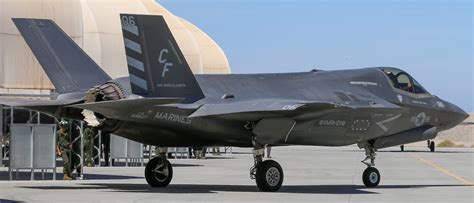
Marine Fighter Attack Squadron 211, famously known as the “Wake Island Avengers,” has once again taken to the skies of the Indo-Pacific. This past weekend, the United States Marine Corps (USMC) confirmed the deployment of VMFA-211 to Marine Corps Air Station Iwakuni, Japan, under the long-established Unit Deployment Program (UDP). This move reinforces not only the Marine Corps’ forward presence in the Indo-Pacific but also signals a decisive commitment to ensuring continued combat aviation readiness in a volatile global climate.
Strategic Deployment: Reinforcing the Indo-Pacific Theater
The Unit Deployment Program is a core pillar of Marine Corps strategy, designed to rotate key aviation and ground units from the continental United States to forward-operating locations. By stationing VMFA-211 in Japan, the Marine Corps strengthens its regional deterrence posture and operational agility across a theater increasingly defined by strategic competition.
Now attached to Marine Aircraft Group (MAG) 12, part of the 1st Marine Aircraft Wing, the squadron’s mission expands across the Indo-Pacific. Their presence supports joint and combined exercises, enhances combat readiness, and bolsters the U.S. commitment to allies such as Japan under the U.S.-Japan Treaty of Mutual Cooperation and Security. As regional tensions simmer, particularly in the East and South China Seas, this move positions one of the Marine Corps’ most advanced fighter squadrons closer to potential flashpoints.
F-35B Lightning II: The Right Jet for Expeditionary Combat
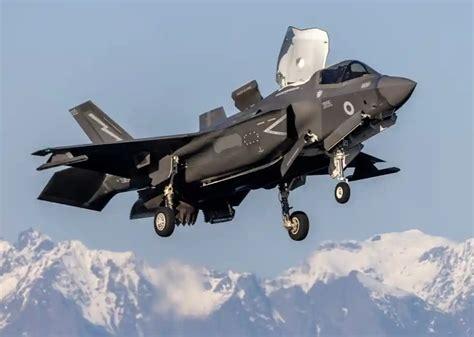
The F-35B Lightning II, the aircraft operated by VMFA-211, is not just another stealth fighter. It’s a cornerstone of expeditionary air power, uniquely suited to Marine Corps operations from austere locations and amphibious assault ships. The short takeoff and vertical landing (STOVL) capabilities, enabled by its distinctive lift fan, allow the F-35B to launch from runways far shorter than those required by conventional fighters — even from the deck of an amphibious vessel.
This makes the F-35B ideal for rapid-deployment forces like the Marine Corps. It bridges the gap between high-end aerial combat and the gritty, expeditionary nature of forward-deployed Marine units. It enables the USMC to strike first, stay hidden, and hit hard from locations where no traditional fighter could.
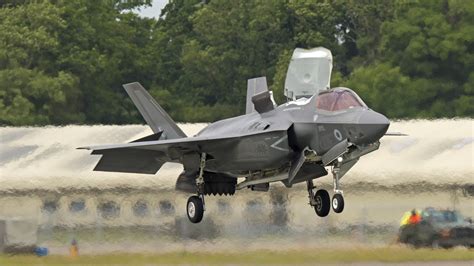
Yet, the Marine Corps is not uncritical in its assessment of the F-35B. As part of its evolving Aviation Plan (AVPLAN), the service has moved to reduce the planned number of F-35Bs from 353 to 280, even as it increases its total F-35 fleet to 420 aircraft. The reason: reliability.
Mission-Capable Concerns: The Reliability Debate
The mission-capable rate—a critical measure of an aircraft’s availability and readiness—has recently posed challenges for the F-35B. In contrast, the F-35C, the Navy’s carrier-based version, has shown improving operational metrics. This has prompted the Marine Corps to allocate more resources toward joint carrier deployments and reduce reliance on the STOVL variant.
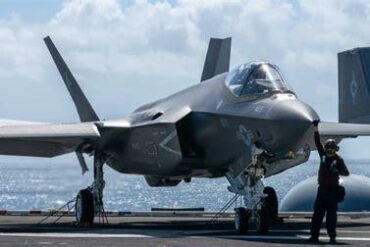
Still, the F-35B remains vital. With 280 eventually fielded, these jets will continue flying from the decks of Wasp-class and America-class amphibious assault ships, supporting distributed maritime operations, and engaging in forward-based missions with allied forces. Notably, VMFA-211 has already proven its mettle in this regard, having deployed aboard the Royal Navy’s HMS Queen Elizabeth in 2021 for a historic Indo-Pacific tour, executing joint missions across multiple nations and reaffirming its tactical versatility.
The Wake Island Avengers: A Legacy of Valor
To understand the significance of this deployment is to appreciate the rich heritage of VMFA-211. The squadron was first activated in January 1937 as VF-4M, later redesignated as VMF-211. But it was during World War II that the unit earned its legendary nickname.
Just days before the attack on Pearl Harbor, a dozen VMF-211 Grumman F4F Wildcats were dispatched to Wake Island. On December 8, 1941, Japanese forces bombed the island, destroying most of the unit’s aircraft on the ground. Despite overwhelming odds, the remaining aircraft and Marine defenders held the island for nearly two weeks, sinking multiple Japanese ships. It was during this fight that Captain Henry T. Elrod, posthumously awarded the Medal of Honor, became the first U.S. Marine aviator to receive that honor.
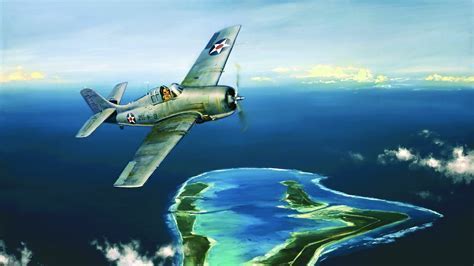
This legacy of sacrifice and determination is carried forward in every mission flown by today’s squadron members. Their insignia—a fierce avenger with clenched fists—serves as a constant reminder of the squadron’s commitment to defending forward.
Post-War Evolution and Harrier Years
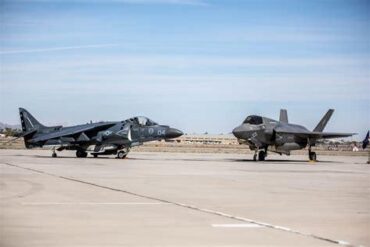
Throughout the Cold War, VMFA-211 evolved to meet new threats. In 1952, it was redesignated VMA-211, shifting its role to ground attack. The unit eventually transitioned to the AV-8B Harrier II, a pioneering STOVL aircraft that preceded the F-35B. During the 1990s, the Wake Island Avengers received accolades for operational excellence, earning the Marine Corps Aviation Association’s “Attack Squadron of the Year” title three times.
The transition to the F-35B began in May 2016, marking a new era of stealth, sensor fusion, and fifth-generation warfare for the squadron. By integrating the most advanced jet in the Marine Corps inventory, VMFA-211 took a bold leap into modern combat aviation.
Strategic Implications in a Multipolar Indo-Pacific
The redeployment of VMFA-211 to Japan comes at a time of heightened strategic complexity in the Indo-Pacific. With China’s rapid military expansion, ongoing tensions in the Taiwan Strait, and North Korea’s nuclear provocations, forward-based aviation assets are essential. The ability to project airpower from Japan—within striking distance of multiple contested areas—gives the U.S. and its allies a credible deterrent.
Moreover, this deployment demonstrates Washington’s commitment to interoperability with regional partners. Japan, South Korea, Australia, and the United Kingdom are all operating or procuring the F-35. Exercises involving multinational F-35 units build cohesion and demonstrate the power of a shared fifth-generation fleet.
Looking Forward: Sustaining the Edge
As the Marine Corps shifts from land-based counterinsurgency operations to littoral and maritime warfare, its aviation posture must evolve. The deployment of the Wake Island Avengers to Iwakuni is not just a rotational assignment — it is a bellwether of strategic prioritization.
Investment in readiness, maintenance innovation, and distributed basing will be key to ensuring that the F-35B remains a frontline asset. The squadron’s presence will likely support Expeditionary Advanced Base Operations (EABO), enabling rapid, unpredictable deployments across the first island chain and beyond.
By placing a squadron with such a storied combat history and modern technological edge at the forefront of Indo-Pacific operations, the Marine Corps sends a clear message: we are ready, forward, and unyielding.
Conclusion: A New Chapter in a Historic Saga
VMFA-211’s deployment to Japan marks both a continuation and a renewal. It is the latest chapter in a saga that began on the coral atolls of Wake Island and now unfolds against the backdrop of 21st-century great power rivalry. The F-35B is more than a machine—it is a force multiplier, and the Wake Island Avengers are more than a squadron—they are the embodiment of Marine Corps tenacity.
With their arrival in Iwakuni, the United States strengthens the frontlines of freedom in the Pacific once again. The Avengers are back, and they are ready to write the next chapter of Marine aviation history.