The US Army is preparing for its first-ever tiltrotor aircraft, but the path to the future does not begin with the aircraft it will eventually fly. Instead, Army aviators are learning the unique skills of tiltrotor operations aboard a Marine Corps aircraft they will never officially operate: the Bell V-22 Osprey. This unusual cross-service training effort represents one of the biggest transformations in Army aviation since the introduction of modern utility helicopters.
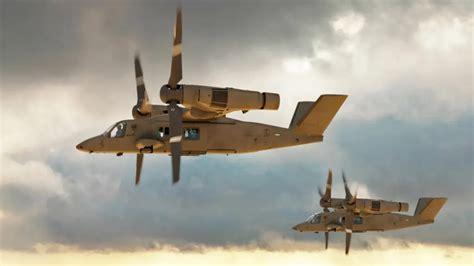
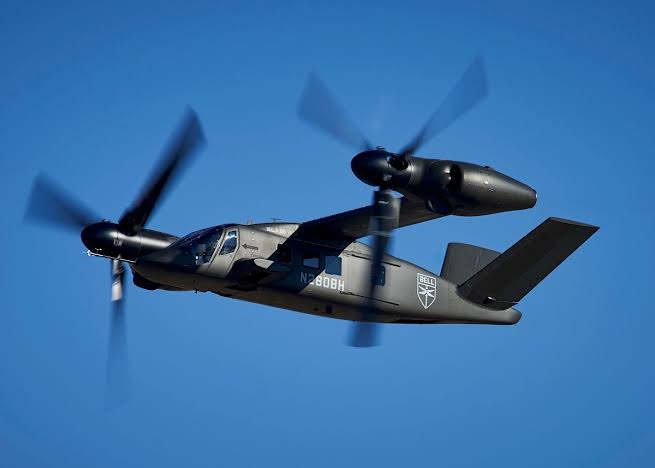
The reason behind this approach is simple: the Army’s upcoming MV-75 Cheyenne II, previously known as the Bell V-280 Valor, represents an entirely new category of aircraft for Army pilots. Unlike conventional helicopters such as the UH-60 Black Hawk and CH-47 Chinook, the MV-75 combines vertical lift capability with fixed-wing aircraft performance. Before Army pilots can safely operate this next-generation platform, they must first understand the fundamentals of tiltrotor flight.
The Army selected the Bell V-280 Valor as the winner of the Future Long Range Assault Aircraft (FLRAA) program in December 2022. The aircraft later received its operational designation as the MV-75 Cheyenne II, marking a historic milestone for Army Aviation. When it enters service around 2030, it will become the first tiltrotor aircraft operated by the US Army.
However, developing a new aircraft is only part of the challenge. The Army must also create an entirely new training system, maintenance structure, and operational doctrine. Since the Marine Corps has spent nearly two decades operating the V-22 Osprey, the Army is turning to its sister service for valuable lessons before the MV-75 arrives.
Why The US Army Needs Marine Corps V-22 Osprey Training Before MV-75 Operations
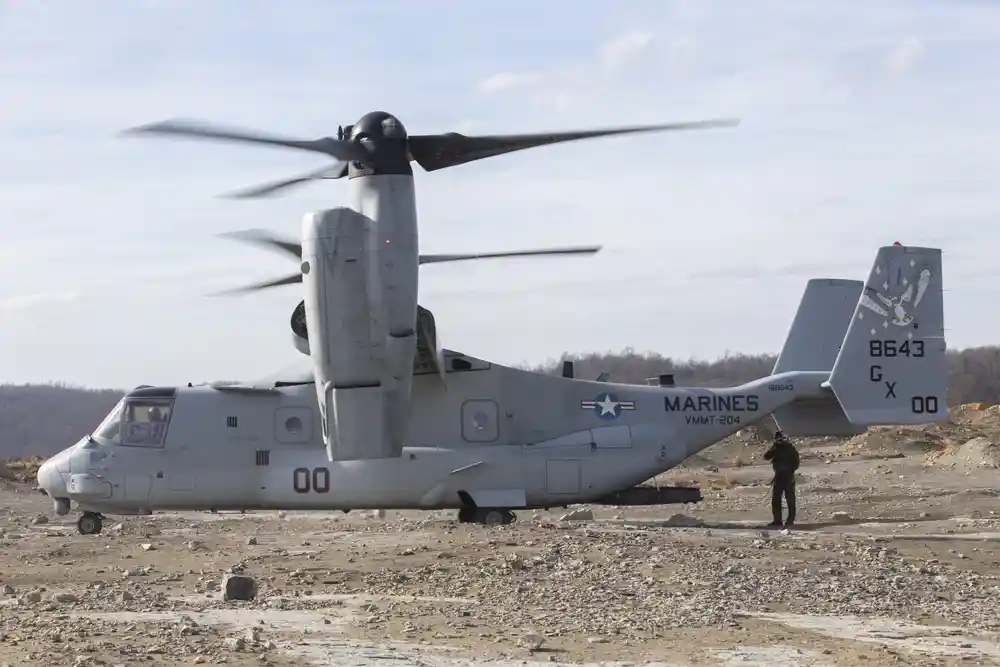
The US Army has never purchased the V-22 Osprey for its own aviation units and has no plans to do so. The aircraft was developed primarily for the Marine Corps, Air Force Special Operations Command, and Navy requirements. Yet despite never operating the aircraft permanently, the Osprey provides the closest available training environment for Army aviators preparing for the MV-75.
Tiltrotor aircraft require pilots to master a completely different flying philosophy. A traditional helicopter relies on rotor lift throughout the entire mission. A fixed-wing aircraft depends on forward speed and wings to generate lift. A tiltrotor combines both concepts by allowing the aircraft to transition between helicopter-style vertical flight and airplane-style high-speed cruise.
This transition creates a unique aerodynamic challenge. Pilots must understand how the aircraft behaves when the rotors gradually rotate from a vertical position into a forward-facing configuration. During this process, flight characteristics change rapidly, requiring precise control inputs and a deep understanding of aircraft systems.
For Army aviators who have spent their careers flying helicopters, this represents a major shift. The MV-75 will demand pilots who think like both helicopter aviators and fixed-wing pilots.
The training with Marine Medium Tiltrotor Training Squadron 204 (VMMT-204) gives Army personnel access to decades of operational knowledge. The Marine Corps has developed tactics, emergency procedures, maintenance methods, and flight techniques through years of real-world V-22 operations.
Rather than creating an entirely new training pipeline from zero, the Army can use Marine experience as a foundation while adapting it for its own missions.
MV-75 Cheyenne II Will Transform Army Aviation Performance
The introduction of the MV-75 is not simply an aircraft replacement program. It represents a fundamental change in how the Army conducts air assault, logistics, medical evacuation, and battlefield mobility operations.
Current Army helicopters are optimized for low-altitude operations and relatively short distances. The UH-60 Black Hawk remains a highly capable platform, but its performance limitations become increasingly significant in large geographic areas such as the Indo-Pacific region.
The MV-75 will dramatically expand Army aviation capabilities.
| Specification | UH-60M Black Hawk | MV-75 Cheyenne II |
|---|---|---|
| Cruise Speed | 150–160 knots | 280–300 knots |
| Combat Range | Around 320 nautical miles | 500–800 nautical miles |
| Ferry Range | About 1,200 nautical miles with external tanks | More than 2,100 nautical miles |
| Troop Capacity | 11 soldiers | 14 soldiers |
| Engine Power | 2 × 2,000 shp | 2 × 6,000+ shp |
The speed difference is especially significant. The MV-75 will travel at nearly twice the speed of current Army utility helicopters, allowing commanders to move troops, equipment, and supplies across much larger areas in significantly less time.
The aircraft’s extended range also changes strategic possibilities. A mission that once required multiple refueling points or forward operating bases could potentially be completed directly from distant airfields.
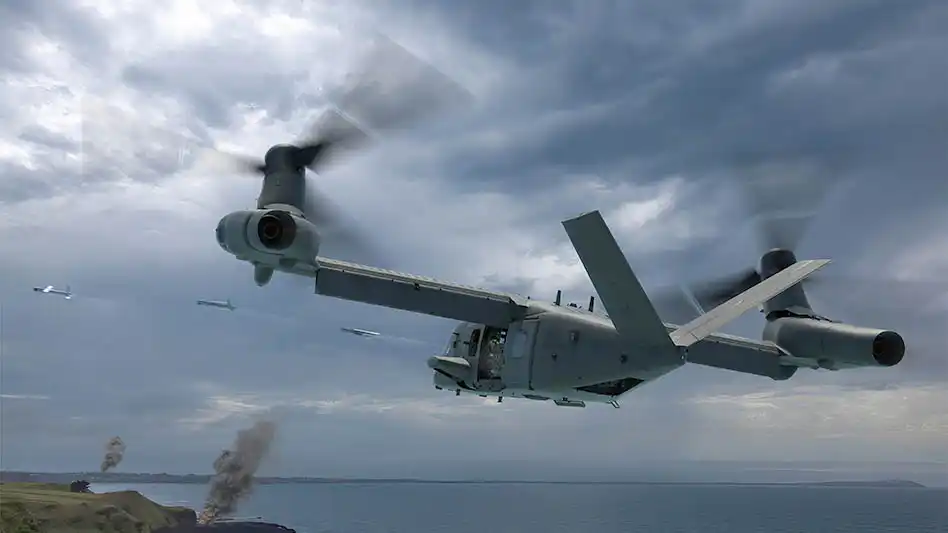
The MV-75 Is Similar To The Osprey But Uses A Different Engineering Approach
Although the MV-75 and V-22 share the same basic tiltrotor concept, the aircraft are not identical. One of the biggest differences involves the propulsion system.
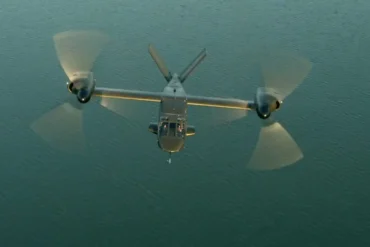
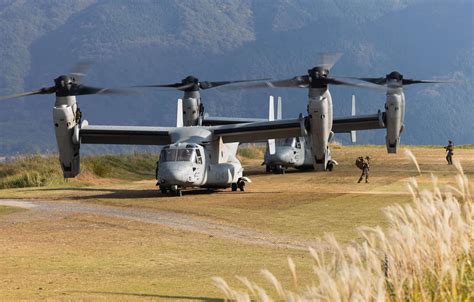
The V-22 Osprey uses rotating engine nacelles. During flight transitions, the entire engine assembly moves from a vertical helicopter position into a horizontal airplane configuration. This system allows the aircraft to perform both helicopter and fixed-wing missions but creates significant mechanical complexity.
The MV-75 takes a different approach. Its engines remain fixed while the prop-rotor system changes position through a different mechanical design. This reduces some of the complexity associated with moving engine structures and aims to improve reliability.
The Army’s decision to train with the Osprey is therefore not about learning every mechanical detail of the aircraft. Instead, it is about understanding the fundamental challenges of tiltrotor aviation.
Pilots must learn how to manage transitions, high-speed operations, instrument flight procedures, emergency scenarios, and tactical employment methods. These skills transfer directly into the MV-75 environment.
Marine Corps Experience Provides A Shortcut For Army Tiltrotor Development
The Marine Corps has spent years building what could be described as a complete tiltrotor ecosystem. This includes pilot training, maintenance procedures, operational tactics, simulator technology, and deployment methods.
The Army is now using that experience to accelerate its own transition.
Through VMMT-204, Army crews receive classroom instruction, simulator training, and familiarization flights aboard the MV-22B Osprey. The training focuses heavily on the unique physics of tiltrotor operations.
Simulator training is particularly important because it allows pilots to experience complex situations before entering actual flight. Emergency procedures, instrument conditions, and transition-phase failures can all be practiced repeatedly in a controlled environment.
The Army is also developing virtual cockpit systems and flight models for future MV-75 training devices. These simulators will become a critical part of preparing thousands of aviators for the new aircraft.
The transition is not limited to pilots. Army maintenance personnel are also learning from Marine technicians. Maintaining tiltrotor aircraft requires different knowledge compared with conventional helicopters, meaning the Army must build a new generation of specialists.
The 101st Airborne Division Leads The Army’s Tiltrotor Transformation
The 101st Airborne Division, known as the Screaming Eagles, has been selected as the first Army unit scheduled to receive the MV-75. The division is already adapting its doctrine around what it calls “Air Assault 2.0.”
This transformation goes beyond replacing helicopters with faster aircraft. The MV-75 will allow the 101st to rethink how air assault operations are planned and executed.
Army units traditionally rely on helicopters to move forces within limited operational distances. With the MV-75’s increased speed and range, commanders will have the ability to conduct much deeper operations while reducing dependence on forward bases.
The division is working with Marine tiltrotor experts to evaluate how existing air assault tactics must change. Lessons learned from Marine operations are being incorporated into Army simulations and planning exercises.
This approach allows the 101st to arrive in 2030 with a mature operational concept rather than waiting years to discover problems after receiving the aircraft.
MV-75 Cheyenne II Supports The Army’s Pacific Strategy
One of the biggest reasons behind the MV-75 program is the growing importance of the Indo-Pacific region. The vast distances between islands and military bases create unique challenges for traditional helicopters.
A UH-60 Black Hawk operating in the Pacific may require frequent refueling stops to complete long-range missions. The MV-75 changes that equation with its significantly greater combat radius.
A future MV-75 unit could potentially launch from locations such as Okinawa, Japan, and deliver forces much farther across the region without relying on extensive support infrastructure.
This capability fits into the Army’s evolving concept of distributed operations. Instead of concentrating forces at large bases, smaller groups of soldiers could rapidly move between locations, establish temporary positions, and relocate before adversaries can respond.
The aircraft’s speed also improves survivability. In contested environments, reducing flight time can decrease exposure to enemy air defenses.
The MV-75 could support missions ranging from troop insertion and medical evacuation to logistics support and rapid deployment of specialized equipment.
A New Era Begins For Army Aviation
The decision to train Army pilots on a Marine aircraft they will never fly operationally may seem unusual, but it reflects a practical approach to military modernization.
The Army is not simply buying a new aircraft. It is creating an entirely new aviation capability. The MV-75 requires different pilot skills, different maintenance expertise, and different battlefield thinking.
By learning from Marine Corps V-22 experience, the Army can avoid repeating decades of trial and error. The partnership provides a bridge between today’s helicopter force and tomorrow’s high-speed, long-range assault capability.
When the first MV-75 Cheyenne II aircraft enter Army service, the pilots operating them will already understand the fundamentals of tiltrotor aviation. They will not be starting from the beginning because the groundwork was built through cooperation with the Marines.
The future of Army Aviation will no longer be defined only by helicopters. With the arrival of the MV-75, the Army is entering a new era where speed, range, and vertical mobility combine into a completely different battlefield advantage.