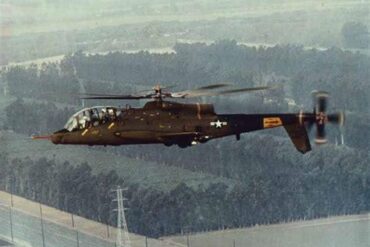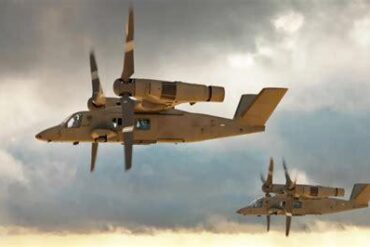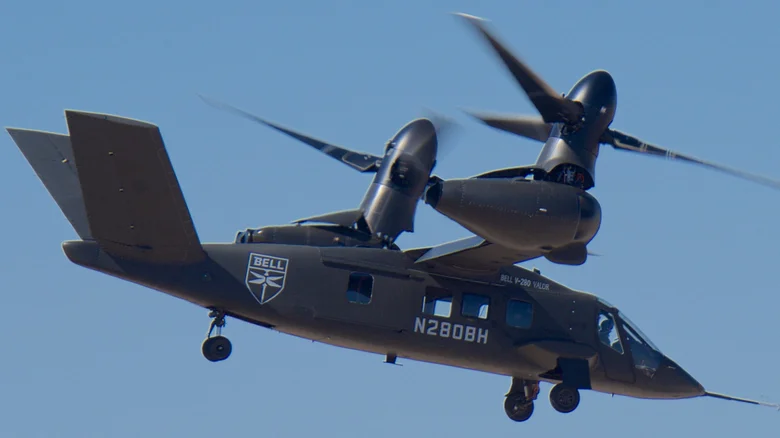
The United States Army has officially added a groundbreaking aircraft to its fleet with the announcement of the MV-75 Cheyenne II, a tilt-rotor aircraft designed for multi-mission operations. This marks a historic expansion for the Army, which has not previously operated the versatile tilt-rotor platforms that have served the Air Force, Navy, and Marine Corps for decades. Developed by Bell Textron Inc., the MV-75 Cheyenne II represents a fusion of aviation innovation, historical homage, and tactical flexibility. It will offer the Army capabilities previously unavailable in its aerial arsenal, including vertical takeoff and landing combined with high-speed forward flight.
Honoring the Northern Cheyenne and Historic Kansas Roots
The naming of the MV-75 Cheyenne II is deeply symbolic, following the Army’s tradition of honoring Native American tribes in its helicopter naming conventions. This new aircraft commemorates both the Northern Cheyenne Tribe in Montana and the Cheyenne & Arapaho Tribes in Oklahoma, reflecting a lineage that traces back to Kansas. For centuries, the Cheyenne people traversed the Great Lakes and Great Plains regions, establishing rich cultural and historical roots before being relocated to reservations. By carrying the Cheyenne name, the Army acknowledges both the resilience and the enduring legacy of these tribes, weaving historical recognition into cutting-edge military technology.
A Revolutionary Aircraft for Modern Warfare
The MV-75 Cheyenne II is not merely a new aircraft; it is a revolutionary platform redefining Army air mobility. Its tilt-rotor design allows it to operate as both a helicopter and a fixed-wing airplane, bridging the gap between vertical lift capability and high-speed, long-range flight. This dual-functionality offers tactical versatility for troop insertion, extraction, and rapid deployment in diverse operational environments. First conceptualized as the V-280 Valor, the MV-75 has been in development for over a decade, with its first flight recorded in 2017. Operational testing is projected for 2027-2028, aiming for deployment around fiscal year 2031.
Advanced Features and Modular Design
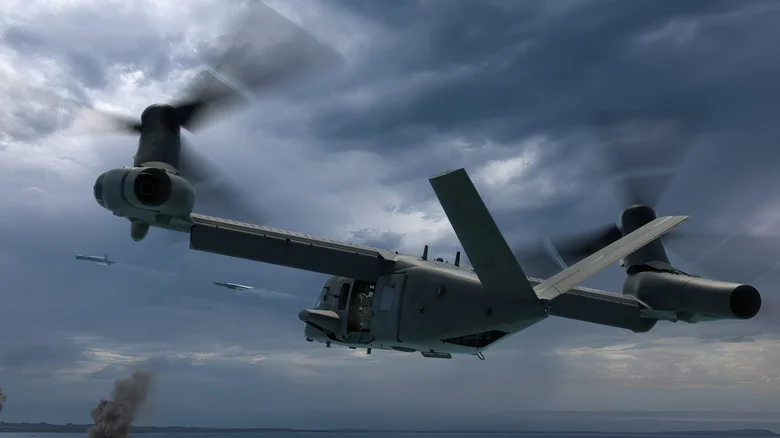
Bell Textron has designed the Cheyenne II around a Modular Open Systems Approach (MOSA), ensuring the aircraft can be adapted to mission-specific requirements and rapidly upgraded as technology evolves. A specialized Night Stalker MV-75A variant for special operations incorporates advanced modifications, potentially including the AN/APQ-187 Silent Knight radar, enhancing night and low-visibility operational capabilities. Semi-autonomous features may allow for limited unmanned operation, offering unprecedented flexibility for reconnaissance, troop support, and high-risk missions. The aircraft is configured to carry up to 12 troops, reach speeds of 322 mph, operate at altitudes up to 6,000 feet, and achieve a combat range of nearly 2,000 miles, meeting rigorous Army specifications.
Bridging Tradition with Innovation
The MV-75 Cheyenne II exemplifies the Army’s commitment to blending historical acknowledgment with next-generation technology. Its designation “MV” signals multi-mission vertical lift capability, while the number 75 commemorates the Army’s founding year, 1775. As a tribute to the Cheyenne tribes, the aircraft embodies a narrative of endurance, skill, and strategic foresight—qualities mirrored in its performance capabilities. Beyond its technical merits, the MV-75 serves as a living reminder of the cultural heritage and historic contributions of Native American communities to the United States.
With the MV-75 Cheyenne II, the Army is setting a new standard for aerial mobility, honoring history while pushing the boundaries of innovation. Its operational impact promises to reshape how the Army projects power, responds to crises, and maintains tactical superiority in the decades to come.