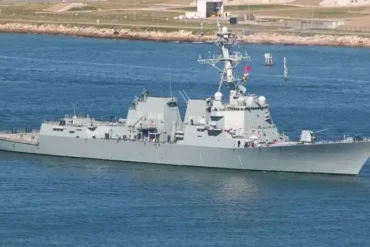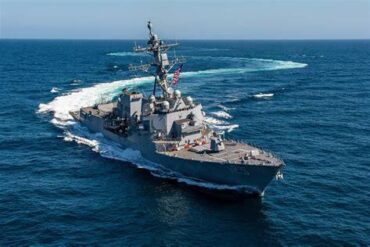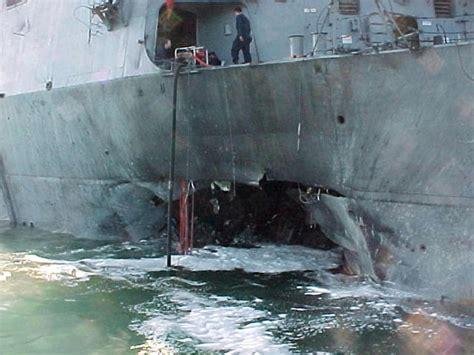
On October 12, 2000, the USS Cole (DDG 67), a U.S. Navy guided-missile destroyer, was refueling in Aden, Yemen, when it became the target of one of the most devastating terrorist attacks ever carried out against the United States Navy. The strike, orchestrated by Al Qaeda, claimed the lives of 17 American sailors, injured 37 others, and left a gaping wound in the hull of one of America’s most advanced warships. It was a chilling precursor to the September 11 attacks that would unfold less than a year later.
The attack exposed the Navy’s vulnerability during routine port calls and forced sweeping changes in U.S. naval security doctrine, particularly in force protection and rules of engagement during refueling and port operations overseas. The courage displayed by the crew in the chaotic aftermath of the bombing, however, turned tragedy into an enduring story of resilience and sacrifice.
The Calm Before the Explosion: USS Cole’s Mission to the Gulf
In August 2000, USS Cole, commanded by Commander Kirk S. Lippold, departed Norfolk, Virginia, for a deployment that would span the Mediterranean, the Red Sea, and the Indian Ocean. The destroyer operated alongside USNS John Lenthall (T-AO-189) and USS Simpson (FFG-56), conducting refueling and escort operations vital to U.S. presence in the region.
When the ship pulled into Aden harbor on that fateful October morning, it was performing a standard bunkering stop — an everyday routine for naval vessels. As refueling hoses were being connected, a small fiberglass speedboat approached the ship’s port side. Witnesses later recalled the two men aboard waving cheerfully to the crew, appearing harmless — a tragic deception.
Unbeknownst to anyone aboard, that boat carried approximately 1,000 pounds (450 kilograms) of C4 explosives, meticulously molded into a shaped charge designed to maximize the blast’s penetration. At 11:18 a.m., the suicide attackers detonated their payload. The explosion tore a 40-by-60-foot (12-by-18-meter) hole into the Cole’s hull, right where sailors were gathering for lunch in the galley.
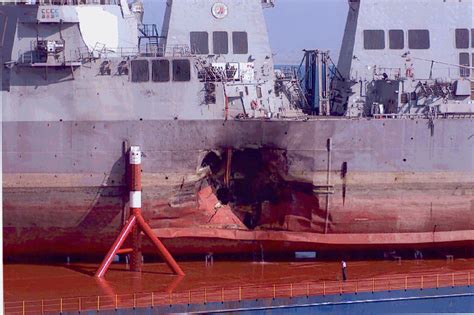
The Deadly Aftermath: Chaos, Courage, and Survival
The detonation ripped through the ship’s interior, shattering decks, collapsing compartments, and instantly killing 17 sailors. Dozens more were thrown against bulkheads or trapped in mangled sections of the ship. Fires erupted, compartments flooded, and the ship began to list dangerously.
The crew, many injured and disoriented, responded with extraordinary composure. Despite the carnage, damage control teams immediately sealed off flooded sections, extinguished fires, and stabilized electrical systems to prevent a total loss. For 96 continuous hours, the sailors fought to keep their ship afloat — without sleep, food, or comfort, under conditions of searing heat and toxic fumes.
The U.S. Navy later commended their efforts as a textbook example of professionalism under fire. “Drawing upon their Navy training and discipline,” the official Navy record states, “the crew heroically conducted more than 96 hours of sustained damage control in conditions of extreme heat and stress.”
Anatomy of the Attack: Al Qaeda’s Maritime Terror Strategy
The FBI investigation determined that the USS Cole bombing was not a random act of terror but a meticulously planned operation led by Al Qaeda operatives under Osama bin Laden’s direction. The attackers — Ibrahim al-Thawar (a.k.a. Nibras) and Abdullah al-Misawa — had trained for months to carry out their suicide mission.
It later emerged that the Cole attack followed a failed attempt earlier that year to destroy another U.S. ship, USS The Sullivans, in January 2000. In that incident, the terrorist boat, overloaded with explosives, sank before reaching its target. The operatives salvaged the undetonated explosives, refitted them, and successfully deployed them against USS Cole ten months later.
The Yemeni government, in coordination with U.S. investigators, arrested two main suspects: Jamal al-Badawi and Fahd al-Quso, both of whom confessed to their involvement. Another key planner, Abd al-Rahim al-Nashiri, was later captured and became one of the most high-profile detainees held at Guantanamo Bay.
In a chilling propaganda video aired by Al Jazeera in 2001, Osama bin Laden praised the attack, reciting poetry that glorified the bombers’ “holy war” and declaring that the “destroyer feared by the powerful” had been humbled by faith.
Rescue and Recovery: USS Cole’s Journey Home
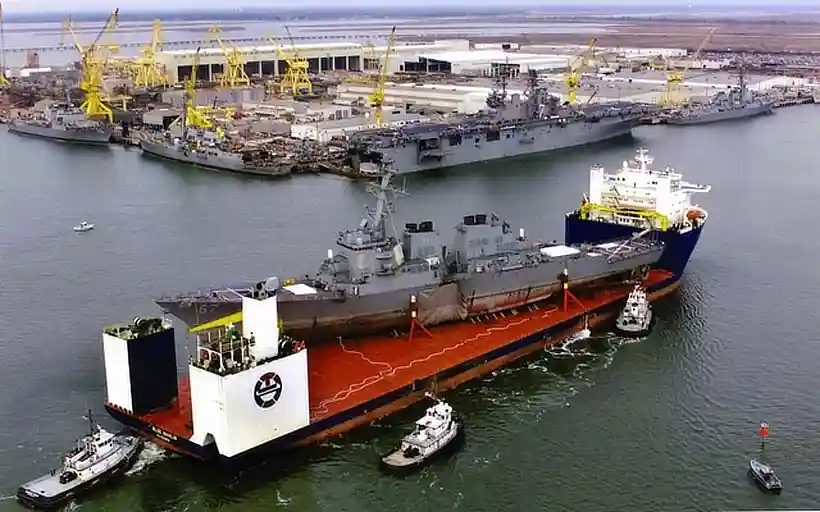
After emergency repairs in Aden, the Military Sealift Command (MSC) dispatched the Norwegian heavy-lift vessel Blue Marlin to transport the crippled destroyer. On October 29, 2000, USS Cole was carefully lifted onto the Blue Marlin’s deck and began its journey back to Pascagoula, Mississippi, where it arrived on December 13, 2000, for extensive reconstruction.
The ship’s crew, meanwhile, was airlifted to Rhein-Main Air Base in Germany before returning to Norfolk, Virginia, where they were granted leave to recover. By Christmas Eve 2000, the destroyer was back in the water, fully repaired and symbolically reborn. USS Cole returned to active duty in 2001 — a testament to both modern shipbuilding and unbreakable crew spirit.
Justice Delivered: The Hunt for Al Qaeda’s Bombers
Over the next two decades, the United States systematically hunted down those responsible. Jamal al-Badawi, one of the masterminds, escaped Yemeni custody twice before being killed in a U.S. airstrike in 2019 during President Donald Trump’s administration.
In his statement, Trump declared: “Our GREAT MILITARY has delivered justice for the heroes lost and wounded in the cowardly attack on the USS Cole. We have just killed the leader of that attack, Jamal al-Badawi. Our work against Al Qaeda continues.”
Fahd al-Quso met a similar fate in 2012, eliminated by a U.S. drone strike in Yemen. Both deaths symbolized the long arc of justice that stretched nearly two decades after the attack, reaffirming America’s commitment to holding every perpetrator accountable.
The Legacy of the Cole Bombing: Lessons Etched in Steel
The USS Cole bombing profoundly changed U.S. naval operations around the world. The attack highlighted gaps in intelligence-sharing, ambiguous rules of engagement, and inadequate port security in foreign waters. In its aftermath, the Pentagon’s Crouch-Gehman Report urged sweeping reforms to strengthen maritime counterterrorism readiness.
Among the key reforms implemented:
- Expansion of Rules of Engagement (ROE), giving commanders more discretion to respond to potential threats.
- Mandatory Anti-Terrorism/Force Protection (AT/FP) training for all deployed naval units.
- Enhanced intelligence coordination between the Navy, the CIA, and allied forces.
- Stricter port security assessments and vetted refueling protocols for U.S. warships overseas.
Two years later, Al Qaeda carried out a similar maritime suicide attack against the French oil tanker MV Limburg, again off Yemen’s coast — proof that the Cole attack had become the blueprint for terrorist strikes at sea.
An Enduring Memorial and a Lasting Warning
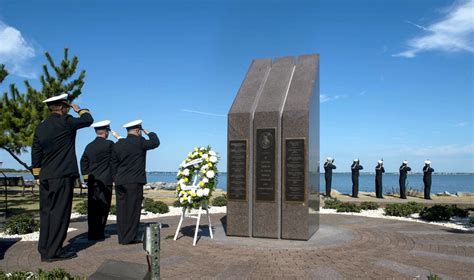
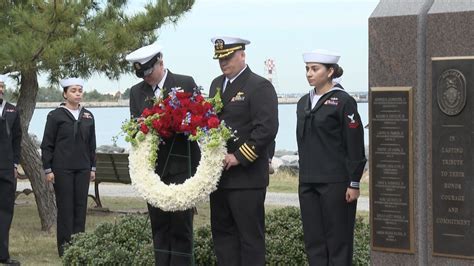
Today, the USS Cole Memorial at Norfolk Naval Station stands as a solemn reminder of the price of vigilance. Each of the 17 marble pylons represents a fallen sailor, forever etched with their names and illuminated at night. Every October 12, survivors and families gather there to honor the courage of those who perished and those who saved the ship against impossible odds.
The bombing of USS Cole was not merely an act of terror — it was a wake-up call that transformed how America defends its fleets and its people. From Aden’s burning harbor to Norfolk’s quiet memorial, the legacy of the USS Cole endures as both a testament to resilience and a warning carved into naval history: vigilance at sea is never optional.