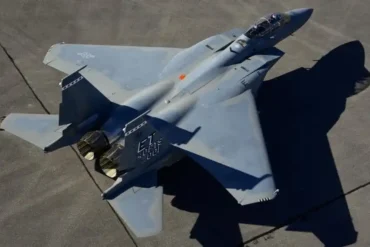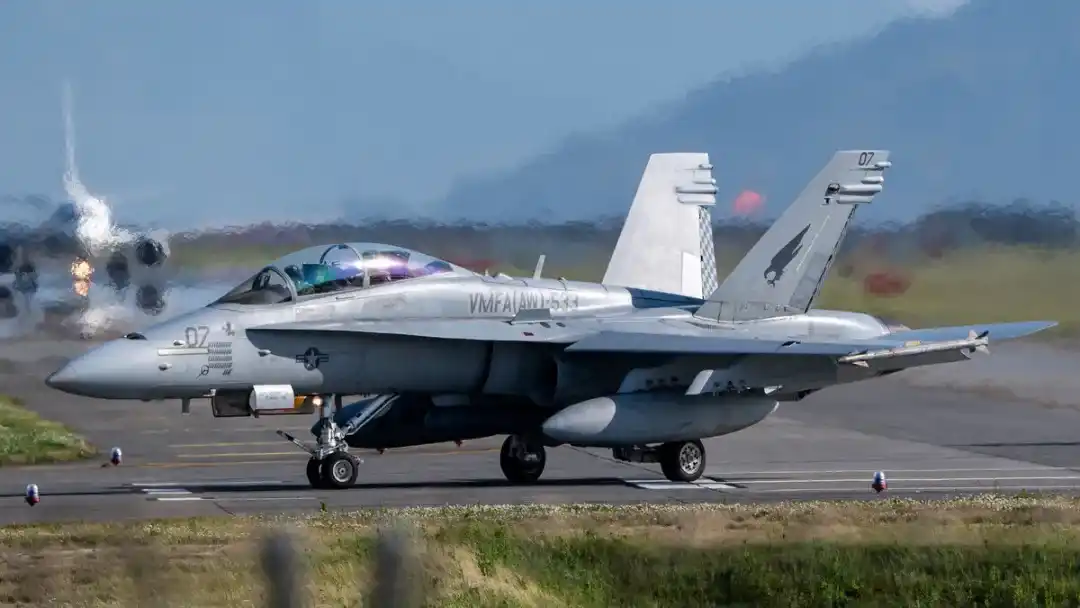
The F/A-18 Hornet and its advanced variant, the F/A-18 Super Hornet, serve as the backbone of carrier-based aviation for the United States Navy and allied forces. These multirole fighter jets are engineered for superior performance in air-to-ground strike missions, leveraging an extensive arsenal of bombs to neutralize enemy targets with surgical precision. Their ability to carry both precision-guided munitions (PGMs) and unguided bombs makes them indispensable assets in modern warfare.
Precision-Guided Munitions (PGMs) Used by the F/A-18
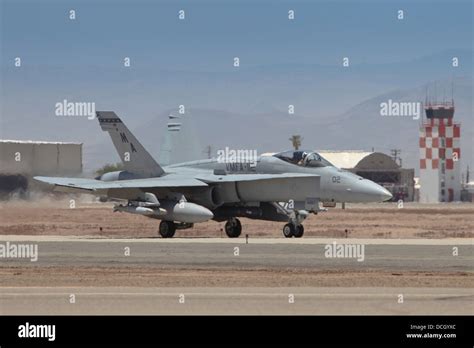
Joint Direct Attack Munition (JDAM)
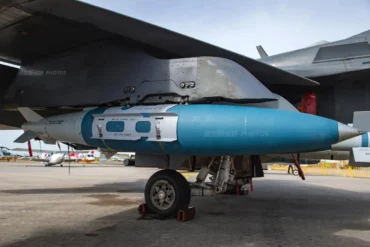
The JDAM system enhances conventional bombs by integrating GPS/INS guidance, converting them into smart weapons capable of striking fixed targets with exceptional accuracy. The F/A-18 employs multiple variants of JDAMs:
- GBU-31 (2,000 lb), GBU-32 (1,000 lb), and GBU-38 (500 lb): Based on Mk 80-series bombs, these JDAMs ensure precision engagement of targets such as bunkers, command centers, and fortified structures.
- Highly effective in all-weather conditions, JDAMs provide a strategic advantage by delivering reliable firepower against high-value enemy infrastructure.
Paveway Series (Laser-Guided Bombs)
Designed for dynamic targeting, the Paveway series employs laser guidance for pinpoint accuracy. The F/A-18 deploys various Paveway munitions depending on the target’s fortification level:
- GBU-12 (500 lb, Paveway II): Effective for precision strikes against enemy strongholds and vehicles.
- GBU-16 (1,000 lb, Paveway II) and GBU-24 (2,000 lb, Paveway III): Designed to penetrate hardened or buried targets, making them ideal for underground bunkers or reinforced enemy positions.
Small Diameter Bombs (SDBs)
The GBU-39 and GBU-53/B StormBreaker represent a new generation of low-collateral-damage precision munitions:
- GBU-39 (250 lb): GPS-guided with glide capability, allowing deployment from a safe distance while maintaining accuracy.
- GBU-53/B StormBreaker: Equipped with a tri-mode seeker (laser, GPS, and infrared imaging), enabling engagement of moving targets under any weather conditions.
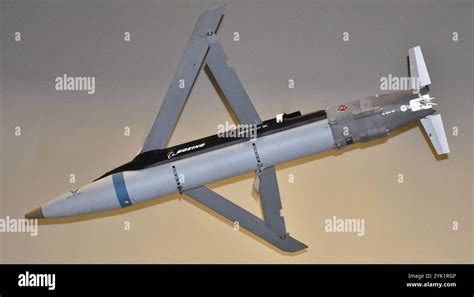
Unguided “Dumb” Bombs Used by the F/A-18
Despite advancements in smart munitions, the Mk 80-series bombs remain crucial for high-explosive area attacks:
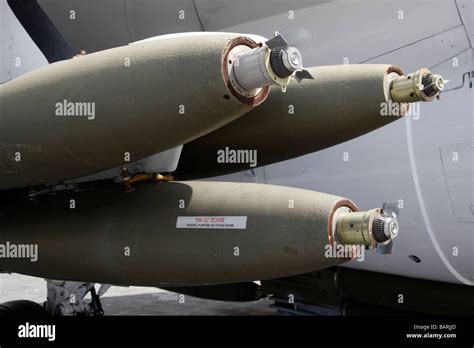
- Mk 82 (500 lb), Mk 83 (1,000 lb), and Mk 84 (2,000 lb): Versatile and widely used in large-scale bombardment operations.
- Retarded (High-Drag) Variants:
- Mk 82 Snake Eye: Employs deployable fins to slow descent, allowing low-altitude drops without damaging the aircraft.
Cluster Munitions (Legacy Systems)
While largely phased out due to international treaties, the CBU-99/CBU-100 Rockeye II once served as a potent anti-armor cluster bomb designed to incapacitate enemy armored units. The F/A-18 formerly carried these munitions for missions involving broad-area suppression.
Key Features Enhancing Bomb Deployment
Payload and Versatility
The F/A-18 is engineered to maximize ordnance capacity while maintaining maneuverability:
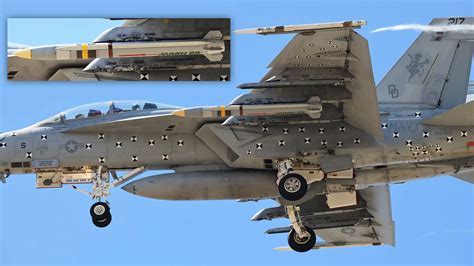
- F/A-18 Hornet: Capable of carrying up to 13,700 lbs of bombs.
- F/A-18 Super Hornet: Enhanced payload capacity of 17,750 lbs, with 11 weapon stations for diverse loadouts.
- Ability to carry mixed payloads, allowing simultaneous deployment of PGMs and unguided munitions.
Advanced Targeting Systems
F/A-18 pilots utilize cutting-edge targeting pods to enhance strike accuracy:
- ATFLIR (Advanced Targeting Forward-Looking Infrared): Provides laser designation, infrared tracking, and reconnaissance.
- LITENING Pod: Enhances targeting precision by integrating high-resolution sensors.
Carrier Compatibility
Designed for naval warfare, the F/A-18 is fully integrated with carrier operations:
- Catapult launches and arrested landings enable flexible deployment from aircraft carriers.
- Maritime strike capability extends mission effectiveness over open seas.
Operational Roles of the F/A-18 in Bombing Missions
Close Air Support (CAS)
The F/A-18 plays a vital role in supporting ground forces by delivering precision-guided strikes. During operations in Afghanistan, GBU-12 laser-guided bombs were extensively used for neutralizing insurgent positions while minimizing civilian casualties.
Interdiction and SEAD Missions
The F/A-18 is deployed for Suppression of Enemy Air Defenses (SEAD) and interdiction missions to destroy critical infrastructure:
- JDAMs and SDBs enable rapid elimination of enemy radar stations and missile sites.
- Electronic warfare capabilities enhance survivability in contested environments.
Strategic Strike Operations
For large-scale bombardment, the Mk 84 (2,000 lb bomb) is deployed against fortifications, enemy command centers, and industrial targets. In past conflicts, such strikes played a crucial role in dismantling enemy supply chains.
Notable Upgrades for Enhanced Bombing Effectiveness
BRU-55/A Smart Racks
- Enable dual-carriage of JDAMs or SDBs, increasing strike potential without compromising aerodynamics.
Networked Targeting Systems
- Integration with real-time data feeds from drones and satellite intelligence, allowing pilots to adjust bombing parameters mid-mission for maximum effectiveness.
Conclusion
The F/A-18 Hornet and Super Hornet remain dominant aerial strike platforms, excelling in precision bombing, strategic attacks, and close air support missions. Their ability to carry a diverse range of munitions, coupled with advanced targeting technology, ensures they remain indispensable in modern combat operations.
FAQ: F/A-18 Bombing Capabilities
1. What types of bombs can the F/A-18 carry?
The F/A-18 carries precision-guided munitions (JDAMs, Paveway, SDBs) and unguided bombs (Mk 80-series, high-drag variants), ensuring mission versatility.
2. How accurate are the bombs dropped by an F/A-18?
JDAMs and laser-guided bombs achieve high precision, with strike accuracy within a few meters, thanks to GPS and infrared targeting.
3. Can the F/A-18 engage moving targets with bombs?
Yes, using GBU-53/B StormBreaker, which features a tri-mode seeker (laser, GPS, and infrared), the F/A-18 can hit moving targets in all weather conditions.