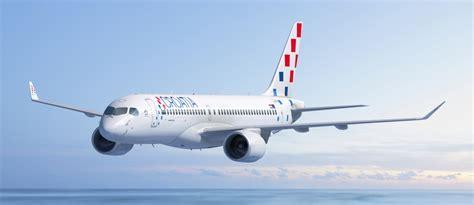
Croatia Airlines faced a serious operational incident after one of its newest Airbus A220-300 aircraft veered off the runway during an aborted takeoff at Split Airport (SPU), raising fresh questions about high-speed rejected takeoff procedures, crosswind conditions, and the challenges pilots face during critical moments close to rotation speed.
The aircraft involved, registered 9A-CAN, was operating Flight OU412 from Split to Frankfurt on Saturday afternoon when the crew suddenly rejected the takeoff while traveling at more than 130 knots, equivalent to roughly 150 mph. Video footage captured from the airport perimeter showed the jet sharply pulling to the left before exiting Runway 23, tearing across the grass, striking runway signage, and sending debris into the air before finally coming to a halt.
Despite the severity of the runway excursion, all 135 passengers and crew members evacuated safely, with no injuries reported. Emergency services rapidly surrounded the aircraft as airport authorities suspended operations on the affected runway.
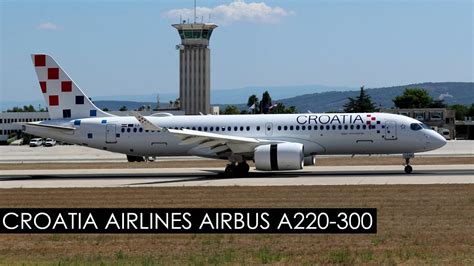
High-Speed Rejected Takeoff Triggered Moments Before Rotation
Flight tracking data from Flightradar24 revealed that the Airbus A220 reached a maximum ground speed of approximately 131 knots before the takeoff was aborted. Aviation experts note that this speed was extremely close to the aircraft’s calculated V1 speed, often referred to as the “decision speed.”
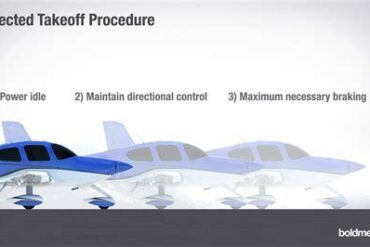
V1 represents one of the most critical thresholds during takeoff. Before reaching V1, pilots can safely reject the takeoff if a major issue develops. After passing V1, continuing the takeoff is generally considered safer than attempting to stop the aircraft on the remaining runway.
The Croatia Airlines jet appeared to begin drifting left during the final seconds of its acceleration phase. Seconds later, the aircraft departed the runway surface entirely. Footage indicates the pilots fought to maintain directional control as the aircraft crossed onto grass at high speed.
Aviation analysts say a rejected takeoff above 100 knots is considered a high-speed rejected takeoff, a maneuver that carries substantial risks due to the enormous kinetic energy involved. At those speeds, braking performance, tire stress, runway conditions, and directional control become critical factors.
The aircraft ultimately stopped around 6,000 feet down the runway, leaving visible tire marks and damage along the grass area adjacent to the runway edge.
Possible Engine Issue and Strong Crosswinds Under Investigation
Authorities have not yet confirmed the exact cause of the incident, but early speculation within the aviation community has focused on the possibility of an issue involving the aircraft’s left engine or a sudden loss of thrust symmetry during acceleration.
Any unexpected thrust imbalance during takeoff can create strong yawing forces, particularly at high speeds when aerodynamic forces rapidly intensify. If combined with braking inputs during a rejected takeoff, maintaining directional stability becomes dramatically more difficult.
Weather conditions at Split Airport may also become a significant focus of the investigation. Data cited by aviation monitoring sources indicated crosswind gusts approaching 27 knots around the time of departure. While the Airbus A220 is certified to handle substantial crosswinds, gusting conditions can still complicate aircraft handling during critical phases of flight.
Investigators will likely examine whether the crosswind merely worsened the excursion after directional control was compromised or whether environmental conditions contributed earlier in the takeoff roll.
Croatia Airlines released a brief statement confirming that the aircraft “interrupted its takeoff” and stated that the company is cooperating fully with airport officials and aviation authorities.
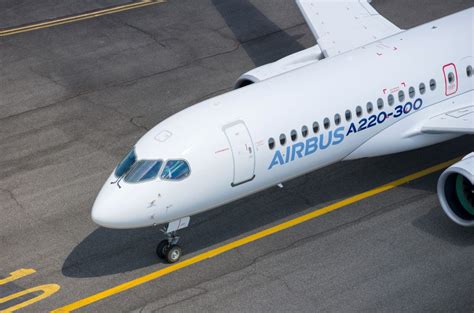
Aircraft Sustained Engine and Landing Gear Damage
Images from the scene showed visible damage to the aircraft’s left engine cowling, reportedly caused after striking runway markers and lighting equipment during the excursion. Croatian accident investigators later confirmed that the aircraft also lost one of its landing gear wheels during heavy braking.
Although authorities initially described the damage as “minor,” the incident could still require extensive inspections before the aircraft returns to service. Modern composite aircraft structures and engine systems demand detailed post-incident examinations even when visible external damage appears limited.
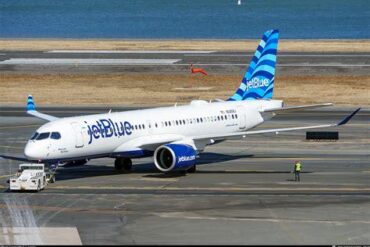
The affected aircraft entered service with Croatia Airlines only recently, having been delivered in June 2025. The Airbus A220-300 forms part of the airline’s ambitious fleet modernization strategy aimed at replacing older narrowbody aircraft with more fuel-efficient next-generation jets.
The timing of the incident is particularly unfortunate for the carrier because the aircraft is among only six A220-300s currently operating in the airline’s fleet.
Split Airport Operations Disrupted for Hours
The runway closure at Split Airport triggered immediate operational disruption across the region. Emergency vehicles and airport rescue crews occupied the affected area while investigators began initial assessments and recovery operations.
Several arriving flights were diverted, while departures experienced cascading delays throughout the afternoon. Although the airport eventually resumed normal operations later in the day, the disruption continued affecting schedules well into the evening.
For Croatia Airlines, even a temporary removal of one A220 from service places additional pressure on a relatively compact fleet. The airline currently operates only 16 aircraft, including:
- Eight Airbus A220 family aircraft
- Four Airbus A319s
- Three De Havilland Dash 8 Q400 turboprops
- One ATR 72
Because the A220 has become central to the airline’s future network strategy, prolonged repair work could create scheduling complications during the busy European summer travel season.
Airbus A220 Safety Record Remains Strong
While the runway excursion generated dramatic visuals, the Airbus A220 continues to maintain a strong overall safety reputation within commercial aviation. Originally developed by Bombardier as the CSeries before Airbus acquired the program, the aircraft has earned praise for its fuel efficiency, advanced avionics, and strong short-field performance.
However, incidents involving rejected takeoffs attract particular attention because they occur during one of aviation’s most demanding phases. Pilots must make split-second decisions under intense time pressure while balancing aircraft performance calculations, runway remaining, and aircraft controllability.
Investigators will now analyze cockpit voice recordings, flight data recorder information, brake performance, thrust settings, weather reports, and pilot inputs to determine exactly why the aircraft departed the runway.
Until those findings are released, the Split Airport runway excursion stands as a vivid reminder of how rapidly a routine departure can escalate into a serious aviation emergency within seconds.