Origins and Development
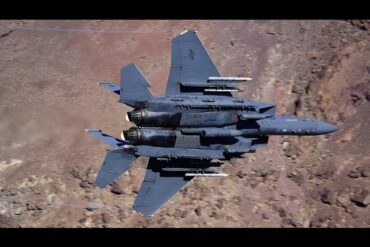
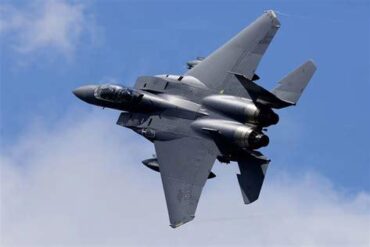
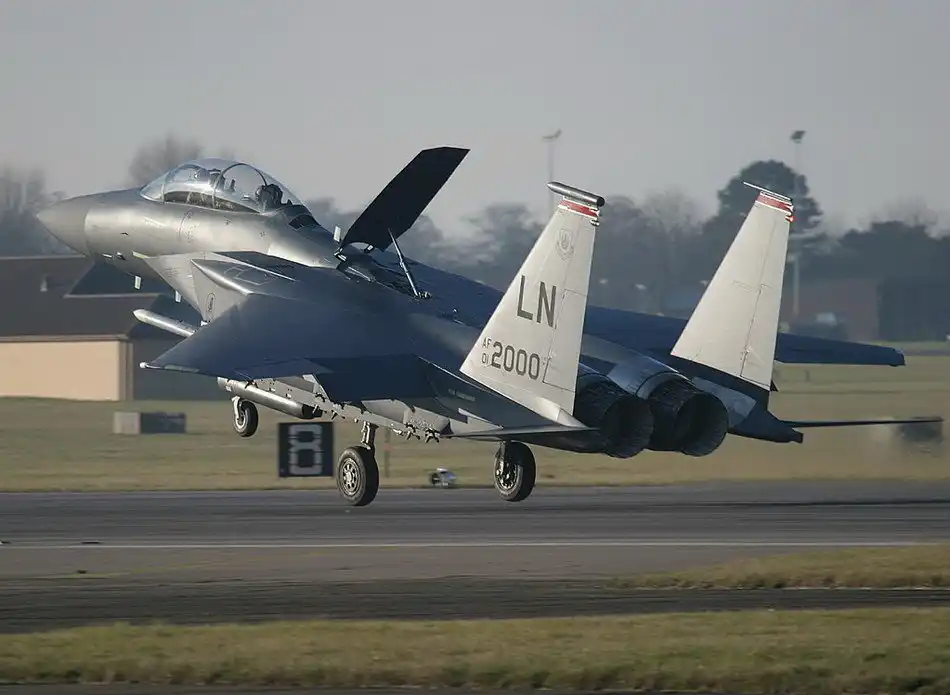
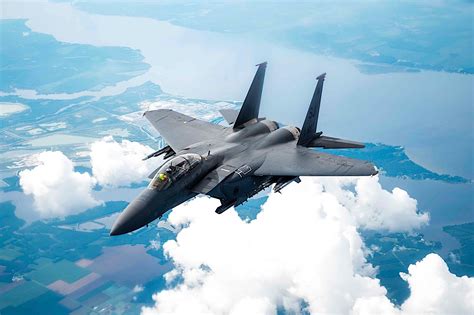
The F-15E Strike Eagle was developed to bridge the gap between air superiority and ground-attack capabilities. Originating from the F-15 Eagle, a dedicated air-superiority fighter, the Strike Eagle was designed to provide the United States Air Force (USAF) with a dual-role fighter that excelled in both air-to-air and air-to-ground missions.
In the 1980s, McDonnell Douglas (now part of Boeing) initiated the project to replace the aging F-111 Aardvark. Unlike its predecessor, the F-15E retained the maneuverability of the F-15 while integrating advanced avionics and weapons for ground attack. This transformation earned it the reputation of a multi-role combat aircraft.
The F-15E’s design philosophy departed from the original F-15’s motto, “Not a pound for air-to-ground.” Key modifications included reinforced airframe structures, conformal fuel tanks (CFTs) for extended range, and advanced targeting systems, ensuring its capability in high-threat environments.
Design and Capabilities
Avionics and Sensors
A defining feature of the F-15E Strike Eagle is its sophisticated avionics suite, optimized for deep-strike and interdiction missions. The AN/APG-70 radar, later upgraded to the AN/APG-82 AESA radar, provides superior target acquisition and ground mapping capabilities. The integration of LANTIRN (Low Altitude Navigation and Targeting Infrared for Night) pods enables precision strikes under all weather conditions.
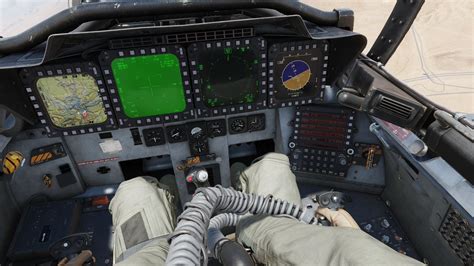
Additionally, the Joint Helmet-Mounted Cueing System (JHMCS) allows pilots to engage targets using a simple head movement, significantly improving situational awareness in dynamic combat environments.
Weapon Systems
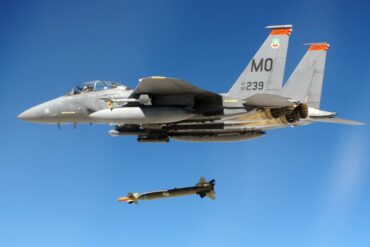
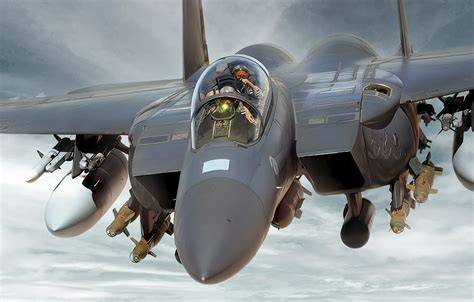
The F-15E Strike Eagle is armed with an extensive arsenal. It supports 11 external hardpoints and carries up to 24,500 lbs (11,113 kg) of ordnance, making it one of the most heavily armed fighters in the USAF inventory.
- Air-to-Air Missiles: AIM-9 Sidewinder, AIM-120 AMRAAM
- Air-to-Ground Ordnance: GBU-31 JDAMs, AGM-130, AGM-158 JASSM
- Internal Cannon: 20mm M61 Vulcan rotary cannon
Recent configurations enable the F-15E to function as a “bomb truck,” carrying up to 15 JDAMs to support stealth fighters like the F-35 Lightning II.
Performance and Range
With its twin Pratt & Whitney F100-PW-229 engines, the Strike Eagle achieves speeds of Mach 2.5 and a combat radius exceeding 1,300 miles (2,092 km). The inclusion of conformal fuel tanks (CFTs) extends its operational reach to 4,445 km, a critical factor in deep-strike missions.
Operational History
Desert Storm and Beyond
The F-15E Strike Eagle debuted in combat during Operation Desert Storm (1991), proving its effectiveness in night-time interdiction and precision strike missions. Equipped with LANTIRN pods, it executed deep-penetration bombing runs against high-value Iraqi targets, including SCUD missile launchers and command centers.
In the decades that followed, the Strike Eagle remained a pivotal asset in major conflicts, including:
- Operation Enduring Freedom (Afghanistan, 2001-2021) – Providing close air support and precision strikes against Taliban positions.
- Operation Iraqi Freedom (2003-2011) – Conducting deep interdiction missions and eliminating enemy infrastructure.
- Operation Inherent Resolve (2014-Present) – Targeting ISIS strongholds in Iraq and Syria with precision-guided munitions.
Modern Deployments
The Strike Eagle continues to evolve, playing a key role in Agile Combat Employment (ACE), a concept emphasizing rapid deployment to austere airstrips to evade adversarial attacks. The F-15E’s ability to operate from forward bases significantly enhances USAF’s combat agility.
Variants and Upgrades
F-15EX “Advanced Eagle”
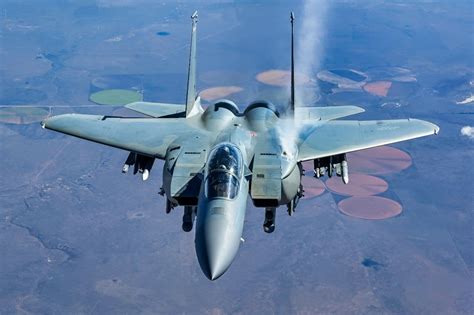
To maintain air superiority, Boeing introduced the F-15EX, a modernized version featuring:
- Increased missile capacity (up to 22 air-to-air missiles)
- Advanced cockpit interface with large-area displays
- Enhanced radar and electronic warfare systems
- Open-architecture software for future upgrades
The U.S. Air Force plans to acquire 144 F-15EX units, replacing aging F-15C/D fighters while complementing fifth-generation aircraft.
International Variants
Several allied nations have procured customized versions of the F-15E:
- F-15QA (Qatar): Enhanced avionics, improved thrust-vectoring capabilities.
- F-15SA (Saudi Arabia): Additional weapon stations, conformal fuel tanks, and advanced radar.
- F-15K (South Korea): Specialized for maritime strike missions.
Strategic Importance
Legacy and Future Role
Despite lacking stealth capabilities, the F-15E Strike Eagle remains indispensable due to its unmatched payload capacity, range, and precision strike capabilities. It serves as a crucial bridge between fourth and fifth-generation fighters, ensuring sustained operational effectiveness.
With the development of the F-15EX and advanced weapons systems, the Strike Eagle is poised to remain a dominant force in global air operations for decades to come.
FAQ
1. What makes the F-15E different from the original F-15 Eagle?
The F-15E Strike Eagle incorporates significant upgrades over the original F-15, including conformal fuel tanks, advanced avionics, and ground-attack capabilities, making it a true multi-role combat aircraft.
2. What is the primary role of the F-15E Strike Eagle?
The Strike Eagle is designed for deep-strike missions, interdiction, and air-to-air combat, allowing it to engage both ground and aerial threats with high precision.
3. How does the F-15E compare to stealth aircraft like the F-35?
While the F-35 Lightning II excels in stealth and networked warfare, the F-15E Strike Eagle outperforms it in payload capacity, range, and high-speed engagements, making it a complementary force in modern air combat.