Origins and Development History
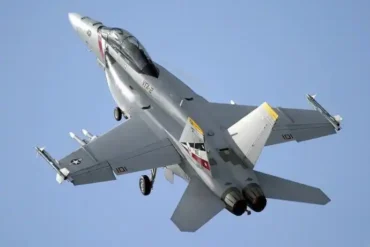
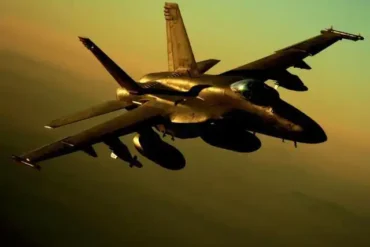
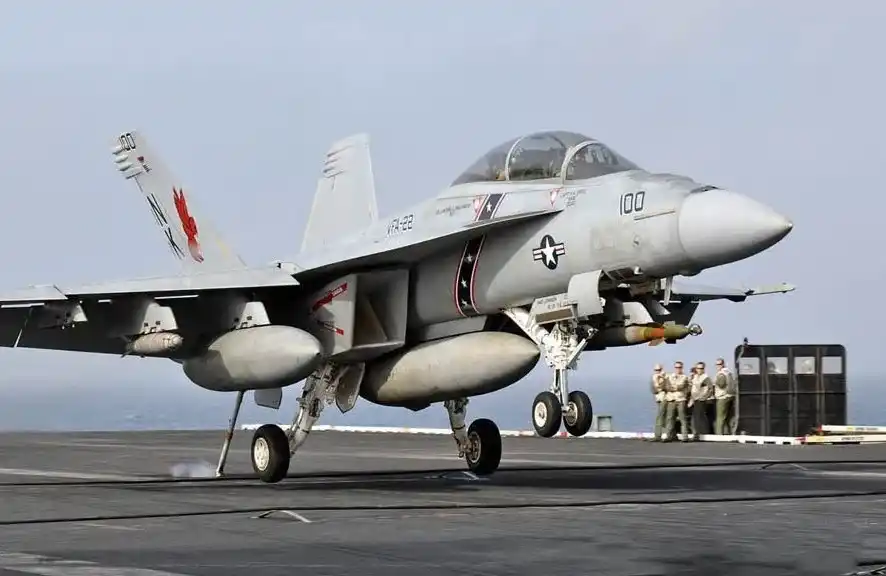
The F/A-18 Hornet was developed as a multirole carrier-based aircraft for the United States Navy, intended to replace aging aircraft like the F-4 Phantom II and the A-7 Corsair II. Its origins trace back to the 1970s VFAX program and the Naval Air Combat Fighter (NACF) project.
Prototype Competition and Selection
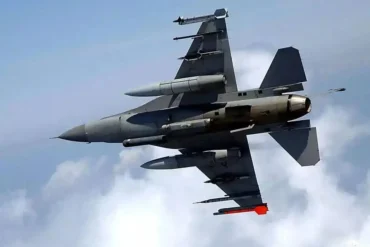
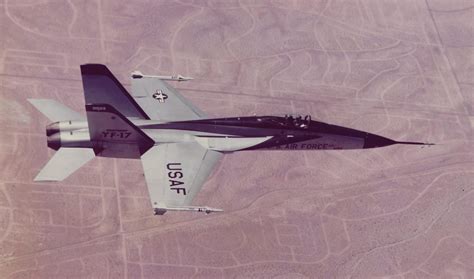
In 1975, the YF-17 prototype, developed by Northrop, lost to the YF-16 (which later became the F-16 Fighting Falcon) in an Air Force competition. However, the Navy recognized the twin-engine YF-17’s potential for carrier operations, where reliability was crucial. As a result, Northrop partnered with McDonnell Douglas (later acquired by Boeing) to modify the YF-17 into a carrier-capable aircraft, leading to the birth of the F/A-18 Hornet.
A Multirole Fighter is Born
Initially, the Navy planned separate fighter (F-18) and attack (A-18) versions. However, in a groundbreaking decision, these roles were merged into a single platform: the F/A-18 Hornet. This made it the first U.S. Navy aircraft designed from inception to perform both air-to-air and air-to-ground missions. The Hornet entered service in 1983, setting a new standard for carrier-based multirole combat aircraft.
Design Features and Technological Innovations
The F/A-18 Hornet was designed for high adaptability and superior carrier operations. Its engineering incorporated cutting-edge advancements to enhance maneuverability, survivability, and combat effectiveness.
Twin-Engine Configuration and Aerodynamics
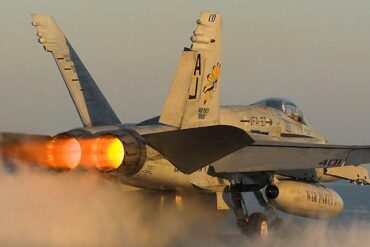
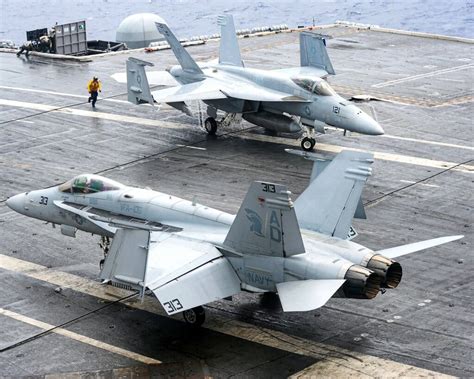
The aircraft’s twin-engine layout provides redundancy and safety, which is crucial for naval aviation. The leading-edge extensions (LEX) improve high-angle-of-attack maneuverability, making it a formidable opponent in dogfights. The Hornet’s short takeoff and landing (STOL) capability enables efficient carrier operations, even on crowded decks.
Advanced Digital Avionics
The F/A-18 was the first fighter to feature a fully digital fly-by-wire system. This advanced system enhances pilot control and stability. Its AN/APG-65 radar (later upgraded to APG-73 and APG-79 AESA radars) enables multi-target tracking and precision engagement, crucial for modern warfare.
Modular Weapons Loadout
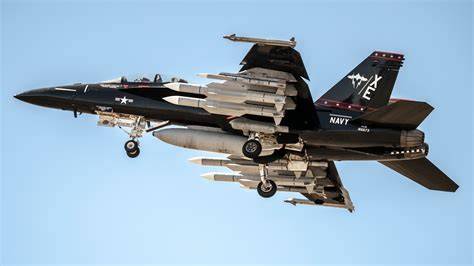
The F/A-18 Hornet features 11 hardpoints, allowing it to carry a diverse payload, including:
- Air-to-air missiles: AIM-9 Sidewinder, AIM-120 AMRAAM
- Air-to-ground munitions: JDAM, JSOW, AGM-65 Maverick
- Electronic warfare pods and reconnaissance systems
This modular approach ensures mission flexibility, from air superiority to close air support and precision strikes.
Evolution and Variants
The F/A-18 family has undergone continuous upgrades, leading to several key variants over the decades.
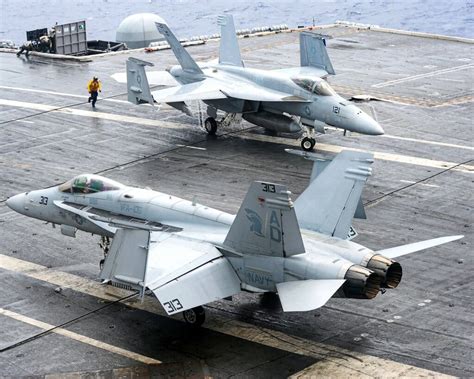
Early Models: F/A-18A/B/C/D
- F/A-18A/B: The initial single-seat (A) and twin-seat (B) versions entered service in the early 1980s.
- F/A-18C/D: Featured improved avionics, better night attack capability, and expanded weapon compatibility.
Super Hornet: F/A-18E/F
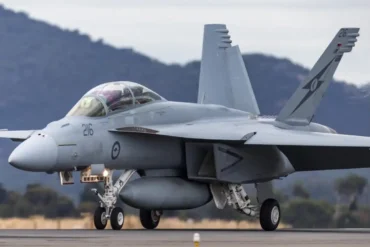
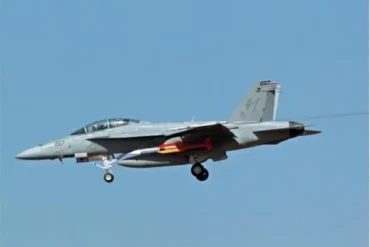
In response to evolving threats, Boeing developed the F/A-18E/F Super Hornet, which first flew in 1995. This variant featured:
- 35% more engine thrust with the F414-GE-400 engines
- Increased range with 33% more internal fuel capacity
- Larger airframe and enhanced survivability
- Network-centric warfare capabilities
Electronic Warfare Specialist: EA-18G Growler
The EA-18G Growler, derived from the Super Hornet, specializes in electronic warfare. It carries AN/ALQ-99 jamming pods to disrupt enemy radar and communications, playing a crucial role in modern electronic combat.
Combat Performance and Strategic Impact
The F/A-18 Hornet has proven itself in multiple conflicts, cementing its reputation as a reliable, versatile warfighter.
Battlefield Success
The aircraft has participated in high-profile conflicts, including:
- Gulf War (1991): Conducted air superiority missions and precision strikes
- Iraq War (2003-2011): Played a vital role in close air support and suppression of enemy air defenses
- Ongoing global deployments supporting NATO and allied forces
Global Adoption
Besides the U.S. Navy and Marine Corps, the F/A-18 has been exported to:
- Canada (CF-18)
- Australia
- Spain
- Switzerland
To date, over 1,500 Hornets and Super Hornets have been built, making them a backbone of Western airpower.

Maintenance and Operational Efficiency
One of the F/A-18’s key advantages is its reliability. It boasts:
- 30-hour mean time between failures, ensuring high availability
- 98% self-test capability, reducing maintenance demands
This makes it an economical yet highly effective platform for extended deployments.
Future Prospects and Technological Upgrades
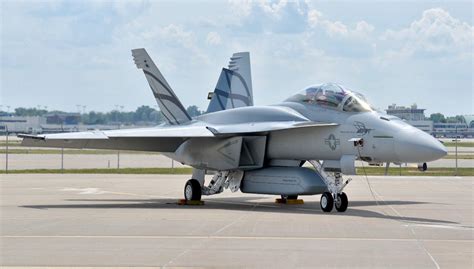
While the F-35C Lightning II is gradually entering service, the F/A-18E/F Super Hornet remains a vital asset. With the Block III upgrade, the Super Hornet will continue to serve well into the 2040s.
Key Block III Enhancements
- Conformal fuel tanks (CFTs) for extended range
- Improved stealth coatings to reduce radar signature
- Enhanced networked warfare capabilities for joint operations
These upgrades will allow it to operate alongside fifth-generation fighters, ensuring continued dominance in naval aviation.
Conclusion
The F/A-18 Hornet’s evolution from the YF-17 to the Super Hornet highlights a remarkable journey of technological innovation and adaptability. Its multirole capability, combat-proven reliability, and continuous upgrades ensure its place as a cornerstone of modern carrier aviation. Even as newer aircraft like the F-35C emerge, the F/A-18’s legacy as a highly capable and versatile fighter remains unchallenged.
FAQ
What makes the F/A-18 Hornet different from the Super Hornet?
The Super Hornet (F/A-18E/F) is a larger, more advanced version of the original Hornet. It features greater fuel capacity, enhanced radar, more powerful engines, and better survivability.
How does the F/A-18 compare to the F-35C?
The F-35C has stealth capabilities and advanced sensor fusion, making it superior in modern threat environments. However, the F/A-18E/F remains a cost-effective, combat-proven multirole fighter with greater payload flexibility.
Will the F/A-18 remain in service?
Yes, the F/A-18E/F Block III Super Hornet will remain operational through the 2040s, working alongside the F-35C to provide a balanced carrier air wing.