A Strategic Carrier from the Indian Ocean
Air Austral, headquartered at Roland Garros Airport in Sainte-Marie, Réunion, stands as a vital connective force between the Indian Ocean islands and mainland France. Since its founding in December 1974, the airline has been more than a regional operator; it has been a bridge across continents. Despite facing intense competition, limited scale, and volatile fuel markets, Air Austral has persisted with resilience and innovation. Today, it operates a fleet of eight modern aircraft and maintains a lean yet capable workforce of approximately 900 employees.
Humble Beginnings: From Réunion Air Services to Air Réunion
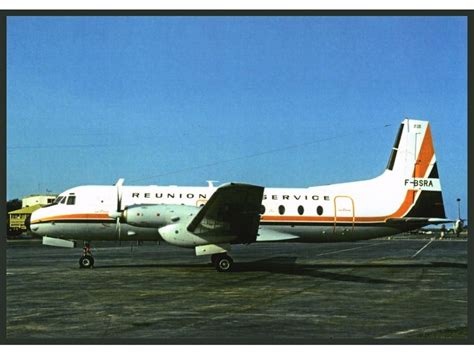
The airline’s journey began as Réunion Air Services (RAS) under the stewardship of Gérard Ethève. By 1977, RAS had initiated operations using a Hawker Siddeley HS 748 turboprop, connecting Réunion with Mayotte — one of its earliest signs of commitment to regional accessibility. The transition to Air Réunion in 1986 marked a significant identity evolution, culminating in Sematra’s acquisition in 1990, signaling the local government’s strong interest in establishing a robust air transport link for Réunion.
Emergence of Air Austral: Ambition Meets Infrastructure
Following its rebranding to Air Austral in November 1990, the airline expanded strategically. Acquiring a Boeing 737-500, followed by 737-300 and 737-300QC aircraft, signified the shift from turboprops to jet propulsion, enabling broader geographic coverage. The turn of the millennium witnessed the integration of ATR 72-500 turboprops, enhancing short-haul regional service.
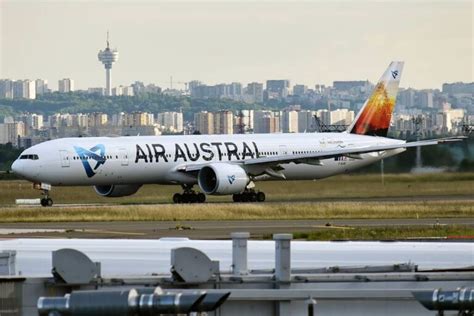
In 2003, Air Austral made a bold leap into long-haul operations with the acquisition of Boeing 777-200ERs, allowing nonstop service to Paris. The strategy was clear: tap into diaspora demand, business travel, and tourism. Within a few years, the airline diversified its French mainland presence by adding Marseille, Lyon, and Toulouse to its network.
A Style Statement and Bold Moves
By 2008, the carrier added a touch of haute couture with Balenciaga-designed uniforms, an effort to align its brand image with French elegance. In tandem, two additional ATR 72-500s bolstered regional capacity. But perhaps the most audacious move came in 2009, when Air Austral linked Paris, Réunion, and Sydney, supported by two new Boeing 777-300ERs.
The airline went even further in November 2009 by placing a firm order for two Airbus A380s, designed to seat 840 passengers in all-economy configuration—a bold but ultimately unsustainable vision for an airline of its size.
Financial Turbulence and Strategic Retrenchment
Despite its ambition, financial headwinds emerged. Mounting fuel costs, coupled with overexpansion and unprofitable long-haul routes to Nouméa, Sydney, Marseille, Bordeaux, Nantes, and Toulouse, resulted in unsustainable losses. In April 2012, founding CEO Gérard Ethève was replaced by Marie-Joseph Malé, tasked with stabilizing the airline’s finances. The Airbus A380s were canceled, and the fleet was optimized.
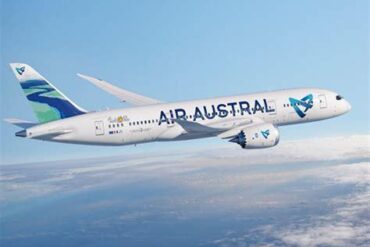
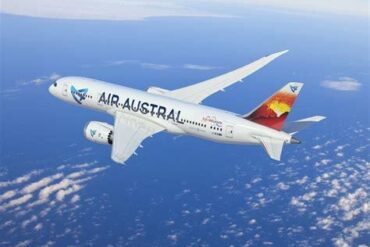
Yet, even amid turbulence, there were forward steps. In 2013, the airline opened direct flights to Chennai, India, with Boeing 737-800s. A strategic fleet refresh began in 2015, marked by orders for two Boeing 787-8 Dreamliners and leases for newer 777-300ERs to replace aging aircraft. The first 787-8 arrived in May 2016, introducing improved fuel efficiency and enhanced passenger comfort.
Regional Consolidation and Strategic Alliances
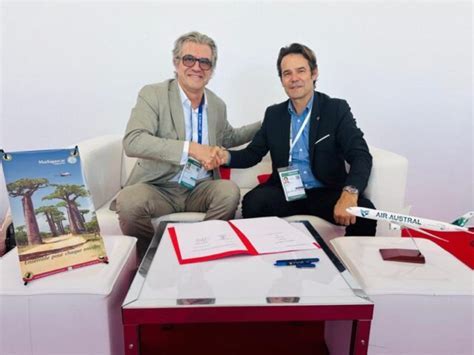
In October 2017, Air Austral acquired a 49% stake in Air Madagascar, positioning itself as a regional aviation influencer. This alliance aimed to create synergies and stabilize both carriers. Kenya Airways joined the strategic arrangement in 2018, enhancing access to East Africa and beyond. However, by late 2019, the venture faced uncertainty as Air Austral missed a critical €25 million equity payment, putting the tri-national alliance at risk.
Fleet Rationalization and Modernization
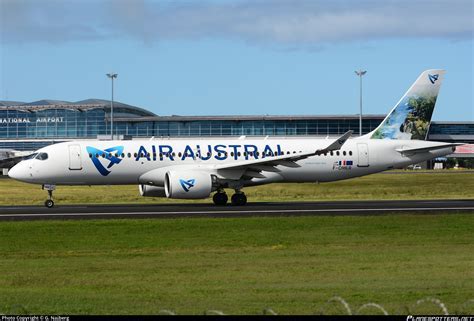
Facing the need to rightsize operations, Air Austral turned toward a fleet modernization strategy. In October 2019, it announced the acquisition of three Airbus A220-300s to replace aging Boeing 737-800s and ATR 72-500s. These fuel-efficient narrowbodies, configured with 132 seats (12 business, 120 economy), were delivered by July 2024, signaling a renewed focus on cost control and sustainability.
The long-haul fleet was reshaped around three Boeing 777-300ERs and two Boeing 787-8s, offering the right balance between capacity, comfort, and economics. The 787-8s, each with 18 business class and 244 economy seats, represent a significant leap in efficiency and passenger appeal.
Destinations and Operational Footprint
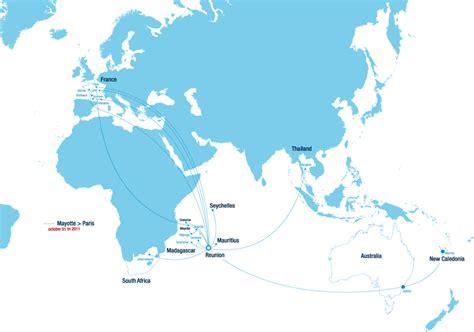
As of October 2022, Air Austral operates an efficient yet targeted route network. Its strength lies in connecting Réunion with mainland France, neighboring Indian Ocean islands, and select long-haul destinations. The airline’s primary hub remains Saint-Denis (RUN), with Saint-Pierre serving as a regional base.
Key destinations include:
- France: Paris (primary hub)
- Africa/Indian Ocean: Mayotte, Mauritius, Seychelles, Comoros, Madagascar (seasonal and permanent)
- Asia: Bangkok (ongoing), Chennai (terminated)
- South Africa: Johannesburg
Terminated services include Sydney, Nouméa, and various French provincial cities—a reflection of the airline’s disciplined pivot toward sustainable operations.
Codeshare and Interline Strategies
To amplify its reach without overextending its fleet, Air Austral relies on strategic codeshare agreements with carriers such as Air France, Kenya Airways, Air Madagascar, and Air India. Interline agreements with Swiss International Air Lines, Thai Airways, and French Bee provide extended global access for passengers originating from Réunion.
These partnerships enable passengers to book seamless journeys while optimizing operational expenditure, a crucial strategy for a boutique international airline.
A Modern Fleet Tailored for Efficiency
Current Fleet (as of July 2024):
- Airbus A220-300 (3 units): 12J / 120Y = 132 seats
- Boeing 777-300ER (3 units): 18J / 40W / 384Y = 442 seats
- Boeing 787-8 (2 units): 18J / 244Y = 262 seats
This current composition allows for flexible deployment, serving high-capacity Paris routes and medium-demand regional services. The A220’s range and efficiency make it ideal for island-hopping and medium-haul continental flights, while the Dreamliners offer a competitive edge on international routes.
The Road Ahead: Cautious Optimism and Regional Strength
Air Austral’s narrative is one of resilience, recalibration, and regional dominance. From its early years as RAS to its ambitious A380 dreams and back to sustainable core operations, the airline has matured into a disciplined carrier with a niche role. Its strategic focus on fleet modernization, route profitability, and smart partnerships underscores a deep understanding of its limitations and potential.
With the volatile aviation industry constantly evolving, Air Austral’s survival and reemergence offers a textbook case in adaptive strategy, especially for small-to-medium carriers navigating a post-pandemic, high-cost, and sustainability-conscious environment.