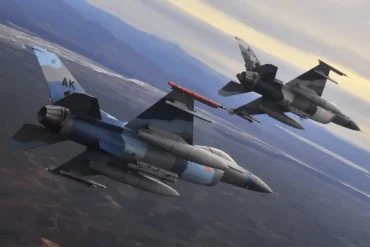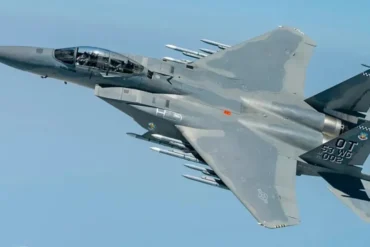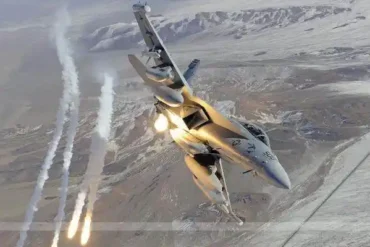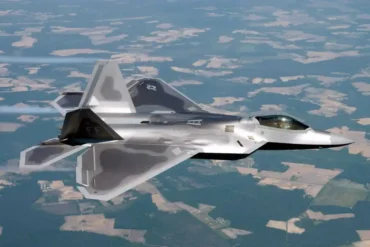
When evaluating the F/A-18 Hornet and the F-16 Fighting Falcon in a dogfight scenario, key aspects such as maneuverability, thrust-to-weight ratio, energy management, and avionics play a significant role. While both aircraft are formidable fourth-generation fighters, their differences in design philosophy, performance, and mission adaptability define their strengths and weaknesses in close-quarters aerial combat.
F-16: Agility and Energy-Based Combat
The F-16 Fighting Falcon, originally designed as a lightweight air superiority fighter, is highly maneuverable, excelling in high-energy engagements. Its high thrust-to-weight ratio (1.3:1) and 9G turn capability give it an advantage in sustained horizontal maneuvering, where it can bleed enemy energy and maintain high-speed engagements.
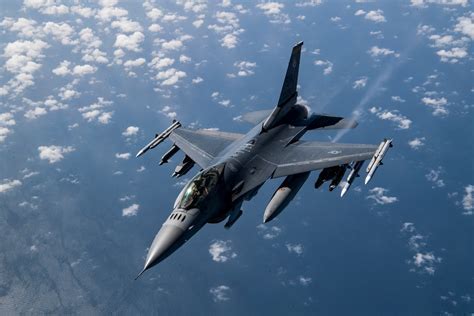
Key Advantages of the F-16 in Dogfights
- Superior Thrust-to-Weight Ratio: The General Electric F110 or Pratt & Whitney F100 engine provides excellent acceleration and climb rates, allowing the F-16 to dictate engagement ranges.
- Instantaneous Turn Rate: The F-16’s small frame and aerodynamics enable it to execute quick snap turns, critical for outmaneuvering an opponent in close-range combat.
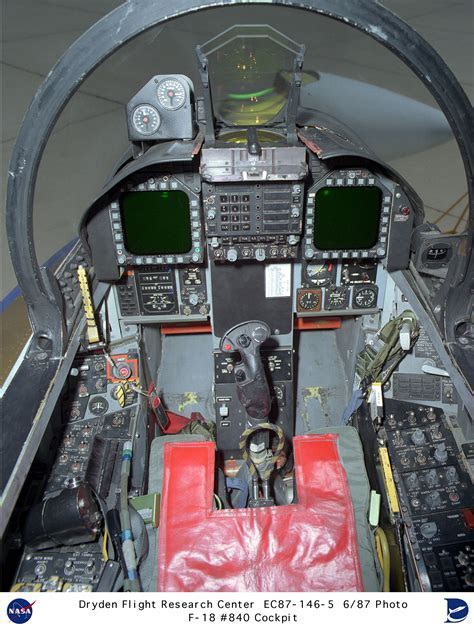
- Side-Stick Control System: The ergonomic cockpit design enhances pilot response time during high-G engagements.
- Bubble Canopy: The F-16 offers superior visibility, allowing the pilot to track an opponent in visual-range combat effectively.
However, despite these strengths, the F-16 has limitations in low-speed engagements, where it struggles to recover energy once lost. Additionally, its single-engine design poses a higher risk in sustained damage scenarios.
F/A-18: High-Angle of Attack and Multi-Role Versatility
The F/A-18 Hornet, including its Super Hornet variant, is a carrier-based multi-role fighter optimized for both air-to-air and strike missions. While it has a lower thrust-to-weight ratio (0.92 with full load) compared to the F-16, its ability to maintain control at high angles of attack (AOA) makes it a dangerous adversary in slow-speed engagements.
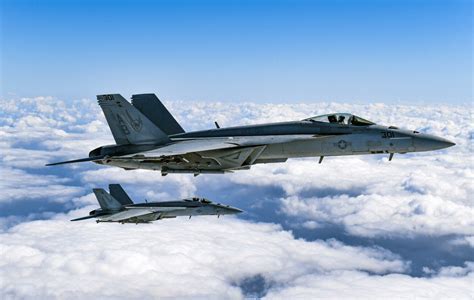
Key Advantages of the F/A-18 in Dogfights
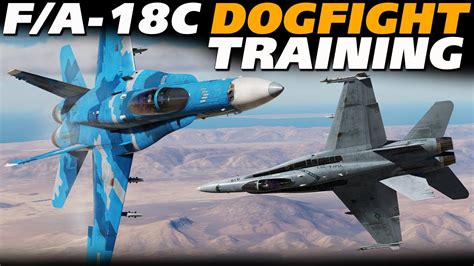
- High Angle-of-Attack (AOA) Capability: The F/A-18 can execute post-stall maneuvers, making it effective in nose-pointing techniques for acquiring and engaging targets.
- Superior Low-Speed Maneuverability: Unlike the F-16, the F/A-18 thrives in low-speed dogfights, allowing it to perform maneuvers such as the pirouette and high-AOA turns.
- Twin-Engine Reliability: The two F414-GE-400 engines provide redundancy, improving survivability in combat.
- Multi-Role Adaptability: The F/A-18 is designed for both air superiority and ground attack, providing enhanced situational awareness through advanced avionics and sensor fusion.
Despite its advantages, the F/A-18 struggles in sustained high-speed engagements due to its lower thrust-to-weight ratio and higher drag profile, making it vulnerable to energy depletion in prolonged fights.
Technical Comparison: F-16C Block 50/52 vs. F/A-18E/F Super Hornet
| Feature | F-16C Block 50/52 | F/A-18E/F Super Hornet |
|---|---|---|
| Max Speed | Mach 2.05 | Mach 1.8 |
| Thrust-to-Weight Ratio | 1.31 | 0.92 (loaded) |
| Combat Radius | 550 km | 740 km |
| Max Takeoff Weight | 19.7 tons | 26 tons |
| Wing Loading | 310 kg/m² | 290 kg/m² |
Real Combat Scenarios and Tactical Applications
When the F-16 Dominates
In scenarios where high-speed energy fights are required, the F-16 thrives due to its ability to retain energy and engage in extended horizontal turns. This is particularly effective in BVR (Beyond Visual Range) fights where missile dodging and speed retention are key.
When the F/A-18 Excels
In low-speed knife fights, the F/A-18 can outmaneuver the F-16 using its high AOA capabilities. This makes it highly effective in WVR (Within Visual Range) combat, where nose authority and slow-speed stability matter most.
AI Simulations and Modern Developments
Recent DARPA AlphaDogfight trials demonstrated that AI-controlled F-16 variants consistently outperformed human pilots in simulated dogfights. However, these simulations do not fully capture real-world tactics, electronic warfare, or human decision-making factors, which play a crucial role in actual combat scenarios.
Conclusion: No Absolute Winner
The outcome of an F-16 vs. F/A-18 dogfight depends on several critical factors:
- Engagement Environment: High-speed fights favor the F-16, while low-speed dogfights favor the F/A-18.
- Pilot Skill Level: A well-trained pilot can exploit an aircraft’s strengths while minimizing its weaknesses.
- Mission Profile: If multi-role adaptability is required, the F/A-18 holds an advantage. If air superiority is the primary goal, the F-16 is more suited for the role.
Both aircraft have proven highly effective in combat, and in an actual fight, victory would ultimately depend on tactics, pilot expertise, and external support elements such as AWACS and electronic warfare systems.
FAQ Section
1. Which aircraft is better for a dogfight, the F-16 or F/A-18?
The F-16 excels in high-speed, energy-based dogfights, while the F/A-18 performs better in low-speed, high-AOA engagements. The winner depends on pilot skill and tactical execution.
2. How does the F/A-18’s twin-engine setup compare to the F-16’s single-engine?
The F/A-18’s twin engines provide better redundancy and survivability in case of combat damage, whereas the F-16’s single engine offers superior power-to-weight ratio and efficiency.
3. Can modern avionics and missiles reduce the importance of dogfights?
Yes, beyond-visual-range (BVR) combat and advanced missile technology have reduced the frequency of dogfights, but within-visual-range (WVR) combat remains relevant, especially in scenarios with electronic warfare and stealth considerations.
The F-16 and F/A-18 remain two of the most respected fourth-generation fighters, each excelling in different combat conditions, ensuring their continued relevance in modern air combat strategies.