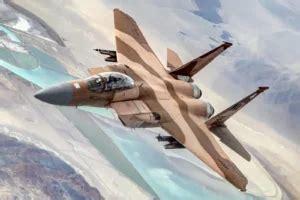
The F-15 Eagle remains one of the most formidable and capable fighter jets ever produced. Designed primarily for air superiority, the F-15 has a long-standing reputation for unmatched speed, maneuverability, and combat effectiveness. One of the critical performance metrics that define the F-15’s operational efficiency is its cruise speed. Understanding the F-15 Eagle’s cruise speed is essential for evaluating its strategic capabilities, including fuel efficiency, mission endurance, and response time.
Overview of the F-15 Eagle’s Cruise Speed
The F-15 Eagle achieves a cruise speed of approximately 570 mph (around 917 km/h or Mach 0.86) when flying at high altitude without engaging afterburners. This cruise speed is carefully calibrated to balance fuel consumption and performance, allowing the aircraft to sustain long-duration missions without compromising its readiness for combat engagement.
Cruising at Mach 0.86 ensures that the F-15 maintains an optimal balance between speed and fuel efficiency. High cruise speeds allow the F-15 to quickly cover large distances, enabling rapid response and extended patrol capability. The ability to cruise efficiently at such speeds provides strategic advantages during both defensive and offensive operations.
High-Altitude Efficiency
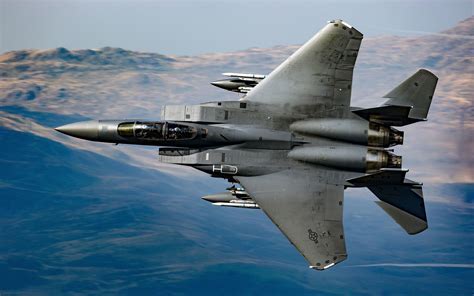
The F-15 Eagle’s cruise speed is most effective when the aircraft is operating at high altitudes, typically around 36,000 feet (11,000 meters) or higher. At these altitudes, the air density is lower, reducing aerodynamic drag and allowing the F-15 to maintain high speeds with less engine strain.
High-altitude cruising not only enhances fuel efficiency but also improves the aircraft’s radar range and missile effectiveness. Lower air resistance allows for more stable flight characteristics, which is crucial during long-range patrols or strategic repositioning.
Variants and Their Impact on Cruise Speed
The F-15 Eagle has several notable variants, each tailored to specific mission profiles. Despite their distinct roles, the cruise speeds of these variants remain closely aligned:
F-15C Eagle – Air Superiority Fighter
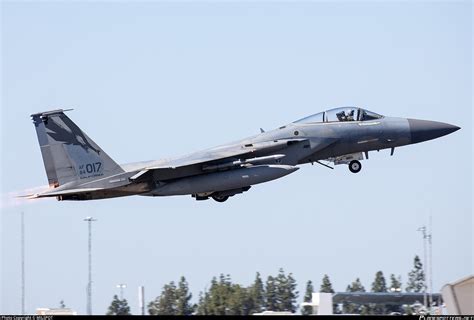
The F-15C is designed primarily for air superiority missions. Its lightweight design and optimized aerodynamics allow it to maintain a high cruise speed while preserving fuel efficiency. The absence of additional strike payloads enhances the F-15C’s ability to sustain consistent cruise speeds.
F-15E Strike Eagle – Multirole Strike Fighter
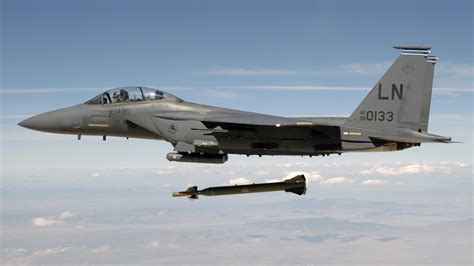
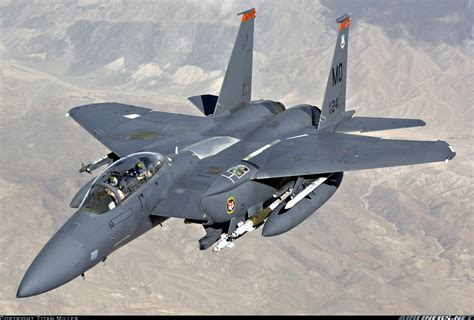
The F-15E Strike Eagle incorporates additional avionics, reinforced airframe components, and ground-attack capabilities. While the added payload increases overall weight and aerodynamic drag, the F-15E retains a cruise speed similar to the F-15C due to its twin Pratt & Whitney F100-PW-229 engines.
Cruise Speed vs. Maximum Speed
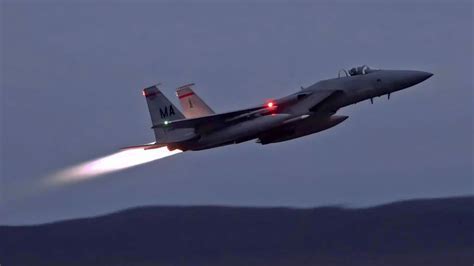
While the F-15’s cruise speed is impressive, its maximum speed capability highlights its extraordinary design and engineering. The F-15 can reach speeds exceeding Mach 2.5 (approximately 1,875 mph or 3,017 km/h) when engaging afterburners. However, such speeds are unsustainable for extended periods due to excessive fuel consumption and increased wear on the engines.
Cruise speed is the more practical measure for sustained operational capability. Cruising at Mach 0.86 allows the F-15 to maximize mission range while maintaining readiness for rapid acceleration and combat engagement. The distinction between cruise speed and maximum speed underlines the F-15’s strategic flexibility in both defensive and offensive scenarios.
Impact of External Factors on Cruise Speed
External Stores and Weapon Payload
The F-15’s cruise speed can be influenced by the type and configuration of external stores. Air-to-air missiles, drop tanks, and electronic countermeasure pods increase drag and weight, reducing the effective cruise speed. However, the F-15’s powerful twin engines compensate for this added load, ensuring that performance degradation remains minimal.
Weather Conditions
Atmospheric conditions such as wind speed, temperature, and air pressure also impact the F-15’s cruising efficiency. Tailwinds can increase the effective ground speed, while headwinds and turbulence may require adjustments in throttle settings to maintain optimal cruise performance.
Operational Requirements
Mission-specific requirements often dictate adjustments to cruise speed. During intercept missions, the F-15 may cruise at higher speeds to close distance rapidly. Conversely, during reconnaissance or long-range patrol missions, fuel efficiency becomes a higher priority, leading to reduced throttle settings and optimized flight profiles.
Strategic Importance of Cruise Speed
The F-15 Eagle’s cruise speed provides several operational advantages:
- Rapid Deployment – The ability to cruise at high speeds allows the F-15 to cover large distances quickly, enabling faster response to threats.
- Extended Patrols – Efficient fuel consumption at cruise speed maximizes the duration of patrol missions, increasing airspace coverage and readiness.
- Flexibility in Engagement – Maintaining high cruise speeds ensures that the F-15 can quickly transition to combat speeds when necessary.

Comparison with Other Fighter Aircraft
The F-15 Eagle’s cruise speed is competitive with other modern fighter aircraft:
- F-22 Raptor – The F-22 has a supercruise capability at approximately Mach 1.8, allowing it to sustain supersonic speeds without afterburners.
- Su-27 Flanker – The Su-27’s cruise speed is slightly lower than the F-15, at around Mach 0.8.
- Eurofighter Typhoon – The Typhoon matches the F-15 in terms of cruise speed, capable of maintaining speeds around Mach 0.9.
While the F-22’s supercruise capability provides a tactical edge, the F-15’s balance of speed, range, and payload capacity ensures it remains a versatile and effective platform for a wide range of mission profiles.
Future Developments and Enhancements
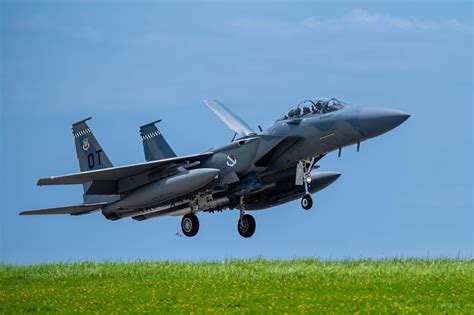
Modern upgrades to the F-15 platform, including the F-15EX Eagle II, are expected to enhance cruise performance further. Improved avionics, increased thrust-to-weight ratios, and reduced radar cross-sections will enable the F-15 to maintain high cruise speeds with greater fuel efficiency.
Additionally, enhanced engine technologies and composite materials will reduce weight and improve aerodynamic performance, contributing to sustained high-speed operation. These advancements will solidify the F-15’s position as a premier air dominance platform well into the future.
FAQs
1. What is the F-15 Eagle’s typical cruising altitude?
The F-15 typically cruises at around 36,000 feet (11,000 meters) to maximize fuel efficiency and minimize aerodynamic drag.
2. How does the F-15’s cruise speed compare to commercial airliners?
Most commercial airliners cruise at approximately Mach 0.8 (around 560 mph). The F-15’s cruise speed of Mach 0.86 gives it a slight edge in speed over commercial aircraft.
3. Why is cruise speed important for combat aircraft?
Cruise speed affects a fighter’s ability to respond to threats, cover large areas, and sustain long-duration missions. High cruise speeds enable rapid reaction times and increased operational flexibility.
The F-15 Eagle’s cruise speed reflects its exceptional balance of speed, efficiency, and combat readiness. Its ability to sustain high speeds without afterburners underscores its value as a fast-response air superiority platform, ensuring dominance in modern and future aerial combat scenarios.