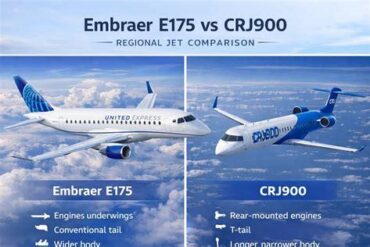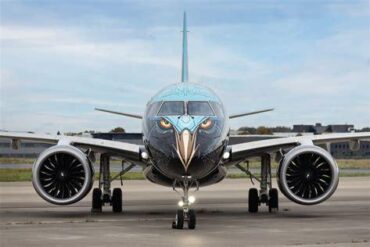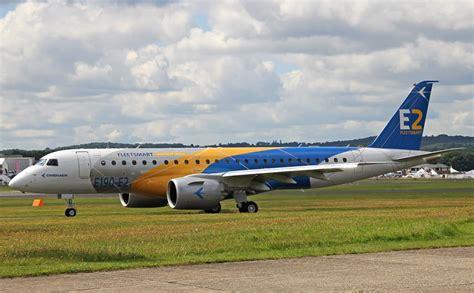
The Embraer E-Jet E2 family represents a transformative step in the evolution of regional aviation. As the successor to the original E-Jet series, the E2 program reimagines what regional jets can achieve in fuel efficiency, environmental responsibility, and passenger comfort. Comprising the E175-E2, E190-E2, and E195-E2, the family incorporates significant aerodynamic, mechanical, and digital enhancements while retaining the successful fuselage cross-section of its predecessor. With upgraded avionics, Pratt & Whitney PW1000G geared turbofan engines, and a newly designed high-aspect-ratio wing, the E2 jets are purpose-built for operators seeking high performance and lower operating costs.
Embraer’s decision to refine its existing platform rather than design a clean-sheet competitor came in direct response to developments like the Airbus A320neo and Boeing 737 MAX. This calculated move allowed Embraer to expedite time to market, leveraging proven design philosophies while maximizing innovation where it mattered most. The result is a trio of aircraft that not only retain Embraer’s hallmark agility but also deliver double-digit gains in fuel efficiency, noise reduction, and maintenance intervals.
Advanced Engineering Behind the E2 Evolution
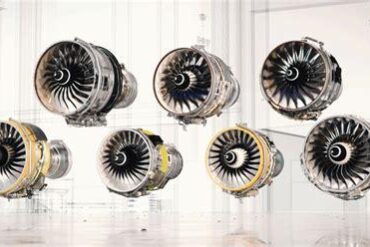
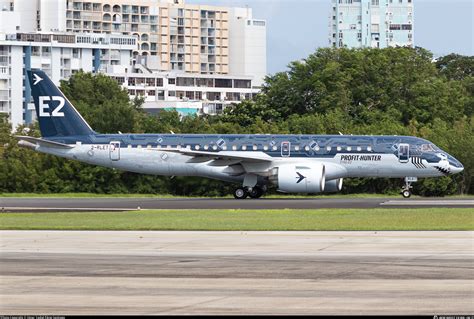
At the heart of the E2’s performance upgrades is the adoption of PW1000G engines, which alone account for up to 11% of the aircraft’s 17.3% fuel efficiency improvement. These geared turbofans enable higher bypass ratios and quieter operations while maintaining robust thrust performance. The engines are elegantly integrated into a new gull-wing configuration, whose refined aerodynamics contribute an additional 4.8% in fuel burn savings. Further gains come from a more compact tail structure, shaving off another 1.5%.
The wings themselves are a feat of modern engineering. Featuring raked wingtips, single-slotted flaps, and aluminum-composite construction, the wings significantly improve lift-to-drag ratio, enabling longer ranges and better performance in hot-and-high conditions. The wing’s expanded area accommodates the large 2.01-meter fan diameter of the PW1000G engines, enhancing engine integration and weight distribution.
To support these hardware upgrades, Embraer implemented closed-loop fly-by-wire controls. Unlike conventional open-loop systems, the E2’s architecture constantly monitors and adjusts control surface positions in real-time, offering a smoother flight experience while reducing pilot workload and fuel usage.
Cabin Redesign: Function Meets Passenger Delight
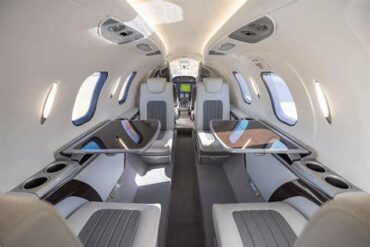
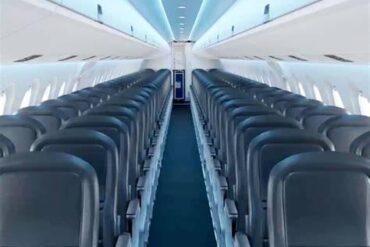
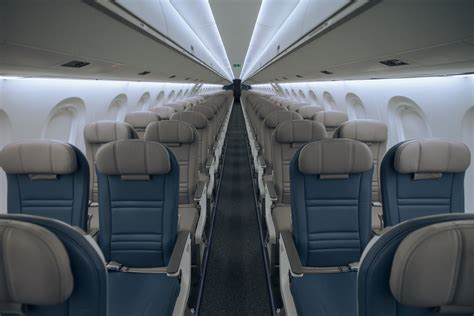
Step inside an E2 jet, and the transformation is equally impressive. Drawing on feedback from thousands of flights in the original E-Jet series, Embraer has completely reimagined the cabin. The E2 series features modular interiors designed by EZ Air, including thinner sidewalls for increased elbow space, expanded overhead bins that accommodate larger carry-ons, and full-spectrum LED lighting to adjust cabin mood and visibility across different flight phases.
Seating remains four-abreast with no middle seats, a configuration popular among regional travelers. However, greater attention has been paid to seat pitch, aisle width, and quietness, owing in part to the ultra-quiet geared turbofan engines. These design considerations result in one of the quietest and most comfortable cabins in the regional market.
Rigorous Development and Flight Testing Program
Embraer unveiled the E2 program at the Paris Air Show in June 2013, setting the stage for a decade-long development initiative. The E190-E2 was the first to fly, rolling out in February 2016 and achieving its maiden flight on 23 May 2016. The aircraft received certification from ANAC, EASA, and the FAA on 28 February 2018 and entered revenue service with Widerøe on 24 April 2018.
Following close behind, the E195-E2 took flight on 29 March 2017, earning certification by April 2019. Its larger frame and extended range positioned it well for Azul Brazilian Airlines, which became the launch operator. With seating for up to 146 passengers, the E195-E2 is the most capacious E-Jet to date.
The smallest of the trio, the E175-E2, flew for the first time on 12 December 2019. However, regulatory limitations in the United States—specifically, scope clause restrictions regarding maximum take-off weight—have delayed its entry into service. Deliveries are now deferred to 2027, pending scope clause revisions.
Production Efficiency Meets Quality Control
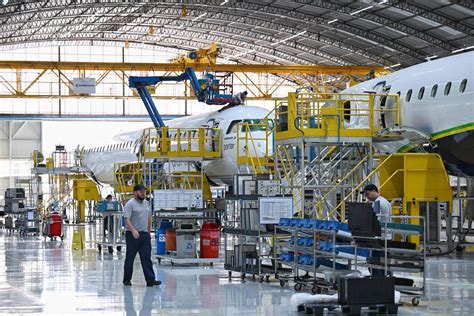
Embraer’s production model blends precision with lean methodology. By consolidating both the E1 and E2 production lines in São José dos Campos, Brazil, the company reduced logistical overhead and improved throughput. Adoption of Toyota Production System principles enabled Embraer to target an output of eight aircraft per month by the end of 2018.
This operational excellence was validated early in the E2’s service life. Widerøe’s E190-E2 aircraft, for example, achieved an average of 6.6 flight cycles per day and maintained a dispatch reliability rate of 99.35% in its first months of service. Furthermore, by March 2024, all E2 variants had received ETOPS-120 certification, enabling operations on longer transoceanic and transcontinental routes.
A Closer Look at the Joint Venture That Wasn’t
In July 2018, Embraer and Boeing announced plans for an 80/20 joint venture designed to elevate the E2 program’s global reach. Approved by Embraer’s shareholders in February 2019, the deal promised new synergies in sales, marketing, and global support. However, in a surprise move in April 2020, Boeing terminated the agreement.
This decision sparked a legal dispute between the two aerospace giants, with Embraer alleging breach of contractual commitments and citing significant lost orders as a result of the failed partnership. Although the joint venture never materialized, Embraer maintained its independence and reaffirmed its commitment to the E2 program, with renewed emphasis on international partnerships and fleet expansion.
Operational Impact and Growing Global Adoption
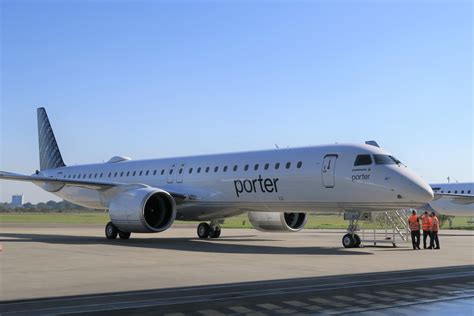
The Embraer E2 family has been adopted by a diverse range of carriers seeking efficient, right-sized aircraft for regional missions. As of February 2025, a total of 155 E2 aircraft are in active service across 17 operators. Porter Airlines leads with a fleet of 44 E195-E2s, followed by Azul Brazilian Airlines with 32 and KLM Cityhopper operating 22. Other key customers include Helvetic Airways, Air Astana, Binter Canarias, and Air Kiribati.
The E2 jets have proven their value not only in traditional regional markets but also in thin long-haul routes where larger narrowbodies would be uneconomical. Their optimized size, range flexibility (up to 3,000 nautical miles), and low fuel burn make them uniquely positioned to serve secondary cities and underserved markets, opening new revenue opportunities for airlines.
Fleet Performance and Maintenance Innovations
Beyond passenger experience and range flexibility, the E2 family introduces meaningful gains in aircraft longevity and maintenance economics. Routine maintenance intervals have been extended, with A-checks spaced at 1,000 flight hours and C-checks at 10,000 hours. This extension significantly lowers downtime and costs for operators.
Additionally, avionics upgrades via Honeywell’s Primus Epic 2 suite have reduced pilot training times and enabled faster diagnostics and data-driven maintenance cycles. Flight crews benefit from larger displays, intuitive interface layouts, and enhanced situational awareness. Combined with real-time health monitoring systems, these innovations ensure high dispatch reliability and lower lifecycle costs.
Conclusion: A New Benchmark in Regional Jet Performance
The Embraer E-Jet E2 family sets a new standard in regional aviation. It combines operational efficiency, environmental responsibility, and premium passenger experience in a single platform tailored to the realities of today’s air travel market. Through its innovative propulsion systems, advanced aerodynamics, and smart cabin designs, the E2 is not merely an update to a previous model—it is a statement about the future of regional air transport.
Whether operating in the icy fjords of Norway, the steppes of Kazakhstan, or the island routes of the Caribbean, the E2 jets are proving daily that performance and profitability are no longer mutually exclusive. With growing adoption and a strong backlog of 196 aircraft yet to be delivered, Embraer’s E2 program is poised to maintain its momentum well into the next decade.