Angola’s Bestfly is rapidly positioning itself as a pivotal player in Africa’s aviation landscape with the recent acquisition of a second Embraer E-Jet, the Embraer 175. This strategic move signals the company’s transition from a primarily rotary-wing and executive-aviation operator to a growing regional jet services provider, increasingly active in key energy and logistics corridors on the African continent.
Strategic Expansion Beyond Angola’s Borders
Though headquartered in Angola, Bestfly is now aggressively pursuing expansion beyond its home base, responding to the growing demand for flexible regional jet operations in Central and West Africa. The newly added Embraer 175, a small narrowbody jet known for its short-field performance and efficient regional operations, will be based in the Republic of Congo’s Pointe Noire, the economic nerve center of the country’s oil and gas industry.
The Pointe Noire hub is not a random selection—it is the epicenter of Congo’s petroleum activity, hosting the country’s sole refinery and numerous offshore energy platforms. It is also a critical location for TotalEnergies and ENI Congo, the two major European oil giants that are now collaborating with Bestfly in a uniquely structured operations agreement.
Oil Majors Drive Aircraft Selection and Mission Focus
According to Bestfly CEO Nuno Pereira, the choice of the Embraer 175 was made explicitly by TotalEnergies (France) and ENI’s Congo subsidiary (Italy), who are the primary beneficiaries of the aircraft’s deployment. Rather than a traditional leasing arrangement, this is a management agreement, with Bestfly providing operational support, crew, and aviation logistics.
“It will be used for crew changes, charter flights, and additional logistical movements required by our oil sector partners,” Pereira stated. However, he added that when the aircraft is not in use by the oil majors, it would be available for regional charters and interline cooperation, suggesting a versatile use model adapted to Africa’s dynamic air transport needs.
This tailored mission profile underlines how Bestfly is leveraging oil-industry contracts to expand its fixed-wing operations—a practice increasingly common among niche operators servicing resource-rich but infrastructure-scarce regions.
A Diversified but Targeted Fleet Strategy
Although Bestfly’s fleet currently comprises 32 aircraft, the overwhelming majority are helicopters and executive jets—ideal for VIP transport, offshore oil rig support, and inter-regional travel. The acquisition of a second E-Jet marks a deliberate and highly strategic diversification toward regional passenger transport and ACMI (Aircraft, Crew, Maintenance, and Insurance) services.
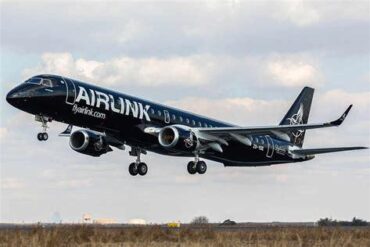
The company already operates an Embraer 190, its first foray into narrowbody jet operations. Unlike the new 175, however, the 190 is not fixed to a single base or client. “It supports the ACMI market across Africa, moving as needed,” said Pereira, suggesting a tactical focus on floating fleet logistics to address short-term contract opportunities in high-demand zones.

This model allows Bestfly to combine agility with long-term revenue security—the 175 offers predictable, contract-based utility while the 190 acts as a flexible revenue-generating asset.
Pointe Noire: A Gateway for Growth
Positioning the Embraer 175 in Pointe Noire is more than a logistical necessity; it is a strategic foothold in one of Africa’s most critical energy and transport corridors. Pointe Noire is not only central to Congo’s petroleum exports but also connected by maritime and air routes to Gabon, Angola, Nigeria, and other key regional economies.
The presence of Bestfly in this location aligns with a broader strategy of establishing strongholds in economically strategic yet under-served regions. It enables access to recurring energy-sector missions while also laying the groundwork for broader inter-African connectivity, especially in zones where larger carriers are absent or inconsistent.
Broader Horizons: Aruba and Dubai Connections
Although Bestfly remains Angola-based, its ambitions clearly extend beyond the African mainland. The company has also signaled ongoing aviation activities in Aruba and Dubai, markets that suggest a dual-track growth strategy—Africa for volume and contract stability, and Middle East-Caribbean for premium, niche operations.

The Dubai angle is especially compelling, as it opens the door to potential intercontinental ACMI contracts and cooperation with global logistics players who require reliable African connections. Meanwhile, Aruba serves as a regulatory and operational base for more executive-style aviation and offshore wealth management clientele, aligning with Bestfly’s deep experience in business aviation.
Why the Embraer 175 Is the Right Fit
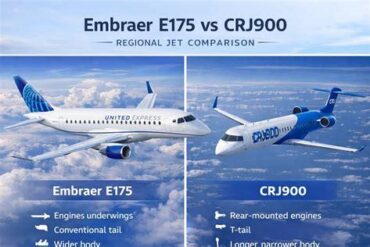
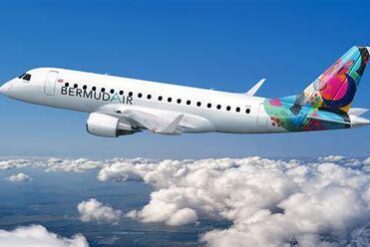
From an operational standpoint, the Embraer 175 presents an ideal compromise between capacity, economics, and runway flexibility. It seats approximately 76 to 88 passengers, making it well-suited for point-to-point missions in secondary cities and resource extraction hubs. Unlike larger jets, the E175 performs excellently on shorter, less-developed runways, which are still common throughout much of sub-Saharan Africa.
Additionally, the jet’s fuel efficiency and low turnaround time make it a cost-effective solution for frequent, medium-haul missions, such as crew transfers and regional shuttle flights. The choice of this aircraft by Total and ENI underscores the importance of reliability, speed, and accessibility in aviation contracts linked to the petroleum sector.
The Future of Regional Aviation in Africa
Bestfly’s move comes amid a broader redefinition of regional air travel in Africa, where traditional flag carriers have struggled to maintain consistent services in the face of economic volatility and underdeveloped infrastructure. Smaller, agile operators like Bestfly are increasingly filling the gap by providing custom-tailored services for corporate clients, governments, and specialized industries.
In this context, Bestfly is carving out a role as an aviation logistics integrator, capable of supporting everything from executive travel to crew rotation schedules, without being tied to rigid route networks or consumer-facing service obligations. This allows the company to maintain high asset utilization while delivering targeted value to each customer segment.

Conclusion: A Calculated Step Toward Continental Leadership
The acquisition of a second Embraer jet may appear modest in the context of global aviation, but for Africa’s air transport matrix, it is a signal of evolving sophistication. Bestfly’s approach blends aircraft management, contractual agility, and market specialization, offering a blueprint for how regional operators can thrive in Africa’s fragmented aviation ecosystem.
By anchoring its newest E-Jet in Pointe Noire under high-value oil industry contracts and maintaining a broader operational network that spans Africa, the Caribbean, and the Middle East, Bestfly is positioning itself not just as a regional carrier—but as a continental enabler of movement, commerce, and strategic connectivity.
The path ahead may still be shaped by regulatory challenges, market access issues, and infrastructure constraints, but with a fleet growing in precision and purpose, Bestfly seems prepared to navigate the turbulence and emerge as a standard-bearer for the next generation of African aviation operators.