Breaking the Mold in Business Aviation
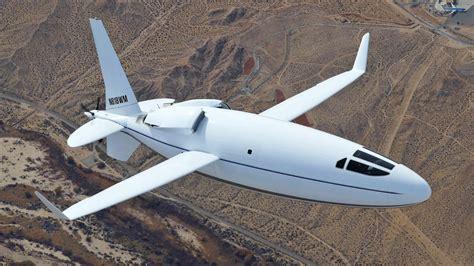
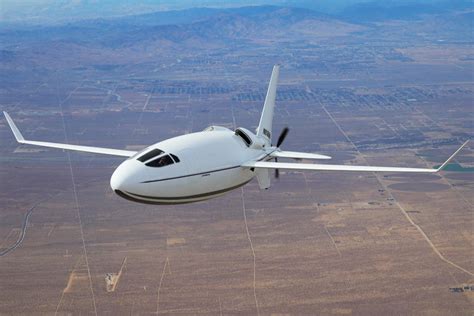
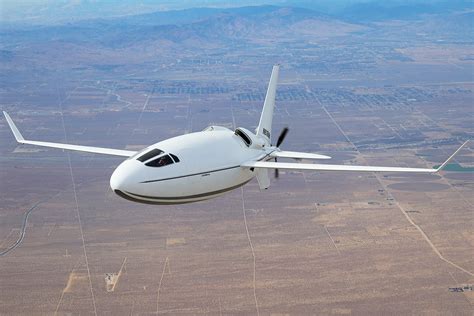
The Celera 500L by Otto Aviation represents one of the most radical redesigns of business-class aircraft in recent decades. Where most private planes follow a legacy of incremental improvements, the Celera 500L introduces a wholly new aerodynamic philosophy rooted in laminar flow optimization. This aircraft’s egg-shaped fuselage and extended glider-like wings are not just stylistic choices—they are the key to its transformative performance metrics.
From the dry deserts of Victorville, California, where seasoned aviation experts have seen generations of aircraft take flight, the Celera 500L has emerged as a striking anomaly. Flight tests have not only confirmed its cruise stability at 250 mph, but also projected its full potential to soar at 460 mph at 50,000 feet with an astounding range of 4,500 nautical miles.
Laminar Flow: The Heart of the Revolution
At the core of the Celera 500L’s design lies a commitment to maximizing laminar flow across every surface of the aircraft. This design principle allows air to pass over the fuselage and wings in smooth, uninterrupted layers, drastically reducing drag. Where turbulent flow generates significant resistance and fuel burn, the laminar flow around the Celera allows for up to 80% lower drag compared to traditional business jets.
The elongated fuselage—akin to a finely crafted bullet—ensures airflow remains orderly from nose to tail. Combined with a 52-foot high-aspect-ratio wing, the aircraft achieves glide ratios comparable to modern sailplanes. The result is a business aircraft that not only sips fuel but does so while maintaining comfort and pressurization at high altitudes.
Interior Volume Meets Aerodynamic Intelligence
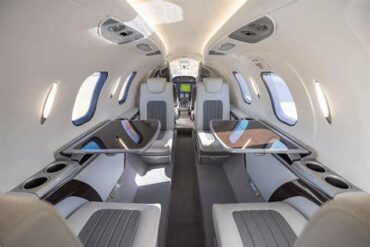
Unlike many aerodynamic experiments that sacrifice internal space for external performance, the Celera 500L delivers both. The cabin offers a full six-passenger capacity with a generous six-foot-two-inch ceiling, enabling passengers to stand and move comfortably. The interior dimensions rival those of established turboprop competitors, yet with less fuel consumption and greater speed.

This feat is made possible through intelligent use of composite construction, allowing lightweight strength without compromising shape integrity. The result is an airframe that supports both structural demands and laminar flow efficiency.
A Radical Engine with Proven Performance
At the rear of the Celera 500L sits a V-12 RED A03 diesel engine, a far cry from traditional turbofan or turboprop engines in this class. This liquid-cooled, twin-turbocharged diesel powerplant is designed for low specific fuel consumption, especially at high altitudes. It allows the aircraft to cruise efficiently using Jet-A fuel, widely available and economically advantageous.
The engine choice directly supports the Celera’s fuel economy, which is projected to outperform models like the Pilatus PC-12 and Beechcraft King Air by a wide margin. According to Otto Aviation, the per-mile operating cost could be as low as one-sixth that of comparable aircraft, drastically altering the economics of private air travel.
A Journey from Vision to Flight
The road to the Celera 500L’s flight tests began not in the design studios of legacy aerospace firms, but in the workshop of Bill Otto, a man with no formal background in aeronautical engineering. His outsider perspective, however, became the project’s greatest strength. Instead of following existing paradigms, Otto asked a different question: What must be done to maximize laminar flow, from scratch?
Starting with a 1/10th scale wind tunnel model, followed by larger remote-controlled prototypes, Otto’s team advanced the project methodically. The leap to a full-scale aircraft was achieved entirely in-house by a small, elite engineering team. Each component—from the landing gear to the pressurization system—was crafted with laser-focused precision, ensuring no compromise in aerodynamic performance.
Flight-Tested by an Astronaut
One of the most compelling elements of the Celera 500L’s development has been the direct involvement of Bjarni Tryggvason, a former astronaut and seasoned test pilot. His contributions extend beyond merely flying the aircraft—he brought a level of scientific rigor and experimental precision that elevated each test cycle.
With chase planes monitoring performance metrics, Tryggvason demonstrated the Celera’s ability to maintain stable cruise characteristics, efficient climbs, and consistent fuel usage patterns. These flight tests have helped validate Otto Aviation’s core premise: that radical design can yield practical, superior outcomes.
Certification and the Road Ahead
Despite its promising results, the Celera 500L faces significant certification challenges. The FAA certification process is notoriously complex, and innovations like rear-mounted diesel engines and non-standard fuselage shapes can introduce regulatory hurdles. Yet Otto Aviation remains committed to working closely with aviation authorities to address each concern.
Future iterations of the Celera will include enhanced cooling systems, increased altitude capabilities, and further aerodynamic refinements. Long-term ambitions hint at hybrid-electric propulsion options and expanded aircraft variants for cargo and medevac roles.
Transforming Aviation Economics
Should it reach production and certification, the Celera 500L could trigger a sea change in aviation operating economics. The aircraft is designed not only for private owners but also for charter operators, air taxi services, and regional carriers looking to cut fuel and maintenance costs dramatically.
Compared to conventional turboprops:
-
Operating cost per hour: Reduced by up to 85%
-
Fuel burn per nautical mile: Lowered by approximately 70%
-
Maintenance intervals: Extended due to diesel engine reliability
These figures point toward a new class of sustainable, efficient, and scalable aviation—one that doesn’t compromise on performance or safety.
Summary: Innovation Meets Execution
In a world where private aviation is often viewed as environmentally unsustainable or financially inefficient, the Celera 500L is a bold rebuttal. By leveraging fluid dynamics, composite materials, and alternative powerplants, Otto Aviation has created a blueprint for what business aircraft could become.
While skepticism remains—understandably so in an industry driven by certification standards and tradition—the data, test results, and flight logs tell a compelling story. The Celera 500L is not a theoretical exercise but a flying prototype with real-world performance metrics, paving the way for a smarter, leaner, and more futuristic aviation model.
Frequently Asked Questions
What makes the Celera 500L different from other private aircraft?
The Celera 500L utilizes a laminar flow design that drastically reduces aerodynamic drag, resulting in better fuel efficiency, longer range, and faster cruising speeds compared to traditional aircraft like the Pilatus PC-12 or Beechcraft King Air.
Is the Celera 500L certified for commercial or private use?
As of now, the Celera 500L is in the testing and development phase and has not yet received FAA certification. Otto Aviation is working toward meeting regulatory requirements for both private and commercial operations.
What kind of engine powers the Celera 500L?
The aircraft is powered by a RED A03 V-12 diesel engine, which uses Jet-A fuel and is optimized for low fuel consumption at high altitudes. This engine is key to the Celera’s exceptional fuel economy and long-range performance.