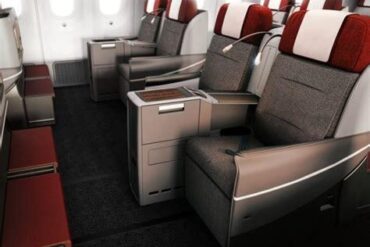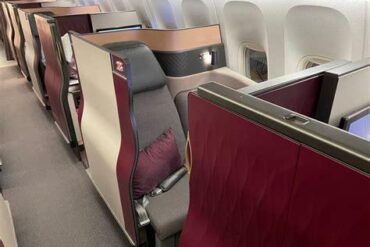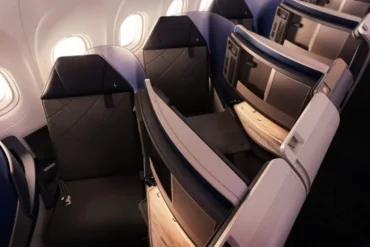
For many travelers, booking a business class ticket feels like purchasing certainty. The fare is dramatically higher than economy, the promises are more luxurious, and the expectation is simple: a spacious seat, priority treatment, and a guaranteed premium experience. Yet every year, travelers paying thousands of dollars for business class discover something surprising at the gate — airlines sometimes sell more premium seats than actually exist on the aircraft.
That revelation often sparks outrage. Passengers understandably wonder how an airline can legally sell a seat twice, particularly in a cabin marketed as exclusive and high-end. The reality is more complicated than most people realize. Airlines deliberately oversell flights across virtually every cabin class, including first and business class, because the economics of aviation practically demand it.
The practice is not an operational mistake. It is a calculated business strategy backed by decades of statistical modeling, government regulation, and revenue optimization systems that analyze passenger behavior in extraordinary detail. While most overbooking situations resolve quietly because some passengers fail to appear, there are moments when every traveler checks in on time. When that happens, someone loses their seat.
The uncomfortable truth is that even premium travelers are not fully protected.
Airlines know this. Regulators know this. Frequent flyers know this. But many occasional travelers do not realize how common business class overbooking has become until they experience an involuntary downgrade themselves.
The issue gained renewed public attention after several high-profile airline downgrade incidents went viral online, including complaints involving American Airlines, British Airways, and other global carriers. Social media transformed what was once an obscure airline practice into a broader debate about fairness, passenger rights, and how far airlines should go in pursuit of maximum profitability.
The answer begins with understanding why overselling exists in the first place.
Why Airlines Deliberately Oversell Business Class
Airlines operate within one of the harshest economic environments in modern business. Aircraft are incredibly expensive assets, fuel costs fluctuate constantly, airport fees are enormous, and profit margins are often surprisingly thin. Every empty seat represents revenue that disappears forever the moment the aircraft door closes.
Unlike hotel rooms or rental cars, airline seats cannot be sold again tomorrow. A vacant business class seat on a transatlantic flight may represent several thousand dollars in lost income that can never be recovered. Because of this, airlines aggressively attempt to ensure every flight departs as full as possible.
Historical passenger data reveals something crucial: not everyone who books a flight actually boards it.
Passengers miss connections. Corporate travelers cancel meetings. People oversleep. Weather disrupts itineraries. Some travelers simply decide not to travel at all. Across the industry, no-show rates can reach double-digit percentages on certain routes.
This predictable uncertainty created the foundation for airline overbooking systems.
Modern airlines use advanced revenue management software capable of analyzing millions of booking patterns. These systems evaluate routes, seasons, passenger profiles, cancellation histories, departure times, and even day-of-week travel trends to determine how many extra seats can safely be sold beyond physical aircraft capacity.
The process is astonishingly precise. A Monday morning business route between New York and Chicago may receive a different oversell threshold than a Saturday leisure flight to Cancun. Early morning departures often have higher no-show probabilities than afternoon flights. Corporate-heavy routes frequently experience last-minute cancellations because business plans change constantly.
Airlines do not simply guess. They calculate probabilities using years of behavioral data.
Business class becomes especially attractive for overselling because the financial stakes are much higher. A single premium seat may generate the same revenue as four or five economy passengers combined. Even one empty business class seat can significantly reduce profitability on long-haul international services.
From the airline’s perspective, allowing premium seats to depart empty is financially wasteful when statistics suggest some booked passengers probably will not appear.
Most of the time, the gamble works.
Why Business Class Passengers Are Still Vulnerable
Many travelers assume that paying a premium fare automatically shields them from operational disruptions like downgrades or denied boarding. Airlines certainly prioritize premium customers more carefully, but business class passengers are far from immune.
The vulnerability exists because airlines prioritize revenue hierarchy rather than emotional expectations.
A business class ticket does not always carry equal value to the airline. One traveler may have purchased a fully flexible $9,000 fare at the last minute, while another secured a discounted business seat during a promotional sale for a fraction of that price. Another passenger may have upgraded using miles or loyalty points instead of cash.
From the airline’s perspective, these customers represent different levels of commercial importance.
Frequent flyer status also dramatically affects protection levels. Elite travelers who consistently spend large amounts with an airline are less likely to be downgraded because airlines fear damaging long-term customer loyalty. A top-tier executive traveler flying weekly is economically more valuable than an occasional leisure passenger, even if both occupy the same cabin.
Check-in timing matters too.
Passengers who check in late sometimes unknowingly place themselves at greater risk during oversold situations. Airlines often finalize seating priorities closer to departure, meaning travelers who checked in exactly when online check-in opened may enjoy stronger positioning than those arriving shortly before boarding.
Even operational disruptions unrelated to overselling can trigger involuntary downgrades. Aircraft substitutions occasionally replace larger planes with smaller ones containing fewer premium seats. Broken business class seats may suddenly become unusable. Crew rest requirements sometimes force airlines to reserve premium seats for pilots or flight attendants repositioning between assignments.
In these moments, confirmed reservations can unravel quickly.
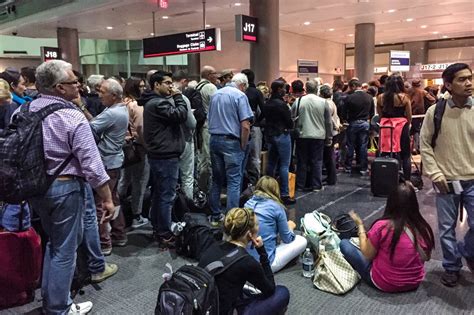
How Airlines Decide Who Gets Downgraded
Passengers often describe downgrades as random, but airlines generally follow internal prioritization systems designed to minimize both financial damage and customer backlash.
The first step almost always involves seeking volunteers.
Gate agents may offer travel vouchers, cash compensation, upgrades on future flights, hotel accommodations, or alternative routings to passengers willing to surrender their premium seats voluntarily. On heavily oversold flights, compensation can become remarkably generous.
There have been documented cases where airlines offered thousands of dollars to encourage volunteers. Delta Air Lines famously offered passengers up to $10,000 during one severe oversell situation. While extreme examples are rare, they illustrate how costly involuntary removals can become for airlines both financially and reputationally.
If voluntary solutions fail, airlines begin identifying passengers for forced downgrades.
Travelers most vulnerable typically include:
- Passengers holding discounted business fares
- Customers upgraded with points or miles
- Travelers without elite status
- Late check-ins
- Third-party booking customers
- Non-flexible fare holders
Airlines rarely publish their exact downgrade formulas because these systems are commercially sensitive. However, industry insiders consistently confirm that loyalty status and fare class heavily influence decisions.
Interestingly, airlines often try harder to avoid removing business travelers on corporate contracts because those agreements generate consistent long-term revenue. Leisure travelers usually possess less negotiating leverage.
Public relations concerns also influence decisions. Airlines understand that downgrading celebrities, influencers, or highly visible business executives can create viral social media disasters capable of damaging brand perception globally within hours.
As a result, some downgrade decisions involve more strategic calculation than passengers realize.
The Legal Reality Behind Airline Overbooking
What surprises many travelers most is that airline overbooking is entirely legal in most countries.
Regulators including the US Department of Transportation and the European Union recognize overselling as a standard airline industry practice. Authorities generally permit overbooking because it improves operational efficiency and helps airlines maintain lower overall ticket prices by maximizing aircraft utilization.
The law focuses less on preventing overbooking and more on defining passenger compensation when disruptions occur.
In the United States, airlines must first seek volunteers before involuntarily denying boarding. If passengers are bumped entirely from a flight, compensation rules become relatively strict depending on delay length and ticket cost.
Downgrades, however, receive weaker protection under US law.
American regulations generally require airlines to refund the fare difference between the class purchased and the class actually flown. The challenge lies in determining that difference fairly because airline pricing fluctuates dynamically.
An airline may attempt to calculate compensation using complicated fare structures that significantly reduce refund amounts. Passengers unaware of their rights sometimes accept travel vouchers worth far less than appropriate cash compensation.
Europe provides substantially stronger protections.
Under EU261 regulations, passengers downgraded involuntarily may receive compensation ranging from 30% to 75% of the ticket price depending on flight distance. Long-haul international business class downgrades can therefore result in enormous payouts.
One widely discussed case involved a British Airways passenger downgraded from business class between London and Los Angeles who reportedly received approximately $7,500 in compensation from a $10,000 ticket.
That level of protection creates much stronger financial incentives for European airlines to avoid involuntary downgrades whenever possible.
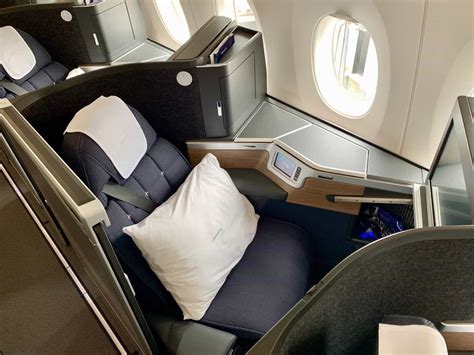
Why Overselling Often Benefits Airlines More Than Passengers
Airlines defend overbooking by arguing that it keeps flights fuller, improves efficiency, and helps maintain competitive pricing. There is some truth to this argument. Without overselling, airlines would likely build higher no-show losses into ticket prices.
Yet critics argue the system disproportionately shifts risk onto passengers.
Travelers purchasing expensive business class tickets often believe they are buying certainty alongside comfort. When airlines knowingly sell more premium seats than available, critics view the practice as prioritizing revenue over trust.
The frustration becomes particularly intense because airlines aggressively market exclusivity in premium cabins. Business class advertising focuses heavily on guaranteed luxury experiences, priority treatment, and superior reliability. Passengers paying premium fares reasonably assume those promises include seat security.
Instead, even confirmed reservations can become negotiable when operational pressures emerge.
Some consumer advocates argue airlines should disclose oversell probabilities more transparently during booking. Others believe premium cabins should face stricter oversell limitations given their high ticket prices and luxury positioning.
Airlines resist such changes because overbooking remains enormously profitable.
From a purely mathematical perspective, overselling works extraordinarily well. Most passengers never encounter problems because the statistical models are usually accurate. Airlines collect additional revenue while avoiding widespread disruption.
The small percentage of affected travelers effectively become the cost of maintaining the system.
What Travelers Should Do After a Business Class Downgrade
Passengers facing involuntary downgrades often make the mistake of accepting immediate airline offers without fully understanding their rights.
The first priority should be documenting everything carefully.
Travelers should retain boarding passes, booking confirmations, receipts, written notices, and any communication exchanged with airline staff. Photographs of airport displays or seat assignments can also become useful evidence later during compensation disputes.
Passengers should immediately ask whether alternative flights with confirmed business class availability exist. Sometimes agents can reroute travelers through different hubs or later departures that preserve the original cabin experience.
If compensation discussions begin, travelers should request cash refunds whenever legally available rather than automatically accepting airline vouchers or loyalty miles.
Vouchers frequently contain restrictions, expiration dates, or blackout periods reducing their actual value.
Passengers traveling under EU jurisdiction should specifically reference EU261 rights if applicable. In the United States, travelers should insist airlines explain precisely how downgrade compensation calculations were determined.
Persistence matters.
Many airlines initially offer minimal compensation hoping passengers will accept quick resolutions. Travelers who escalate politely but firmly often receive better outcomes, particularly when they demonstrate knowledge of regulatory protections.
Frequent flyers also recommend contacting customer relations departments after travel concludes rather than relying solely on airport negotiations. Post-flight compensation teams sometimes possess greater authority to approve meaningful reimbursements or goodwill gestures.
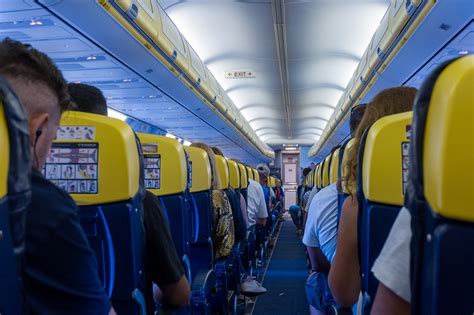
The Future Of Business Class Overbooking
Business class overselling is unlikely to disappear because the economics remain overwhelmingly favorable for airlines. Advanced artificial intelligence and predictive analytics may actually increase overbooking sophistication in coming years, allowing airlines to forecast passenger behavior with even greater accuracy.
At the same time, public awareness is growing.
Social media has fundamentally changed how airline disruptions unfold. A single involuntary downgrade can now generate millions of online impressions within hours, creating reputational consequences far beyond the affected passenger alone.
That visibility pressures airlines to handle oversold premium cabins more carefully than in previous decades.
Some carriers are already experimenting with more personalized compensation offers, predictive rebooking systems, and proactive disruption management designed to reduce customer anger before conflicts escalate publicly.
Still, travelers should understand one important reality: a confirmed business class ticket does not represent an absolute guarantee.
It represents a contractual agreement within an airline system built around probabilities, optimization algorithms, and commercial calculations. Most of the time, the system functions invisibly. But when every passenger shows up, airlines must suddenly decide whose premium experience survives intact.
And sometimes, even the most expensive seat onboard is not as secure as passengers believe.