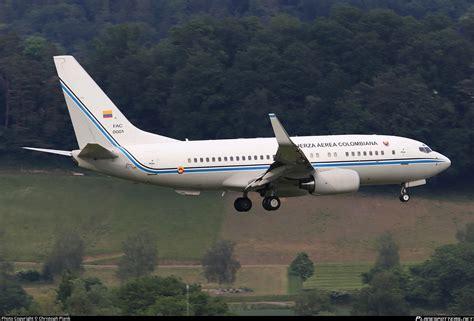
The Colombian Air Force One, officially designated FAC-0001, stands as a formidable symbol of national sovereignty, statecraft, and aviation excellence. Operating as the principal aircraft for the President of Colombia, it is a Boeing 737-700 configured as a Boeing Business Jet (BBJ)—a custom-designed aircraft tailored for governmental command, global diplomacy, and elite security.
From humble beginnings in early 20th-century aviation to the modern sophistication of today’s presidential fleet, Colombia’s commitment to airborne executive transport has evolved through decades of technological milestones and strategic acquisitions.
A Legacy of Airborne Command: From Junkers to Jetliners
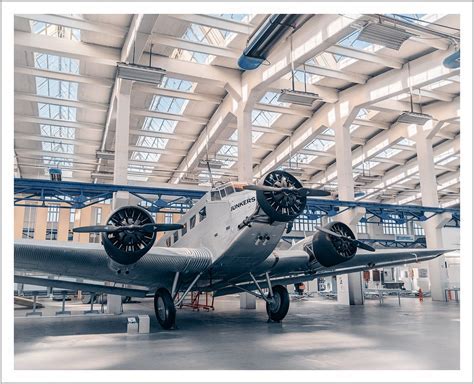
The history of presidential air travel in Colombia began during the tenure of President Pedro Nel Ospina, who embarked on the first official aerial mission in 1922. A significant evolution occurred in 1933 when the Junkers Ju-52/3mge, bearing the registration FAC 625, entered service. Built in Germany, this tri-motor aircraft could accommodate three crew members and twenty passengers. It became the presidential workhorse for leaders like Enrique Olaya Herrera, Alfonso López Pumarejo, Eduardo Santos, and Mariano Ospina Pérez, serving until 1950.
As aviation developed, so did Colombia’s presidential fleet. The Douglas C-47 Skytrain (FAC 660) and the Lockheed C-60 Lodestar (FAC 654) were used in parallel. A milestone occurred in 1954 with the acquisition of the Douglas C-54 Skymaster (FAC 613), later renumbered as FAC 690, serving five presidents before its retirement in 1971.
Fokker F-28: The Workhorse of the Democratic Era
February 19, 1971, marked the arrival of the Fokker F-28, a Dutch-built jet that remained pivotal to Colombian presidential aviation for over three decades. The aircraft was used by leaders from Misael Pastrana Borrero to Álvaro Uribe Vélez. Its versatility extended beyond political functions; in 1986, it famously transported Pope John Paul II across Colombian cities. To honor the occasion, the pontifical coat of arms was painted beside the national insignia.
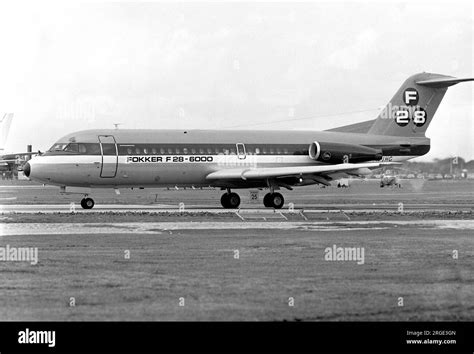
The F-28 survived a near-tragic episode in 2005 when the FARC attempted to target it during a landing approach in Neiva. The plot was thwarted just minutes before the president’s arrival, underlining the critical security challenges surrounding presidential aviation.
Today, the aircraft is registered as FAC 0002 and is reserved for vice-presidential duties and high-ranking officials.
Boeing 707 ‘Zeus’: Crossing Oceans with Colombian Authority
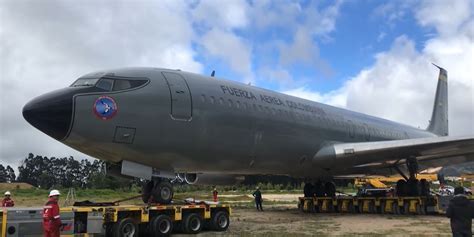
With the increasing need for long-range travel, the Boeing 707, known as ‘Zeus’ (FAC 1201), was inducted in 1983 to handle transatlantic and international missions. It replaced the Fokker for such journeys due to the latter’s limited autonomy. Presidents Betancur, Barco, Gaviria, Samper, Pastrana, and Uribe used this aircraft extensively.
Zeus allowed Colombian diplomacy to gain a modern, global presence, connecting Bogotá to capitals across Europe, Asia, and the Americas. The 707 served reliably until it was replaced by a more modern model in the 2010s and was subsequently retired to the Colombian Aerospace Museum.
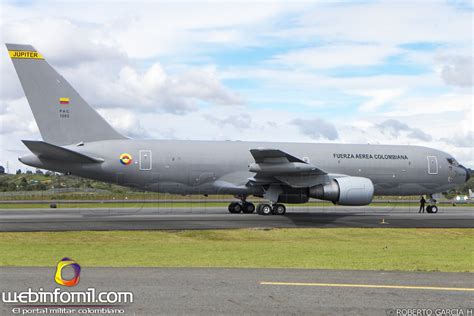
Boeing KC-767 ‘Jupiter’: Multipurpose Powerhouse of the Skies
Introduced under President Juan Manuel Santos in 2013, the KC-767 ‘Jupiter’ (FAC 1202) redefined the scope of Colombian presidential airlift. Not merely a VIP jet, this aircraft has multi-role capabilities—capable of carrying up to 210 passengers, performing aerial refueling, and serving in strategic cargo and humanitarian missions.
Jupiter was a $40 million investment that paid dividends not only in diplomacy but also in disaster response. In 2020, during the COVID-19 pandemic, it flew to China to repatriate Colombian nationals. It also supported President Santos’s journey to Oslo, where he received the Nobel Peace Prize, and transported President Iván Duque Márquez to the COP26 Summit in Glasgow.
The Arrival of FAC-0001: Boeing Business Jet for Presidential Precision
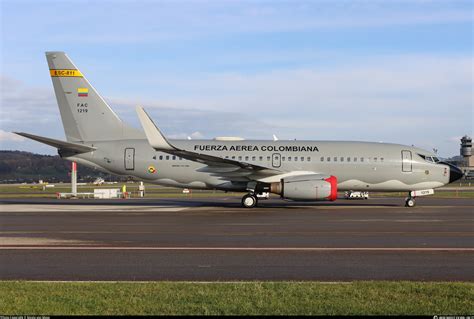
The transition to a dedicated Boeing Business Jet stemmed from the aging condition of the Fokker F-28. In 2002, the Colombian Air Force initiated an exhaustive review of global aerospace solutions. After evaluating aircraft from Canada, Brazil, France, the United States, and the European Airbus consortium, the choice came down to the Boeing BBJ and the Airbus A319 ACJ.
Ultimately, Colombia selected the Boeing BBJ—a modified 737-700—due to its reliability, availability, and favorable terms. The aircraft had originally been built in 1999 for a Middle Eastern sheikh, who never took delivery. With only 22 flight hours, it was essentially brand new. The total cost was approximately $40 million, including $29 million for the aircraft itself and the remainder allocated to luxury configuration and secure communications systems.
Specifications and Features of FAC-0001
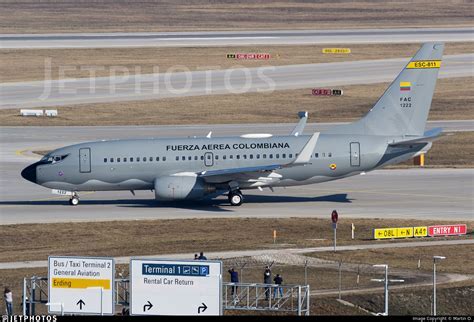
The FAC-0001 is no ordinary Boeing 737. As a BBJ variant, it includes state-of-the-art avionics, encrypted communication systems, a conference suite, private quarters, and advanced defensive countermeasures. The interior layout supports presidential briefings, long-range missions, and in-flight command during crises.
Technical Highlights:
- Model: Boeing 737-700 BBJ
- Engines: Two CFM56-7B27 high-bypass turbofans
- Range: Approx. 6,000 nautical miles (with auxiliary tanks)
- Passengers: Configured for 25–50 VIPs in executive layout
- Top Speed: Mach 0.82 (544 knots)
- Defense Systems: Infrared countermeasures, radar jamming, secure data links
The aircraft is operated by elite crews of the Colombian Air Force (FAC) and is subject to constant upgrades to maintain its technological superiority.
Strategic and Diplomatic Role in Modern Colombia
FAC-0001 has served the administrations of Álvaro Uribe, Juan Manuel Santos, Iván Duque, and Gustavo Petro. Under each leader, it has been a flying embassy, helping position Colombia at the global diplomatic table. Whether attending United Nations summits, bilateral state visits, or urgent humanitarian interventions, the aircraft has extended Colombia’s reach far beyond its borders.
Beyond prestige, this platform offers real-time connectivity and command capabilities that allow the President to manage state affairs in transit. As such, it embodies not just a tool of transportation but a critical asset in national governance and geopolitical strategy.
Public Controversies and Operational Challenges
Like many high-cost government assets, FAC-0001 has not been without scrutiny. Debates have emerged regarding its maintenance costs, necessity during fiscal austerity, and potential misuse. However, defenders argue that a secure and independent presidential aircraft is essential in a country marked by both internal conflict and external diplomatic commitments.
In recent years, technical downtimes have drawn media attention. In 2022, the aircraft underwent prolonged repairs, leading to temporary substitutions and increased reliance on Jupiter (FAC 1202). Nevertheless, the Air Force has reiterated that these overhauls are part of standard aviation protocols.
Conclusion: Symbol of a Nation in Flight
The Colombian Air Force One, with its storied legacy, is more than a luxury aircraft. It is an emblem of institutional continuity, modern leadership, and the evolving identity of a nation rising on the global stage. From early 20th-century propellers to today’s jet-powered diplomacy, each aircraft has reflected a chapter in Colombia’s complex history.
FAC-0001 continues that narrative, not just by transporting presidents but by projecting Colombian sovereignty through the skies. Whether combating crises, sealing international accords, or representing the tricolor flag abroad, this aircraft remains a powerful, moving icon of the Republic of Colombia.