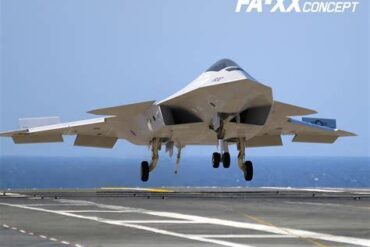
Military aviation remains one of the most expensive and technologically demanding components of modern defense strategy. Nations that maintain powerful air forces must invest billions annually in aircraft development, pilot training, advanced weapons, satellite integration, and maintenance infrastructure. The size of an air force is not determined solely by the number of aircraft it operates; rather, its strength lies in the scale of its funding, the sophistication of its technology, and the strategic reach it can project across continents.
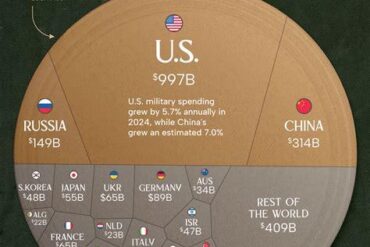
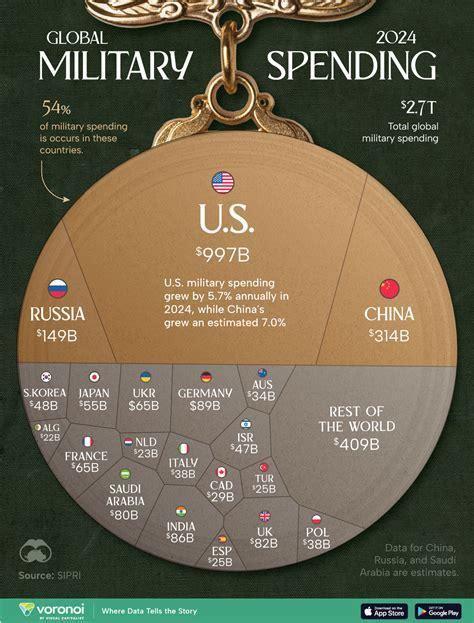
Recent global defense expenditure studies reveal a striking concentration of military spending among a handful of nations. According to international research reported to the Stockholm International Peace Research Institute (SIPRI) in 2025, the five largest military spenders together account for roughly 60% of all defense spending worldwide. These countries—the United States, China, Russia, Germany, and India—also operate some of the most capable and well-funded air forces on Earth.
However, the relationship between budget size and aircraft inventory is far from straightforward. Some countries maintain enormous fleets but operate older platforms, while others invest heavily in smaller but technologically superior forces. As a result, the rankings for defense spending, fleet size, fighter inventory, and strategic capabilities often differ significantly.
This comprehensive analysis explores the world’s largest air forces by annual defense budget, examining how each nation allocates resources across fighters, bombers, helicopters, and transport aircraft. The comparison reveals not only which countries spend the most—but also how their investments translate into real airpower.
1. United States: The Undisputed Leader in Air Power Spending
No nation comes close to matching the United States’ dominance in military aviation funding. With a staggering $997 billion defense budget in 2024, the United States alone accounts for approximately 37% of total global military spending.
This extraordinary level of investment supports an unparalleled aviation ecosystem spanning multiple branches of the armed forces:
- United States Air Force (USAF)
- United States Navy aviation
- United States Marine Corps aviation
- United States Army aviation
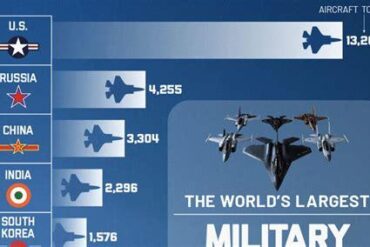
Together, these organizations operate a combined fleet of roughly 14,486 military aircraft, making the United States the largest airpower operator in human history.
The US Air Force alone received the largest share of the Pentagon budget in 2025, even surpassing the Army in certain spending categories. This allocation reflects Washington’s strategic doctrine that air superiority is essential for global military dominance.
Fighter Aircraft Superiority
One of the most defining characteristics of American airpower is the sheer number of advanced fighters in service. The United States maintains approximately 2,358 fighter aircraft, more than any other country.
Among them are several of the most sophisticated combat aircraft ever produced:
- F-35 Lightning II
- F-22 Raptor
- F-15EX Eagle II
- F-16 Fighting Falcon
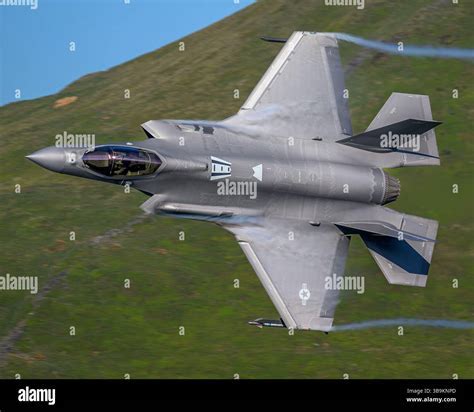
The Lockheed Martin F-35 Lightning II, produced through the legendary Skunk Works development division, represents the first stealth fighter program manufactured at true large-scale industrial levels. Thousands of these fifth-generation jets are expected to serve across American and allied forces for decades.
Strategic Bombing Capability
The United States also fields the most technologically advanced strategic bomber fleet in existence. Although China currently operates more bombers numerically, American bombers deliver unmatched stealth and payload capabilities.
Key platforms include:
- B-52 Stratofortress
- B-1B Lancer
- B-2 Spirit stealth bomber
The Northrop Grumman B-2 Spirit stands out as one of the most valuable assets in the U.S. military arsenal. Only 19 aircraft exist, but each possesses the ability to penetrate heavily defended airspace using stealth technology and deliver precision nuclear or conventional payloads.
The upcoming B-21 Raider will further cement American dominance in strategic aviation.
Helicopter and Airlift Dominance
American supremacy extends well beyond fighter jets and bombers. The U.S. military operates an enormous rotary-wing fleet of over 5,500 helicopters, led by the renowned AH-64 Apache attack helicopter and UH-60 Black Hawk utility helicopter.
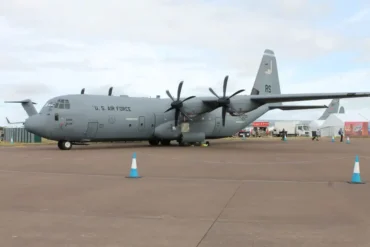
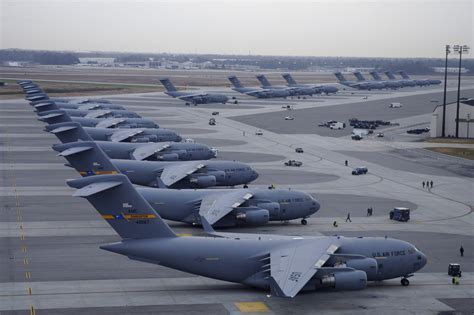
Equally important is the country’s unmatched global airlift capability. The Air Force operates more than 1,020 transport aircraft, including the gigantic Lockheed C-5 Galaxy and Boeing C-17 Globemaster III, allowing rapid deployment of troops and equipment anywhere on Earth.
In short, the United States possesses not only the largest air force budget, but also the most comprehensive aviation ecosystem ever assembled.
2. China: Rapid Modernization of the People’s Liberation Army Air Force
China has emerged as the second-largest military spender in the world, with a $314 billion defense budget fueling massive modernization programs across all branches of the armed forces.
The People’s Liberation Army Air Force (PLAAF) now operates approximately 4,392 aircraft, placing it among the largest aviation forces globally. Unlike previous decades, when China relied heavily on imported or copied aircraft designs, the country is now rapidly transitioning to domestically developed platforms.
Stealth Fighter Development
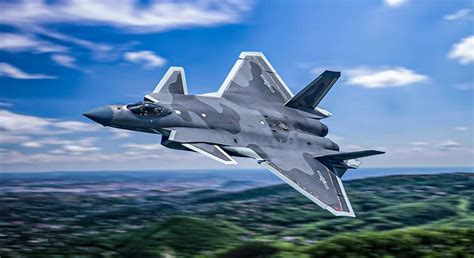
China’s most ambitious aviation project is the Chengdu J-20 “Mighty Dragon”, a fifth-generation stealth fighter designed to rival American aircraft such as the F-22 and F-35.
Production of the J-20 has accelerated dramatically. Analysts estimate that more than 200 aircraft have already been produced, and the number continues to grow as new manufacturing lines expand output.
Alongside the J-20, the PLAAF also operates:
- J-11 multirole fighter
- J-16 strike fighter
- JF-17 Thunder lightweight fighter
Many of these aircraft originated from Russian Sukhoi designs, particularly the Su-27, but China has progressively integrated indigenous avionics, radar systems, and weapons.
Bomber Expansion
China currently operates the largest bomber fleet in the world, with approximately 209 aircraft. Most are variants of the Xian H-6, a jet-powered bomber derived from the Soviet Tu-16 design.
However, the most intriguing development involves China’s rumored next-generation stealth bomber, often referred to as the H-20. Although not officially unveiled, leaked images suggest the aircraft may resemble a flying-wing configuration similar to the American B-2.
Strategic Focus
China’s aviation spending focuses heavily on three key objectives:
- Stealth aircraft development
- Uncrewed aerial systems
- Long-range strike capabilities
This strategy reflects Beijing’s goal of expanding its influence across the Indo-Pacific region, where airpower plays a central role in maritime security and territorial defense.
3. Russia: Legacy Strength Facing Modern Challenges
Russia ranks as the third-largest air force spender, with a defense budget of roughly $149 billion. Despite economic challenges and international sanctions, the country maintains one of the world’s largest aviation fleets at approximately 4,211 aircraft.
Historically, the Russian Aerospace Forces (VKS) inherited the massive aviation infrastructure of the Soviet Union. Many aircraft still in service today were originally designed during the Cold War.
Fighter Inventory
Russia currently operates around 1,008 fighter aircraft, including several highly capable designs:
- Su-35 multirole fighter
- Su-30SM fighter
- MiG-31 interceptor
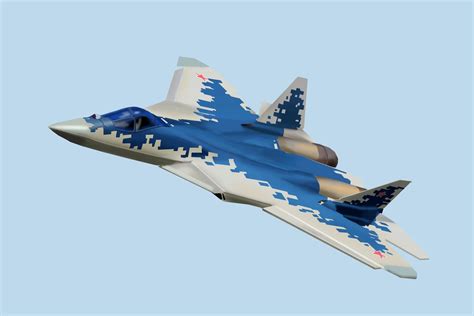
The nation’s flagship fifth-generation aircraft is the Sukhoi Su-57 Felon. However, production has been slow, and analysts estimate only a few dozen aircraft have been built so far.
Sanctions imposed on Russia have significantly impacted its aerospace industry. Many high-tech components previously imported from Western countries are no longer available, complicating efforts to expand production of advanced fighters.
Strategic Bomber Fleet
Russia remains one of only three countries capable of operating intercontinental strategic bombers. Its fleet includes:
- Tu-160 Blackjack supersonic bomber
- Tu-95 Bear turboprop bomber
- Tu-22M Backfire strike bomber
While these aircraft provide impressive payload and range capabilities, many designs date back decades and require extensive modernization.
Helicopter Strength
Russia also maintains the second-largest helicopter fleet in the world, with roughly 1,551 aircraft. Well-known models include the Mil Mi-24 Hind, Mi-28 Havoc, and Kamov Ka-52 Hokum attack helicopters.
Despite their formidable reputation, many of these platforms have undergone relatively few upgrades in recent decades compared with Western counterparts.
4. Germany: Europe’s Rapidly Expanding Air Defense Budget
Germany ranks fourth among global air force spenders with an $88.5 billion defense budget, representing a dramatic 28% increase in 2024.
This surge in spending followed Russia’s invasion of Ukraine, which prompted Berlin to modernize its armed forces and strengthen NATO’s eastern defenses.
Although Germany operates a comparatively small fleet of 745 aircraft, its emphasis lies on high-quality NATO-compatible platforms.
Fighter Fleet
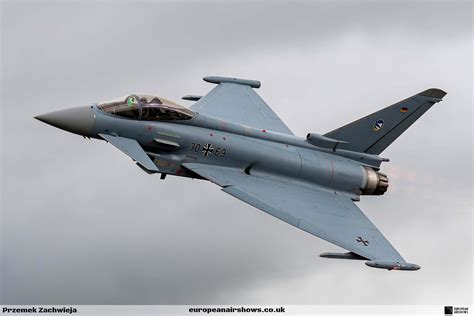
Germany’s fighter force currently consists of approximately 211 aircraft, dominated by the Eurofighter Typhoon, one of Europe’s most advanced multirole fighters.
The country has also ordered 35 F-35 stealth fighters from the United States. These aircraft will replace the aging Panavia Tornado, which has served in German airspace since the 1980s.
Future Combat Development
Germany is heavily involved in the ambitious Future Combat Air System (FCAS) project alongside France and Spain. The program aims to develop a sixth-generation fighter aircraft supported by drones and advanced networked combat systems.
Although political disagreements occasionally slow progress, FCAS remains one of Europe’s most important defense initiatives.
Maritime Patrol and Support Aircraft
Germany also operates advanced maritime surveillance aircraft, including the Boeing P-8A Poseidon, which enhances NATO’s anti-submarine warfare capabilities in the North Atlantic.
5. India: Expanding Airpower Through Domestic and Foreign Technology
India rounds out the top five with an $86.1 billion defense budget and an air fleet of approximately 2,296 aircraft.
Unlike many other major powers, India’s air force features a unique mixture of Western, Russian, and domestically developed aircraft.
Fighter Fleet Diversity
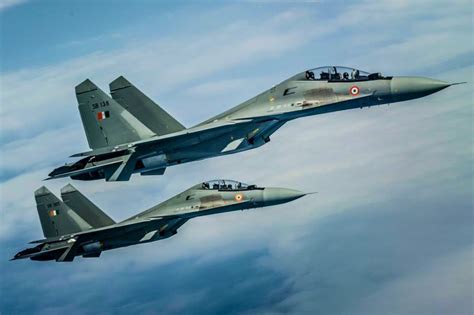
India operates around 542 fighter aircraft, including:
- Su-30MKI multirole fighter
- MiG-29 interceptor
- Dassault Rafale fighter
- HAL Tejas indigenous fighter
This diverse inventory reflects decades of procurement from both Eastern and Western defense industries.
Future Fighter Programs
India continues to explore several potential options for expanding its stealth fighter capabilities. Discussions have included:
- Producing a local variant of the F-16V (designated F-21)
- Purchasing the Su-57 export version
- Developing indigenous stealth fighters
The ultimate direction remains uncertain, but the country is clearly committed to strengthening its aerospace independence.
Transport and Surveillance Capability
India also operates a robust airlift fleet, including Boeing C-17 Globemaster III, Lockheed C-130 Hercules, and Ilyushin Il-76 transport aircraft.
Its surveillance capabilities have improved dramatically through the acquisition of Boeing P-8A Poseidon maritime patrol aircraft, which provide long-range intelligence and anti-submarine operations across the Indian Ocean.
The Strategic Importance of Air Force Budgets
Modern airpower is one of the most complex and capital-intensive elements of military strategy. Fighter jets alone can cost tens or even hundreds of millions of dollars per aircraft, while stealth technology, satellite integration, and advanced sensors dramatically increase development costs.
Large budgets allow air forces to invest in:
- Next-generation aircraft
- pilot training and readiness
- logistics and maintenance
- intelligence and surveillance networks
- global mobility capabilities
The five countries examined here collectively dominate global military aviation spending. Yet their approaches differ widely—some emphasizing fleet size, others prioritizing technological superiority.
What remains clear is that air superiority continues to define modern military power. Nations capable of controlling the skies gain a decisive advantage not only in warfare, but also in deterrence, global influence, and geopolitical stability.
As emerging technologies such as autonomous drones, artificial intelligence, and sixth-generation fighters enter service, the race for airpower supremacy will only intensify in the years ahead.