Slovak technology innovator InoBat has officially announced the development of a next-generation battery cell, the E10, designed specifically for military drones and unmanned aerial systems (UAS). This move represents a strategic pivot for the company, long known for its pioneering work in electric vehicle (EV) and electric vertical take-off and landing (eVTOL) batteries, and comes at a pivotal moment for Europe’s evolving defense infrastructure.
European Defense Landscape Spurs Strategic Battery Innovation
In recent years, Europe has witnessed a resurgence in defense investment, spurred by escalating geopolitical tensions and calls for greater autonomy from transatlantic allies. As governments across the continent rapidly accelerate procurement of tanks, weapons systems, and surveillance technologies, industrial players have responded by retooling existing facilities to meet the pressing needs of the defense sector. It is within this climate that InoBat emerges as a critical enabler, offering a European-made, high-spec battery solution tailored for unmanned aerial platforms.
CEO Marian Bocek emphasized that the E10 battery is not only a technological breakthrough but also a strategic necessity. “We are engaging with drone manufacturers that require a technologically superior European battery solution,” Bocek stated, underlining the urgency to reduce reliance on non-NATO suppliers.

Introducing the E10: A Leap Forward in Drone Battery Technology
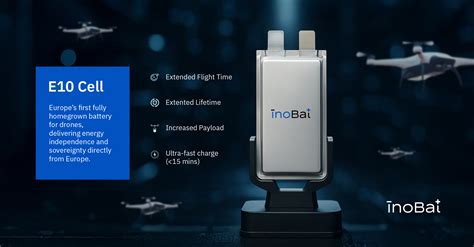
The E10 cell, slated to enter production in September 2025, boasts performance characteristics that position it well ahead of existing solutions. According to company specifications, the E10 can fully charge in under 15 minutes, support a 40% greater payload, and deliver a 60% longer flight duration than currently available alternatives. These enhancements directly address long-standing limitations in drone endurance and operational flexibility—key performance indicators in both military and industrial drone applications.
Designed with modular scalability and robust energy density, the E10 represents what InoBat calls a “natural evolution” from its earlier work in mobility and aviation energy systems. As Bocek described it, “This expansion into defense-grade drone batteries is driven by unprecedented demand for secure, resilient, and locally sourced energy solutions in NATO-aligned markets.”
Military Drones: A Fast-Evolving Theater of Technological Competition
The deployment of drones in modern combat has evolved rapidly, with military and paramilitary forces increasingly leaning on unmanned aerial systems for reconnaissance, targeting, logistics, and even direct combat engagement. The energy source powering these drones has thus become a critical bottleneck and a focal point of competitive advantage.
Traditional drone batteries often compromise between weight, power output, and recharge times, limiting their efficacy in high-stakes operations. The E10 addresses these constraints with a sophisticated chemistry engineered to optimize the power-to-weight ratio while maintaining thermal stability and rapid charge capability—features crucial for drone fleets operating in dynamic combat environments.
Strategic Independence: European-Made and NATO-Compliant
A key selling point of the E10 is its compliance with NATO supply chain standards. Amid growing concerns over the geopolitical risks associated with sourcing critical components from non-allied countries, InoBat’s European provenance offers strategic reassurance to defense contractors and government procurement agencies.
Though Chinese battery giant Gotion holds a 10% equity stake in InoBat, Bocek was unequivocal in affirming that the drone battery program is fully isolated from their joint ventures and conforms to all NATO-aligned security protocols. “There is no technological cross-pollination. Our military battery development is entirely sovereign, both in data integrity and production oversight,” Bocek stated.
Industry-Wide Momentum: Europe Repurposes for Defense
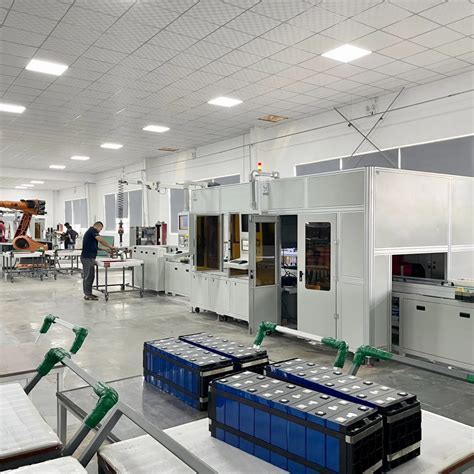
InoBat’s announcement comes at a time when several European manufacturers are actively converting their civilian production lines to fulfill defense sector contracts. For example, Rheinmetall, Europe’s largest ammunition producer, has begun repurposing two of its automotive component plants for defense applications. Likewise, French munitions company Europlasma is revitalizing a foundry previously owned by carmaker Renault, underscoring a regional trend of leveraging existing industrial infrastructure for national security priorities.
This repurposing trend reflects not only the growing demand but also the agility of European manufacturing to respond to shifting geopolitical realities. InoBat’s pivot to drone batteries demonstrates a similar responsiveness, channeling its deep R&D experience in electric mobility into a sector that now sits at the forefront of strategic defense planning.
Technical Superiority: What Sets the E10 Apart
The E10’s core advantage lies in its custom-engineered architecture, built to accommodate the extreme requirements of tactical UAV missions. Key technical differentiators include:
- Ultra-fast charging capability: <15 minutes to full charge
- Payload support: Up to 40% increase over standard drone battery cells
- Extended flight duration: 60% longer operational time
- Temperature resilience: Maintains performance in extreme climates
- Lightweight form factor: Enables higher drone maneuverability
- Modular integration: Flexible deployment across various drone platforms
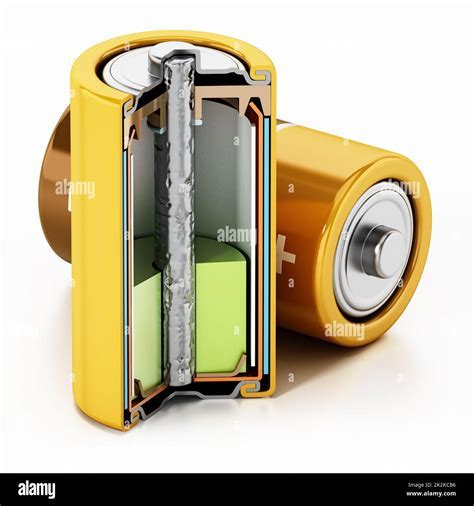
Such specifications do more than increase the raw endurance of drones; they empower militaries with strategic autonomy, reducing the need for mid-mission battery swaps and enhancing overall fleet operational tempo.
Securing the Future of European Defense Energy
Beyond battlefield applications, the E10 has far-reaching implications for Europe’s broader security architecture. As drones become a staple of not only military strategy but also border patrol, infrastructure surveillance, and emergency response, the availability of high-performance, locally manufactured batteries becomes a matter of national resilience.
InoBat’s €100 million funding round in December, part of a cumulative raise surpassing €400 million, has fueled its rapid development cycle. The company has also cemented partnerships with several European drone OEMs, although names remain confidential due to active NDA agreements. These collaborations signal early traction and growing institutional trust in InoBat’s technological leadership.
Looking Ahead: A New Epoch for Defense-Energy Synergy
As Europe steps into a new era of integrated defense technology, energy solutions such as the E10 will likely play a central role. InoBat’s agility in reorienting its innovation pipeline to meet these demands places it at the heart of a vital ecosystem—one that blends cutting-edge science, supply chain security, and continental self-reliance.
From energy-dense chemical formulations to rigorous NATO compliance and fast-track commercialization, the E10 stands as a symbol of what’s possible when technological foresight meets strategic imperatives. For a continent facing complex security challenges, this battery is more than just a power source—it is a strategic enabler.
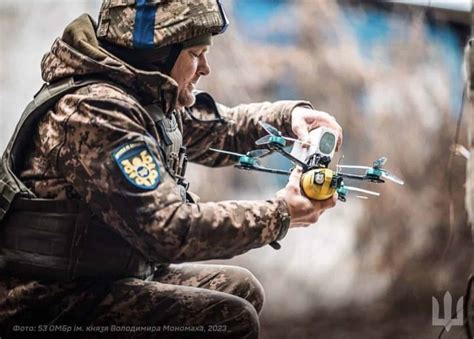
In an age where unmanned aerial dominance is reshaping the very fabric of modern warfare and surveillance, InoBat’s E10 is not just timely—it is transformative.