The modern balance of military power is no longer defined solely by aircraft numbers or technological sophistication. Geographic reach, sustained presence, and access to international airbases have become the decisive factors shaping global airpower. An air force able to operate far from home, maintain aircraft abroad, and sustain combat-ready squadrons across continents possesses a strategic advantage that cannot be replicated by domestic strength alone.
Counting international airbases, however, is far from straightforward. Definitions blur between permanent installations, rotational deployments, leased facilities, overseas territories, and politically contested regions. Some nations classify distant territories as homeland, while others operate from foreign soil under complex diplomatic arrangements. These distinctions matter, because an international airbase is not merely a runway—it is a symbol of influence, logistics dominance, and geopolitical commitment.
When measured by airbases located beyond a country’s homeland, a clear hierarchy emerges. One nation stands entirely apart, several operate impressive but limited networks, and others maintain selective footholds shaped by regional priorities rather than global ambition.
Global Airbases as Instruments of Power Projection
An international airbase functions as a forward-operating nerve center. It enables rapid response, extended patrols, deterrence missions, and sustained air campaigns without reliance on long-distance sorties. These bases also anchor alliances, reassure partners, and shape regional security architectures.
In practical terms, the size and dispersion of overseas airbases determine how quickly an air force can project fighters, bombers, tankers, surveillance aircraft, and transport fleets into a crisis zone. They also reflect political trust, as host nations grant access only to partners with long-term strategic alignment.
After the Cold War, some countries downsized their foreign footprints. Others expanded quietly, emphasizing flexibility and interoperability. Today’s global airbase map reveals not just military priorities, but strategic worldview.
The United States Air Force: A Category of Its Own
No discussion of international airbases can begin anywhere other than the United States Air Force. By every credible definition, the USAF operates the largest, most dispersed, and most operationally significant network of airbases beyond national borders.
The USAF maintains over 45 confirmed international airbases, with the number rising above 60 when rotational, joint, and space-related installations are included. These bases span Western Europe, Eastern Europe, East Asia, the Middle East, the Indian Ocean, and the Pacific, forming a truly global lattice of airpower.
Major hubs such as Ramstein Air Base in Germany, Kadena Air Base in Japan, Osan Air Base in South Korea, and Al Udeid Air Base in Qatar are not symbolic outposts. They are massive installations supporting fighters, bombers, tankers, ISR aircraft, command centers, and thousands of personnel. In many cases, these bases are larger and more heavily armed than the host nation’s own air facilities.
The USAF’s presence in Italy, the United Kingdom, Turkey, Spain, and Norway, combined with growing rotational deployments in Australia and the Philippines, allows the United States to sustain air dominance across multiple theaters simultaneously. Even relatively small facilities serve as logistical bridges, enabling rapid force surge during crises.
What distinguishes the USAF is not just the number of bases, but their scale and permanence. In some allied countries, the United States permanently stations more combat aircraft than the host nation fields itself. This depth of infrastructure transforms overseas basing from contingency access into enduring power projection.
Andersen Air Force Base and the Pacific Backbone
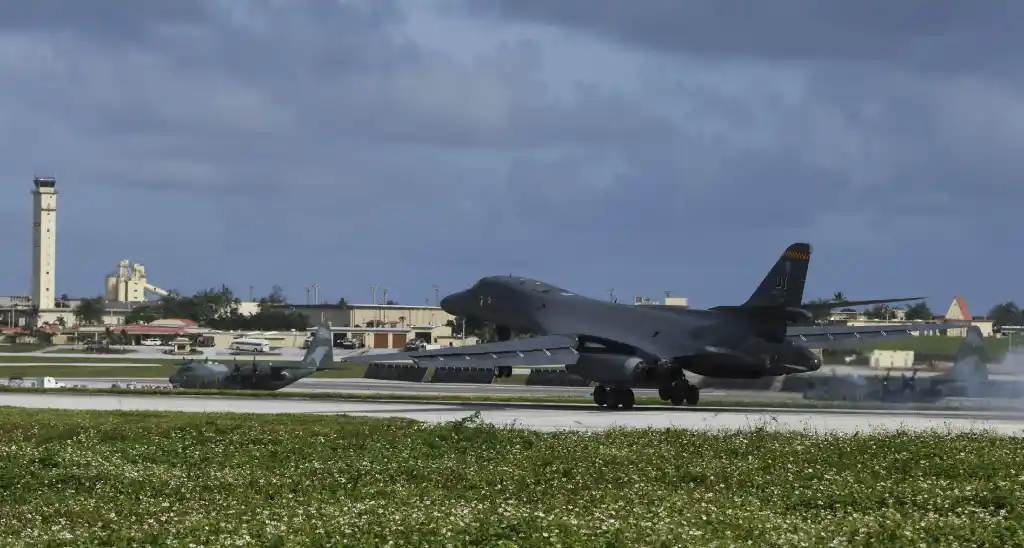
Although US territories are often excluded from international counts, Andersen Air Force Base on Guam deserves special attention. It functions as the keystone of America’s Pacific air strategy, hosting rotational bomber task forces, advanced fighters, and long-range surveillance aircraft.
Guam’s location allows the USAF to operate deep into the Western Pacific while remaining outside immediate adversary reach. Combined with smaller presences on Wake Island, the Northern Mariana Islands, and American Samoa, Andersen forms a resilient network underpinning US air operations across Asia.
The United States Navy and Marine Corps: Floating Airbases and Strategic Nodes
When airbases are considered broadly, the United States Navy and Marine Corps together constitute what is effectively the world’s second-largest air force. Their defining advantage lies in aircraft carriers and amphibious assault ships, which act as mobile, sovereign airbases capable of repositioning globally.
Beyond the sea, the Navy and Marines operate major overseas aviation hubs in Japan, Bahrain, Italy, Spain, Djibouti, and Cuba, often co-located with USAF facilities. Bases such as Naval Air Facility Atsugi, Marine Corps Air Station Iwakuni, and Naval Air Station Sigonella support both fixed-wing and rotary aviation across vast operational theaters.
Diego Garcia, while technically British territory, is operated by the US Navy and remains one of the most strategically vital airbases in the Indian Ocean. Its long runways and isolation make it indispensable for bomber operations and logistics support across the Middle East and Asia.
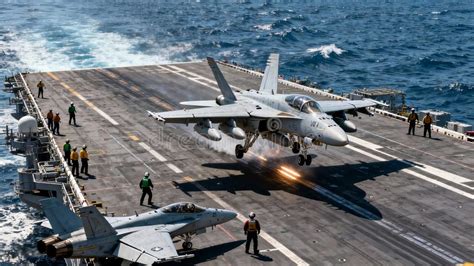
Unlike smaller air forces, US naval aviation bases often host dozens of advanced fighters, supported by extensive maintenance and munitions infrastructure. This density allows sustained operations at a scale few nations can match.
The United Kingdom: Strategic Reach Beyond Size
Despite a smaller fleet, the Royal Air Force continues to project airpower well beyond Britain’s shores. This reach is rooted in overseas territories and long-standing basing rights established during the imperial era.
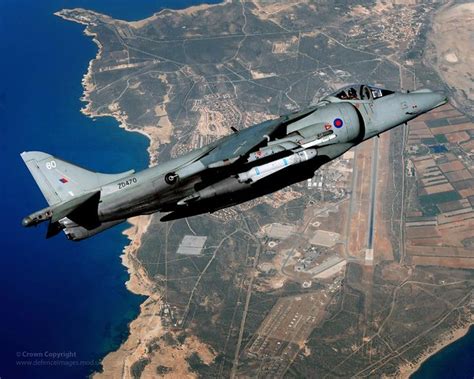
The RAF maintains permanent airbases in the Falkland Islands, Ascension Island, Gibraltar, and Cyprus, with RAF Akrotiri serving as a critical Middle East hub. Additional presence in Qatar and the United Arab Emirates enhances Britain’s role in coalition air operations.
What sets the UK apart is efficiency rather than scale. RAF Mount Pleasant in the Falklands, while hosting a modest number of fighters, anchors British sovereignty across the South Atlantic. Meanwhile, RAF Akrotiri supports strike missions, ISR flights, and refueling operations across multiple conflict zones.
Britain’s two Queen Elizabeth–class aircraft carriers extend this reach further, enabling RAF and Royal Navy F-35B operations across the globe without reliance on foreign runways.
France’s Global Footprint: Overseas Departments and Strategic Retrenchment
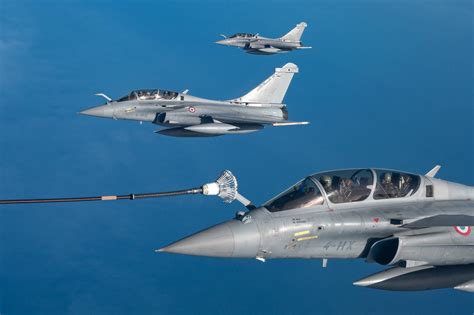
France maintains one of the most geographically dispersed air force presences relative to its size. The Armée de l’Air et de l’Espace draws heavily on overseas departments and territories, which function as forward-operating regions rather than foreign deployments.
France’s presence spans French Guiana, Réunion, New Caledonia, and French Polynesia, supporting operations across the Atlantic, Indian Ocean, and Pacific. Beyond these territories, France has traditionally maintained airbases in Africa and the Middle East.
Recent years, however, have seen a sharp contraction. France has withdrawn from multiple African countries, handing over bases in Senegal, Mali, Niger, Chad, and Burkina Faso. What remains are strategic footholds in Djibouti, Gabon, and Al Dhafra Air Base in the UAE.
France’s nuclear-powered aircraft carrier, Charles de Gaulle, remains a unique asset outside the United States, allowing France to project carrier-based airpower across vast distances.
Russia’s International Airbases: Regional and Politically Complex
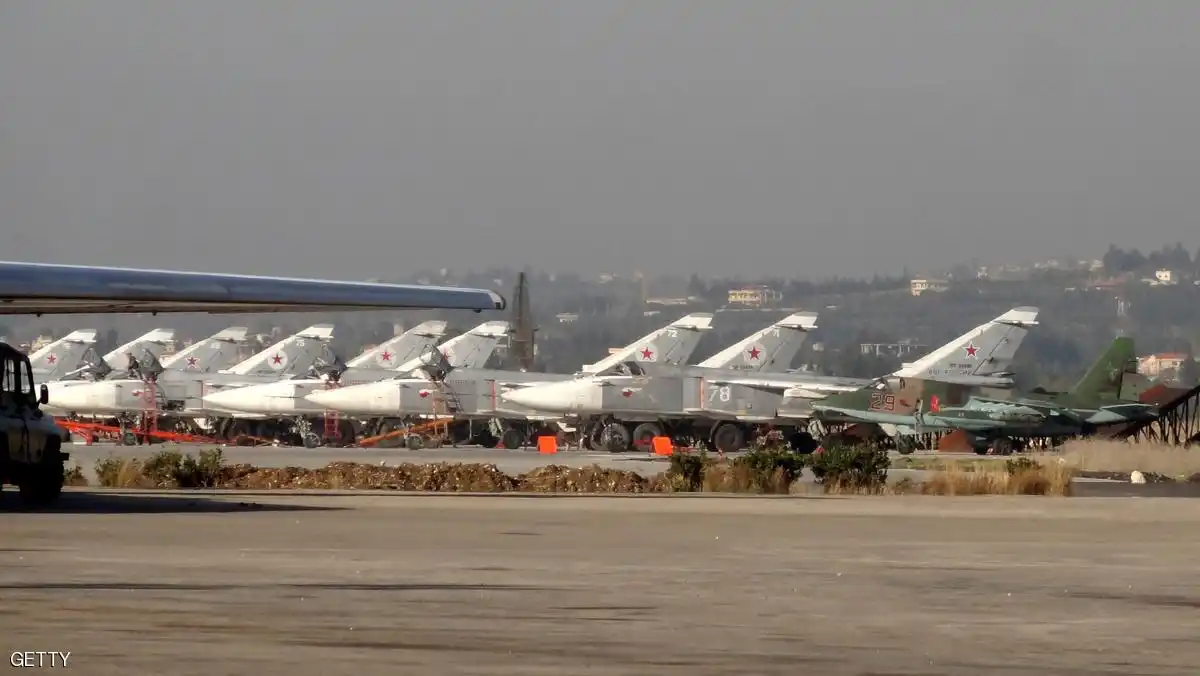
Russia’s international airbase network is narrower and politically entangled. Its most visible foreign base is Khmeimim Air Base in Syria, though its long-term status has become uncertain following regional instability.
Russia also maintains airbases in Armenia, Belarus, Kyrgyzstan, Kazakhstan, and disputed regions such as Abkhazia. These installations reflect Moscow’s post-Soviet security perimeter rather than global ambitions.
In Africa, Russia’s presence is opaque. Operations previously associated with the Wagner Group have transitioned to the Africa Corps, which operates limited aviation assets across the Sahel. These facilities lack the permanence and infrastructure of Western airbases, relying instead on flexibility and political leverage.
Emerging and Niche Airbase Powers
Other countries maintain international airbases for specific strategic reasons rather than global dominance. China’s overseas aviation footprint remains limited, centered primarily on facilities in Djibouti and disputed South China Sea islands. While significant, these do not yet constitute a worldwide network.
Turkey operates an airbase in Northern Cyprus, which it recognizes as independent but is internationally disputed. This presence supports regional power projection rather than global reach.
Smaller states such as Singapore and the United Arab Emirates maintain overseas airbases largely for training and strategic depth. Singapore’s basing arrangements in Guam, Australia, and Thailand compensate for its limited domestic space, underscoring how international airbases can serve defensive, not expansionist, objectives.
Why International Airbases Define Modern Air Superiority
International airbases reveal the true operational ceiling of an air force. Aircraft numbers matter, but without overseas infrastructure, those aircraft remain tethered to home soil. Bases abroad enable persistence, deterrence, alliance leadership, and rapid escalation when diplomacy fails.
The global picture is unmistakable. The United States operates in a league entirely its own, with a basing network that spans the planet and underpins every major security architecture. The United Kingdom and France form a distant second tier, leveraging history and alliances to maintain meaningful reach. Russia’s network remains regional and politically constrained, while others operate selectively based on geography and necessity.
In the modern era, airpower follows access, and access is defined by international bases. The nations that master this equation shape not just skies, but the strategic order beneath them.