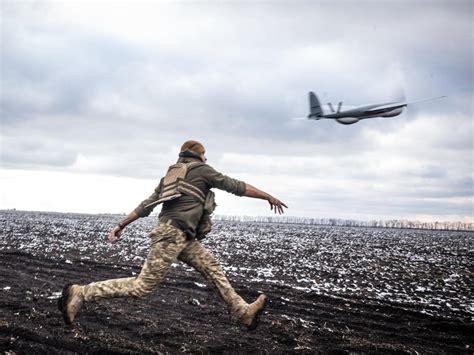
Drones have fundamentally reshaped the landscape of modern warfare, thrusting military powers into a new era defined not by tanks and trenches but by unmanned aerial systems (UAS) and asymmetric attacks. The rapid drone escalation in Ukraine — punctuated by a stunning strike on Russian air bases by more than 100 smuggled drones — signals not just a technological evolution, but a strategic reckoning for NATO and its member states.
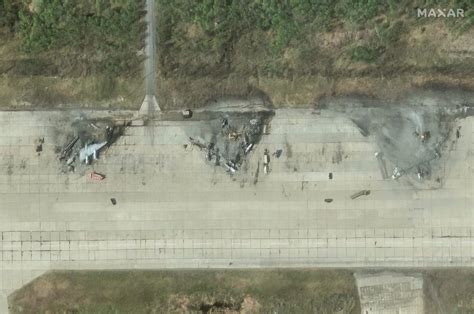
Ukraine’s bold assault, which damaged or destroyed up to 20 high-value aircraft deep inside Russian territory, was more than a tactical victory. It was a siren for Western defense officials, many of whom are now reevaluating their own vulnerabilities in the face of proliferating drone warfare. The precision, reach, and affordability of these attacks expose gaps in NATO’s readiness, especially concerning the defense of air bases and critical infrastructure.
The New Face of War: Swarms, Speed, and Saturation
The Ukraine conflict has become a brutal testbed for drone technology, and its lessons are both sobering and urgent. Russia, leveraging its Geran-series drones—derived from Iran’s Shahed systems—has been flooding Ukrainian skies with over 1,000 drones per week. These long-range loitering munitions are cheap, persistent, and effective, costing a fraction of traditional missiles but delivering strategic disruption at scale.
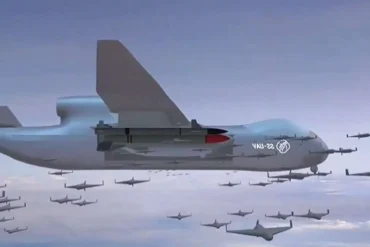
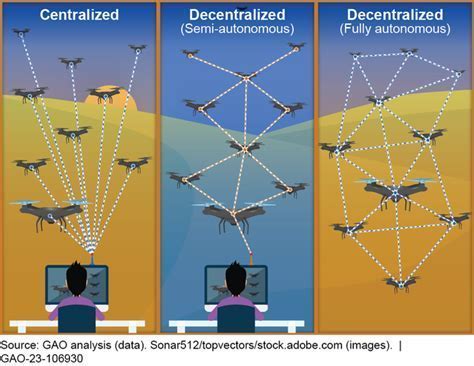
Ukraine has responded not only in kind but with ingenuity. From 800,000 domestically produced drones in 2022, Ukrainian production is expected to exceed 5 million in 2025. These include so-called missile drones, capable of flying up to 1,800 miles. These systems are disrupting traditional doctrines of air superiority and proving that dominance is no longer secured by jets alone, but by data-driven autonomy and decentralized deployment.
NATO’s Strategic Lag: A Doctrinal and Technological Gap
While Ukraine evolves under fire, NATO’s posture still reflects the contours of conventional warfare. Despite opening a joint training center in Poland to learn from Ukrainian tactics, the alliance struggles to adapt at the scale and pace required. The bulk of NATO air assets remain stationed on exposed tarmacs, relying on Cold War-era assumptions that are ill-suited to swarming drone assaults.
China, by contrast, has over 3,000 hardened aircraft shelters, and Russia’s drone saturation tactics highlight NATO’s lack of defensive redundancy. According to Simone Ledeen, a former Pentagon policy official, “A well-timed swarm could blind us before we’re airborne.” Her stark warning underscores the reality that NATO’s current infrastructure is not designed to withstand mass drone incursions or hybrid airspace threats.
Western Production Bottlenecks vs. Eastern Agility
The mismatch extends into industrial capacity. While Ukraine and Russia are churning out drones at blistering speeds—Russia is reportedly spending over 7% of its GDP on defense, with large allocations toward drone production—the U.S. and European manufacturers have lagged. The West’s fragmented procurement processes and slow scaling capabilities put it at a disadvantage in a theater where the speed of adaptation determines survival.
President Zelensky’s call for increased drone funding resonated with allies, notably the UK, which pledged to supply Ukraine with 100,000 drones in 2025, a tenfold increase over previous commitments. Yet even with new investments, NATO faces a steep learning curve.
Drone Threats Extend Beyond the Battlefield
Perhaps most troubling is how drones redefine the battlefield itself. As James Patton Rogers of Cornell University notes, war is no longer confined to neatly drawn front lines. Drones target energy grids, communication hubs, and transport infrastructure—areas that are often underprotected. Hybrid warfare, including cyberattacks paired with physical drone strikes, is becoming the new normal.
This blurred frontline creates acute vulnerabilities for NATO states, particularly in defending civilian and military dual-use infrastructure. A recent review of British defense capabilities acknowledged that adversaries may possess more advanced systems if conflict arises within the next few years. It urged immediate investment in one-way attack drones and counter-UAS systems.

Tactical Disruption, Strategic Implications
The implications extend far beyond Ukraine. The United States alone recorded 350 drone sightings across 100 military installations in a single year, according to Gen. Gregory Guillot of NORAD. These incursions are not mere provocations—they are rehearsals.
If Ukraine’s success in penetrating deep into Russia is any indication, it’s not inconceivable that similarly sophisticated attacks could target NATO bases in Germany, Italy, or Poland. From strategic bombers to surveillance outposts, NATO’s air power could be paralyzed by well-coordinated drone swarms, especially when paired with electronic warfare and cyber jamming.
The Economics of Asymmetry: High-Tech vs. High-Volume
Drone warfare is also rewriting the economic rules of military engagement. A $20,000 Geran drone disabling a $50 million aircraft exemplifies asymmetric cost efficiency. For NATO nations that have traditionally banked on technological superiority and high-end platforms, this poses a dilemma: how to counter mass production with boutique systems.
Ukraine’s answer lies in volume and ingenuity—leveraging commercial parts, decentralized manufacturing, and open-source coordination. NATO, with its bureaucratic procurement models, must adapt or risk being outpaced by less affluent but more agile adversaries.
Building a New Defense Doctrine
To close this gap, NATO must embark on a fundamental rethinking of its air defense doctrine. This includes:
- Building hardened shelters for high-value aircraft and critical systems
- Deploying layered counter-drone systems, including radar, jamming, and kinetic interceptors
- Investing in automated airspace monitoring to detect and respond to low-signature threats
- Accelerating interoperability with partner forces like Ukraine, which now has Europe’s most battle-hardened military
These measures are not mere upgrades—they are existential necessities. The military alliance was founded in an era of tank divisions and nuclear brinkmanship; it now must defend against invisible, autonomous, networked threats that arrive silently but strike with lethal precision.
The Road Ahead: Urgency Meets Innovation
As former Trump-era Pentagon official Simone Ledeen warned, assumptions are liabilities in today’s warfare. NATO’s strategy must prioritize agility over tradition, resilience over dominance, and speed over prestige. The clock is ticking, and adversaries are already proving what drone warfare can achieve with fewer resources and smarter tactics.
Ukraine’s audacious drone attacks are more than battlefield maneuvers—they are proof of concept. If NATO fails to learn from them, it may find itself tactically outmaneuvered and strategically blindsided in a future war it is unprepared to fight.
In the coming years, the defining question will not be who has the most aircraft, but who controls the skies with the fewest pilots. And in that contest, drones have already taken the lead.