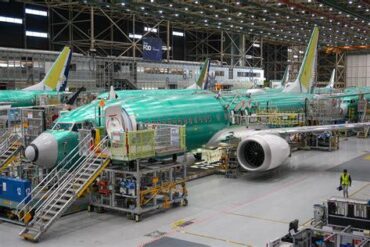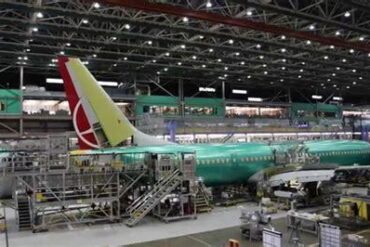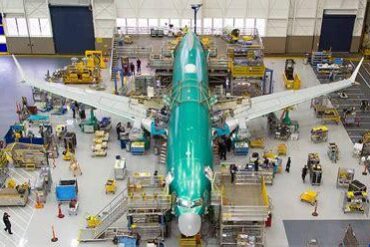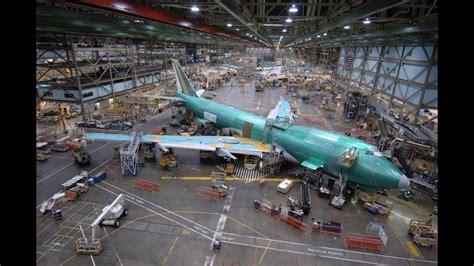
Seattle’s aerospace skyline is set for a dramatic shift as Boeing revives operations at its legendary Everett facility to begin production of the 737 MAX 10, the largest and most sophisticated member of the 737 MAX family. This strategic move marks a turning point for both Boeing and the city of Everett, reactivating a plant that once symbolized the golden era of jumbo jet production with the 747. Now, Boeing aims to transform this historic space into the heartbeat of its next-generation single-aisle aircraft manufacturing strategy.
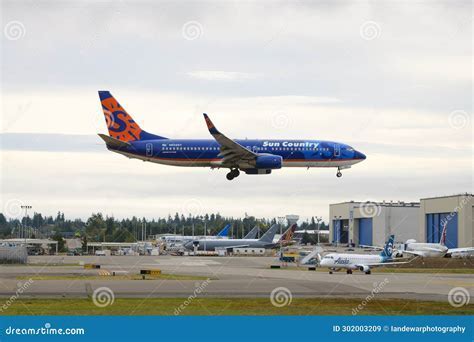
Why Everett and Why Now: Boeing’s Strategic Factory Realignment
The decision to shift MAX 10 assembly from Renton to Everett is more than a logistical adjustment—it is a strategic reallocation of industrial resources. Boeing’s Renton facility, while historically the core of 737 production, is under strain. Output is currently capped at 38 aircraft per month, and the Federal Aviation Administration (FAA) has yet to authorize any production increase. Meanwhile, the Everett factory—once bustling with 747s and 787s—has been underutilized since 787 production moved to Charleston, South Carolina, and the 747 program concluded.
The move allows Boeing to split its narrow-body assembly across two sites, freeing up Renton for the high-demand 737 MAX 8 and MAX 9 variants, while dedicating Everett’s massive east-side bay to the more complex MAX 10.
MAX 10: The Longest and Most Technically Advanced 737 Yet
The 737 MAX 10 is not just another stretched variant; it incorporates critical design changes that distinguish it from the rest of the MAX lineup. Chief among these is a retractable, lengthened landing gear, designed to avoid tail strikes during takeoff and landing—an engineering challenge not present in earlier models. This structural enhancement increases the aircraft’s overall length to 143 feet 8 inches, enabling it to carry up to 230 passengers, making it a direct competitor to the Airbus A321neo.
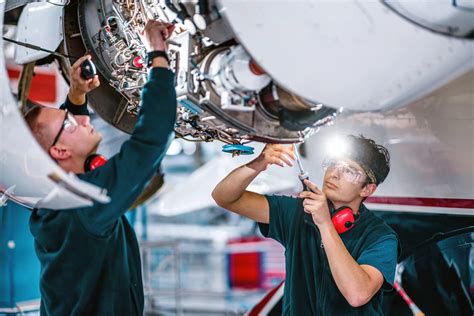
With growing demand for higher-capacity single-aisle jets, especially from low-cost carriers and transcontinental operators, the MAX 10 is crucial to Boeing’s ability to capture future market share. The model promises improved fuel efficiency, advanced avionics, and a range of up to 3,300 nautical miles, making it ideal for high-density domestic routes and some international flights.
Reactivating Everett: From Widebody Giants to Narrowbody Titans
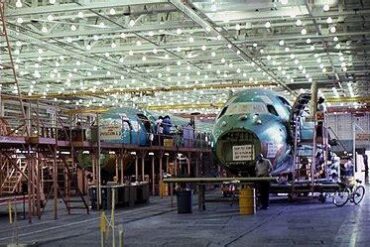
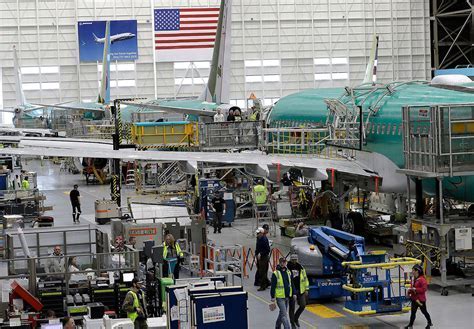
The Everett facility, once synonymous with the 747 and 787 Dreamliner programs, is undergoing a metamorphosis. Its reactivation is not just symbolic—it’s essential to Boeing’s industrial footprint. The new 737 MAX 10 line will be housed near the space currently used for 767 freighter and KC-46 Pegasus tanker production, enabling shared infrastructure, labor resources, and part logistics.
At over 98 acres under one roof, Everett remains the largest building by volume in the world, offering unparalleled floor space and vertical clearance. This allows Boeing to adapt and expand production capabilities without needing a new facility build-out.
FAA Oversight and Ramp-Up Timeline
Before full-scale production can begin in Everett, Boeing must first satisfy FAA requirements tied to production quality and safety assurance. This follows a series of high-profile incidents, including a door plug detachment on an Alaska Airlines 737 MAX 9, that reignited concerns over Boeing’s manufacturing rigor. The FAA has since intensified inspections and halted increases to Renton’s output.
Once compliance is verified, Boeing aims to raise Renton’s production from 38 to 42 aircraft per month, eventually reaching 47 per month by 2026. This unlocks space in Renton to concentrate on the higher-demand MAX 8 and MAX 9, while Everett ramps up the more specialized MAX 10 line in parallel.
Certification Challenges: MAX 10 and MAX 7 Still Await FAA Approval
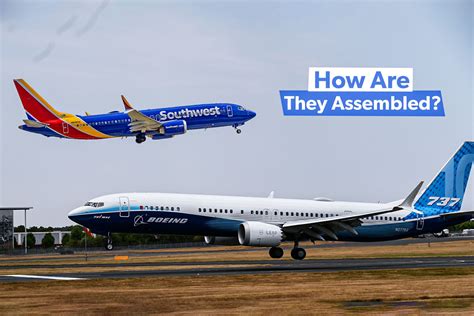
Despite infrastructure readiness, neither the 737 MAX 10 nor its smaller sibling, the MAX 7, is FAA certified. Both programs have faced years of delays driven by updated safety protocols, intensified scrutiny post-MAX 8 crashes, and evolving regulatory standards.
Boeing is actively working with the FAA and global regulators to resolve certification hurdles, with approval expected by the end of 2025. Without certification, the company cannot deliver or mass-produce these aircraft, making this final regulatory milestone pivotal to the success of the Everett transition.
Logistical and Workforce Benefits at Everett
The choice of Everett is also driven by logistical optimization. Locating the MAX 10 line adjacent to existing 767/KC-46 and 777 production areas creates a synergistic environment where parts, tooling, and workforce training can be shared across programs. Everett’s infrastructure includes specialized transport systems, overhead cranes, and testing stations that can be readily adapted for the 737 line.
The reallocation will also preserve and potentially expand employment at the plant, which had seen workforce reductions following the 787 and 747 departures. Rehiring and retraining of skilled labor is already underway, reinforcing Boeing’s commitment to the Puget Sound region as its industrial anchor.
Market Dynamics and the Narrow-Body Future
Boeing’s pivot to single-aisle dominance reflects larger commercial aviation trends. With widebody demand still recovering post-pandemic and airlines seeking fuel-efficient, high-capacity narrow-bodies for domestic and regional routes, the MAX 10 is positioned as Boeing’s best answer to Airbus’s A321XLR, which has already gained traction among major airlines.
Industry analysts see the 737 MAX 10 as a strategic stopgap before Boeing launches an all-new narrow-body platform in the early 2030s. For now, leveraging Everett’s capabilities allows Boeing to match Airbus’s production ramp-up in Europe and China, where A320 family jets are being assembled at record pace.
What This Means for Everett’s Legacy and the Community
The 737 MAX 10 line is more than an aircraft program—it is a lifeline for Everett’s industrial heritage. The city’s economy has long been tethered to Boeing, and the revival of full-scale operations signals renewed investment in infrastructure, job growth, and global relevance.
Local leaders have applauded the decision, citing the boost to regional suppliers, educational partnerships, and apprenticeships in aerospace engineering. The move could also attract future projects to the plant, solidifying Everett’s role in Boeing’s long-term roadmap.
Conclusion: A Bold Bet on the Future of Flight
Boeing’s decision to build the 737 MAX 10 at Everett isn’t just about solving a capacity issue—it’s a strategic reshaping of the company’s production future. By breathing new life into the world’s largest aircraft factory, Boeing is betting on the resurgence of high-capacity single-aisle jets and reaffirming its presence in Washington state. With careful execution, regulatory cooperation, and market uptake, the MAX 10 line in Everett could mark the beginning of a new era in narrow-body aviation leadership.
The road ahead will require engineering precision, production discipline, and regulatory success, but if Boeing can deliver, Everett will once again be at the forefront of global aerospace innovation.