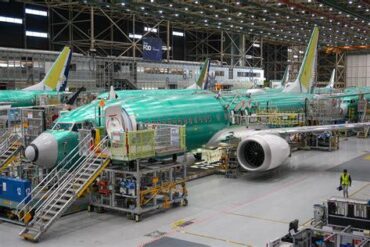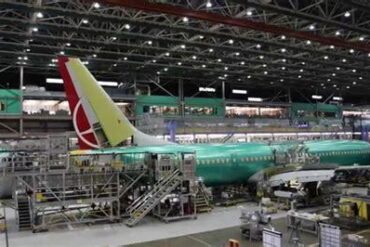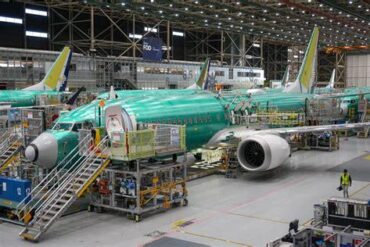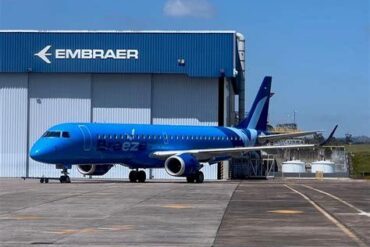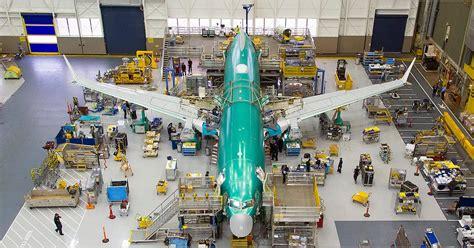
For nearly six decades, the Boeing 737 and the Renton factory have been inseparable symbols of American commercial aircraft manufacturing. Since the first 737 entered production in the late 1960s, every major generation of the aircraft — from the Original series to the Classic, Next Generation, and 737 MAX families — has rolled through final assembly at Boeing’s facility in Washington State.
That historic manufacturing pattern is now changing. Boeing is preparing to assemble the 737 MAX outside Renton for the first time in the program’s history, opening a new production line at the company’s Everett facility. The move represents one of the most significant changes ever made to the world’s most recognizable narrowbody aircraft program.
The decision is not simply about adding another factory floor. It reflects Boeing’s broader effort to rebuild production strength, increase delivery capacity, improve operational flexibility, and prepare the 737 program for long-term growth. With thousands of aircraft still waiting in Boeing’s order backlog, expanding final assembly capability has become a critical priority.
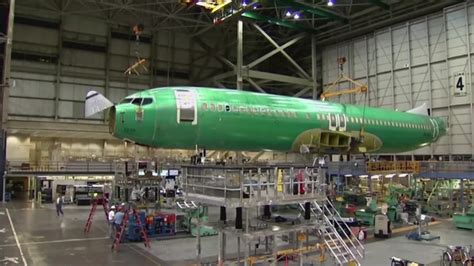
A Historic Shift Away From Single-Site 737 Production
For generations of Boeing workers, Renton has been the birthplace of the 737. The facility became one of the most productive commercial aircraft factories in the world, refining assembly methods over decades and delivering thousands of aircraft to airlines worldwide.
Unlike Boeing’s other aircraft programs, which gradually expanded across different production locations, the 737 remained concentrated at one location. The company produced every version of the aircraft at Renton, creating a unique manufacturing identity built around specialized tools, experienced workers, and highly optimized processes.
That tradition will change with the activation of the Everett North Line, a new 737 MAX final assembly operation located at Boeing’s massive widebody aircraft manufacturing complex.
Boeing leadership has emphasized that Everett is not replacing Renton. Instead, the company is creating a second production center that will operate alongside the existing Renton lines. The goal is to increase total manufacturing capacity while maintaining the quality standards developed through decades of 737 production.
The first aircraft assembled on the Everett line is expected to mark a major milestone for Boeing’s commercial aircraft business. It will demonstrate whether the company can successfully transfer one of its most important manufacturing systems to a new location without disrupting production reliability.
Why Boeing Chose Everett for 737 MAX Production
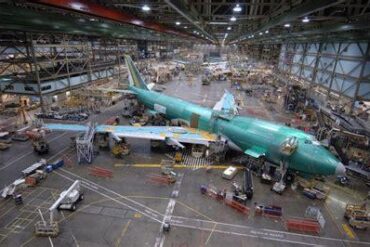
Boeing’s Everett facility has traditionally been associated with some of the largest aircraft ever built. The factory has produced legendary widebody programs including the 747, 767, 777, and 787 Dreamliner.
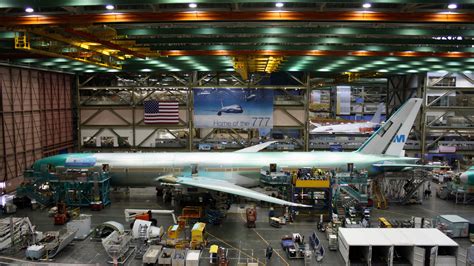
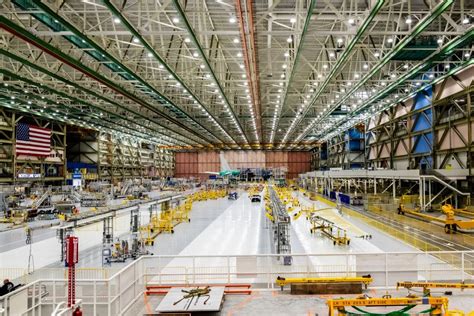
The scale of Everett makes it uniquely suited for aircraft manufacturing. The facility covers approximately 1,025 acres and contains one of the largest industrial buildings in the world by volume. Its enormous interior space was originally designed to support aircraft far larger than the 737, giving Boeing significant room to adapt the site for narrowbody production.
However, Boeing’s manufacturing network has changed significantly in recent years. The company ended 747 production in 2023, while 787 Dreamliner final assembly was consolidated at its South Carolina facility. Although Everett continues supporting programs such as the 767 and 777X, portions of the factory became available for new opportunities.
Rather than building an entirely new production facility, Boeing chose to use existing infrastructure. This approach reduces investment costs, takes advantage of established transportation connections, and allows the company to utilize a highly experienced aerospace workforce already located in the region.
The decision also highlights a broader manufacturing strategy. Modern aircraft production depends not only on physical space but also on skilled labor, supply chain access, engineering support, and decades of accumulated knowledge. Everett already possesses those advantages.
The Everett North Line Is Designed as a Copy of Renton
One of Boeing’s biggest challenges is ensuring that aircraft built in Everett meet the same standards as aircraft assembled in Renton. Airlines expect every 737 MAX delivered to them to have identical levels of safety, reliability, and performance regardless of where it was produced.
To achieve this goal, Boeing designed the Everett operation as a near replica of the existing Renton production system.
The company has focused on duplicating proven manufacturing methods rather than creating a completely new approach. Assembly layouts, tooling concepts, inspection procedures, employee training methods, and production workflows have been aligned with Renton operations.
Boeing CEO Kelly Ortberg described the new line as essentially a “carbon copy” of the established 737 manufacturing process. The strategy is intended to reduce startup risks by relying on techniques already tested through millions of hours of aircraft production.
This approach is particularly important because aircraft assembly is an extremely complex process. A commercial aircraft contains millions of individual parts supplied by thousands of companies around the world. Even small manufacturing inconsistencies can create significant delays or quality issues.
By keeping Everett and Renton closely connected, Boeing hopes to create a unified production system rather than two separate factories.
The New Line Will Support the Entire 737 MAX Family
The Everett North Line has been designed to support multiple versions of the 737 MAX family, beginning with the highest-volume variants: the 737 MAX 8 and 737 MAX 9.
Over time, Boeing expects the facility to support the 737 MAX 10, the largest member of the MAX family. The aircraft is strategically important because it competes directly with Airbus’ popular A321neo in the larger narrowbody market.
The ability to produce different MAX variants at Everett gives Boeing greater flexibility when responding to airline demand. Market conditions can change quickly, and airlines may shift orders between aircraft sizes depending on passenger demand, route networks, and operating economics.
A flexible production system allows Boeing to adjust output more efficiently without making major changes to factory operations.
The addition of Everett capacity is especially important as Boeing works to increase monthly 737 production rates. The company has faced significant pressure from airlines that are waiting for delayed aircraft deliveries, while Airbus has continued expanding its own narrowbody production capabilities.
Preparing a New Generation of Boeing Workers
Opening a new aircraft assembly line requires much more than installing equipment. The most important component is the workforce.
Boeing has spent significant time preparing employees who will operate the Everett 737 MAX line. The team includes experienced Boeing workers from Renton, Everett, and Moses Lake, along with newly hired employees joining the program.
This combination allows Boeing to transfer decades of 737 manufacturing knowledge while also bringing new skills into the production system.
Experienced employees provide valuable knowledge about aircraft assembly techniques, problem-solving methods, and quality practices. New workers bring fresh perspectives and help expand the workforce needed for future production growth.
Training programs have included classroom education, hands-on exercises, and practical experience working alongside existing 737 production teams. Employees have been able to learn established assembly procedures before moving into Everett operations.
This knowledge transfer is essential because aircraft manufacturing depends heavily on experience. Many production challenges cannot be solved simply through manuals or automated systems. Skilled workers often identify problems through years of practical understanding.
Boeing’s Production Recovery Depends on Quality First
The timing of Everett’s 737 production launch is significant because Boeing is attempting to recover from several manufacturing challenges.
Following the January 2024 Alaska Airlines 737 MAX 9 door-plug incident, regulators increased oversight of Boeing’s production processes. The Federal Aviation Administration placed additional scrutiny on the company’s manufacturing practices and limited production growth while Boeing addressed quality concerns.
Since then, Boeing has focused on improving factory discipline, increasing inspections, strengthening employee training, and rebuilding confidence among regulators and airline customers.
The Everett North Line is therefore more than a capacity expansion. It is also an opportunity for Boeing to establish a modern production environment built around improved quality controls.
The company has stated that production increases will not happen simply to achieve numerical targets. Instead, growth will depend on maintaining consistent manufacturing performance.
Boeing’s challenge is balancing two competing priorities: delivering aircraft faster while ensuring every aircraft meets strict safety and quality expectations.
A Gradual Production Ramp-Up Instead of Immediate High Output
Although Everett will begin assembling 737 MAX aircraft, Boeing does not expect the facility to reach maximum production immediately.
The company plans to use a Low-Rate Initial Production (LRIP) approach. This allows engineers, managers, and employees to monitor the new production system carefully before increasing output.
During the early stages, aircraft will move through the assembly process at a slower pace. Additional inspections and reviews will help Boeing identify potential problems and improve procedures before production expands.
This method is common when launching complex manufacturing operations. A controlled startup reduces the possibility of larger disruptions later.
For Boeing, the goal is not simply to produce more aircraft. The goal is to create a reliable second 737 production center capable of supporting the program for decades.
Why the Everett 737 Line Matters for Boeing’s Future
The opening of the Everett 737 MAX assembly line represents a major strategic change for Boeing. After almost 60 years of single-site 737 production, the company is creating a more flexible manufacturing network.
The move gives Boeing additional capacity, reduces dependence on one factory, and creates opportunities for future growth. It also demonstrates how the company is adapting its industrial strategy after recent challenges.
The 737 remains Boeing’s most important commercial aircraft program, and the success of the Everett line will influence the company’s ability to compete in the global narrowbody market.
Airlines around the world continue to demand efficient single-aisle aircraft, and the competition between Boeing and Airbus remains intense. Increasing production capability while maintaining quality will be essential for Boeing’s long-term position.
The Everett North Line is therefore not just a new assembly area. It represents a turning point in Boeing’s manufacturing history — the moment when the company’s most famous aircraft program finally expanded beyond the factory that created it.