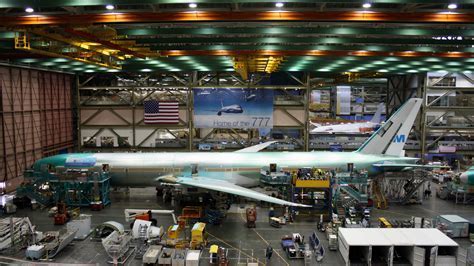
Boeing’s recent announcement to build a dedicated production line for the 737 MAX 10 at its Everett, Washington facility marks a bold, calculated shift in the company’s manufacturing strategy. This move not only rekindles the industrial heartbeat of Everett—home to legends like the 747 and 777—but also signals a critical realignment in how Boeing intends to manage complexity, production speed, and capacity in its narrowbody aircraft segment.
For a company emerging from turbulence, investing in Everett carries symbolic and strategic weight. The decision effectively breathes new life into one of Boeing’s most iconic manufacturing hubs, indicating renewed long-term commitment to the Pacific Northwest.
Why the 737 MAX 10 Needs Its Own Line
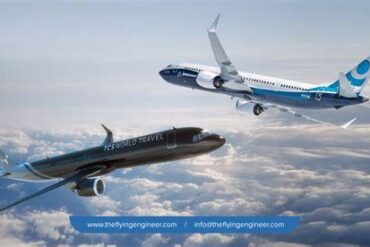
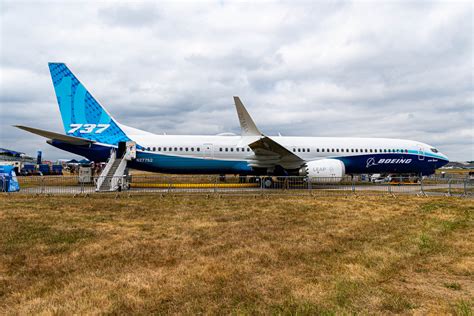
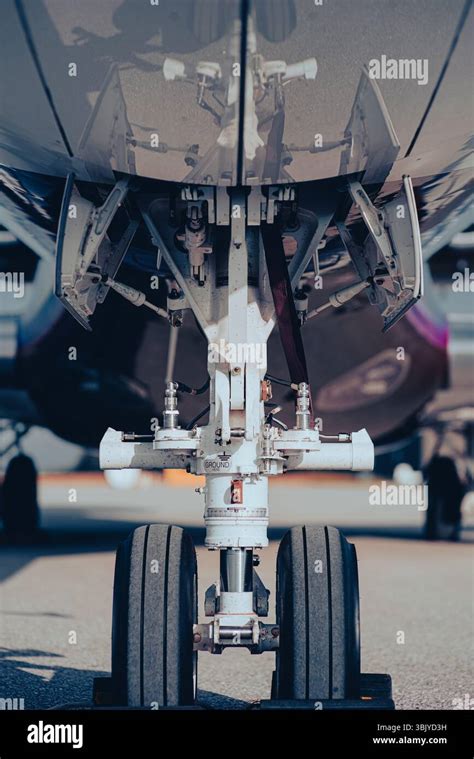
At the heart of this decision lies the unique complexity of the 737 MAX 10—the longest and most advanced version of the 737 MAX family. Designed to compete directly with the Airbus A321neo, the MAX 10 features a stretched fuselage, updated landing gear, and an increased passenger capacity of up to 230 seats. While these enhancements elevate its market potential, they also make it more technically demanding to assemble.
According to Boeing executives, CEO Kelly Ortberg has been clear that the MAX 10’s production flow diverges enough from its smaller siblings that segregating its assembly is the most efficient solution. Renton, Boeing’s existing 737 production site, currently handles the MAX 8 and MAX 9 with high output rates. By offloading the MAX 10 to Everett, Renton can focus on scaling up production volumes for its best-selling models without being constrained by the more intricate assembly of the MAX 10.
Unclogging the Renton Bottleneck
The logic is simple: Renton is running out of breathing room. With global airlines regaining appetite for narrowbody jets, the pressure to deliver higher volumes of the MAX 8 and MAX 9 is mounting. However, with the MAX 10’s more labor-intensive build process, it acts as a bottleneck in a production system optimized for speed.
By transitioning the MAX 10 line to Everett, Boeing aims to decongest Renton, effectively unleashing its full production potential. It’s a targeted maneuver to maximize throughput where it’s easiest and isolate complexity where it’s manageable.
Why Everett—and Why Now?
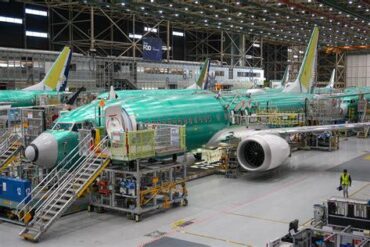
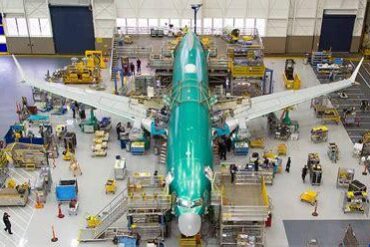
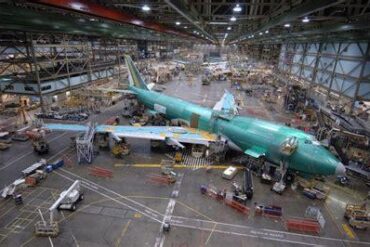
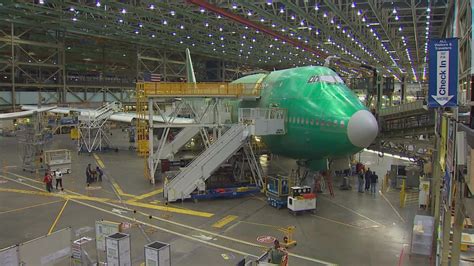
Everett may seem like an unconventional choice for narrowbody production. Traditionally associated with widebody giants like the 747, 767, 777, and 787, the facility has been underutilized since the end of the 747 program. Building the MAX 10 here is a strategic repurposing of underused capacity in a region rich with aerospace talent, supply chain depth, and established infrastructure.
Moreover, Everett’s production bay space is colossal—the largest building by volume on Earth—and the high ceilings and modular layout offer a flexibility unmatched by Renton. This gives Boeing the room to tailor a bespoke assembly line for the MAX 10 without interfering with other active programs.
Timing-wise, the move comes at a pivotal moment. Boeing continues to seek recertification and market reentry for the MAX 10, while airlines are beginning to rebound from pandemic-era fleet contractions. Establishing a line now allows Boeing to hit the ground running once certification is granted.
A Signal to the Seattle Region
Perhaps one of the most overlooked aspects of this development is its regional economic impact. Boeing has made few major production investments in the Seattle area in the past decade. The new Everett line, then, becomes more than just an operational pivot—it’s a vote of confidence in the region’s aerospace workforce and infrastructure.
For Washington state officials, this move is seen as a triumph in retaining critical industrial capacity. Everett’s skilled labor pool—many of whom faced uncertainty with the wind-down of the 747 program—will now have an opportunity to retrain and contribute to a modern, forward-facing production initiative.
Market Implications and Competitive Dynamics
The MAX 10 is Boeing’s answer to the Airbus A321neo, a jet that has dominated the upper end of the narrowbody market. With a larger cabin and improved economics over the MAX 9, the MAX 10 is crucial for Boeing to regain lost ground. Yet Boeing’s ability to deliver the aircraft efficiently will be a major factor in its commercial success.
Establishing a production line dedicated solely to the MAX 10 gives the aircraft a much-needed chance to stand on its own in a crowded market. It allows Boeing to refine assembly techniques, build proficiency, and most importantly—deliver jets faster once regulatory hurdles are cleared.
If managed well, this line could become the centerpiece of Boeing’s narrowbody resurgence.
Engineering and Technical Considerations
Building a new production line is no small task. Boeing will need to:
- Design tooling and fixtures tailored to the MAX 10’s unique dimensions
- Retrain Everett staff accustomed to widebody builds
- Integrate new logistics and supply chain pathways
- Coordinate certification compliance protocols for both production and quality assurance
Everett’s existing infrastructure offers advantages here, including advanced composite fabrication tools, dedicated power and avionics test bays, and ample room for scalable production cells. But success will hinge on how seamlessly Boeing can transfer processes from Renton, adapt them to Everett’s physical realities, and manage the human and technical transitions.
Financial and Strategic Risks
Not every industry analyst is bullish on the move. Critics argue that splitting production across two sites adds complexity in terms of logistics, workforce management, and coordination. There’s also the capital expenditure required to outfit the new line—an investment made amid a period of ongoing scrutiny into Boeing’s financial performance.
Moreover, the FAA has yet to certify the MAX 10, and while Boeing remains optimistic, the aircraft remains grounded. That means Boeing is effectively betting on future approvals, using valuable resources to prepare for an aircraft that—at least for now—can’t fly commercially.
Still, from a strategic standpoint, this is a long-game move. Boeing is not just preparing to build aircraft—it’s preparing to win back dominance in the narrowbody space by focusing production around the MAX 10’s needs.
A Look Toward the Future
As Boeing transitions into a post-747 world, adapting Everett’s role will be essential. While widebody demand continues in niches, the bulk of global airline growth lies in the narrowbody market. The MAX 10 production line could serve as a blueprint for how legacy facilities adapt to new market realities.
Boeing’s ability to execute flawlessly in Everett may determine not just the success of the MAX 10, but also whether Everett remains a cornerstone of the company’s manufacturing future. If successful, this move could open doors for other next-gen narrowbody initiatives, and even hybrid manufacturing strategies that blend the best of wide and narrowbody practices.
Conclusion: Smart, But Not Without Risks
Is Boeing’s decision to build a 737 MAX 10 line at Everett a smart move? In a word: yes—with a cautious asterisk. It’s smart in terms of logistics, workforce utilization, and futureproofing. It’s smart because it de-risks Renton and re-engages Everett. And it’s smart because it sends a powerful message to stakeholders: Boeing is planning not just for recovery, but for resurgence.
But the risks are real. Until the MAX 10 is certified, the line will remain a forward-looking gamble. And even once operational, managing quality and efficiency across two sites will test Boeing’s engineering, management, and coordination prowess.
If they succeed, Everett may yet again become synonymous with Boeing’s best—and this time, with a narrowbody aircraft that carries the weight of the company’s competitive future.