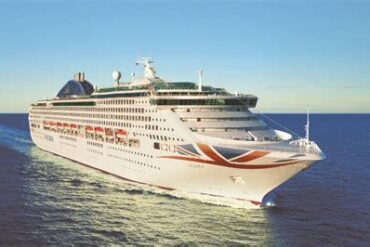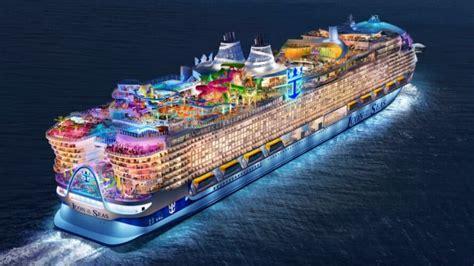
The modern cruise ship is one of the most complex civilian machines ever built, blending floating-city scale, hotel-grade luxury, advanced propulsion systems, and intricate safety engineering into a single vessel. Unlike historic ocean liners designed primarily for speed and transatlantic crossings, today’s cruise ships are purpose-built for leisure, efficiency, and immersive onboard experiences. Their construction demands specialized expertise, massive dry docks, and a highly coordinated industrial ecosystem that only a handful of countries can provide.
Globally, cruise ship construction is highly concentrated. While shipyards exist on nearly every continent, Europe remains the undisputed center of cruise ship manufacturing, responsible for the vast majority of large, ocean-going cruise vessels. This dominance stems from decades of accumulated know-how, access to skilled labor, and the ability to integrate advanced technologies at scale. Yet change is underway, as Asian shipbuilders invest heavily to challenge Europe’s long-standing leadership.
Before exploring the countries that build the most cruise ships, it is essential to understand why cruise ship construction is so geographically limited. These vessels require not only steel fabrication and marine engineering, but also interior design, environmental systems, digital navigation, and hospitality-grade finishing, all delivered within tight timelines and strict regulatory frameworks. Only a few nations possess shipyards capable of managing this level of complexity from keel laying to final delivery.
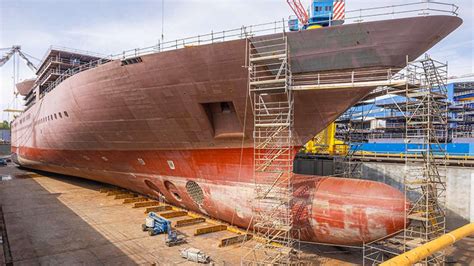
How Cruise Ships Are Built: From Steel Plates to Floating Cities
The construction process of a cruise ship follows a carefully sequenced methodology that has been refined over decades. It begins months before physical assembly, with computer-modeled designs translated into thousands of steel components. These pieces are cut using precision plasma or laser systems, ensuring millimeter-level accuracy for later assembly.
Once fabrication is complete, construction officially begins with the laying of the keel, the structural backbone of the vessel. From there, massive pre-built blocks—some weighing hundreds of tons—are assembled into the hull like a three-dimensional puzzle. This modular approach allows shipyards to build passenger cabins, restaurants, theaters, and technical spaces off-site while the hull is still under construction.
After the hull is sealed, the ship is floated for the first time, marking a major milestone. Outfitting then accelerates, with interior installations, propulsion systems, electrical networks, and safety equipment added simultaneously. The final stages include sea trials, where performance, maneuverability, and compliance with international maritime regulations are tested before delivery to the cruise line.
While this process is standardized, execution quality varies significantly. That difference explains why only a small number of shipyards consistently win contracts for the world’s largest and most technologically advanced cruise ships.
Italy and Fincantieri: The World’s Largest Cruise Ship Builder
Italy stands at the forefront of global cruise ship construction, anchored by Fincantieri, the largest cruise ship builder on Earth. With roots dating back to the early 20th century, Fincantieri has evolved from a traditional shipbuilder into a global maritime powerhouse.
Since 1990, Fincantieri has delivered more than 130 cruise ships for 25 different cruise lines, a staggering output that places its vessels at the heart of the global cruise industry. Statistically, one out of every three cruise passengers worldwide sails on a Fincantieri-built ship, underscoring the company’s unparalleled influence.
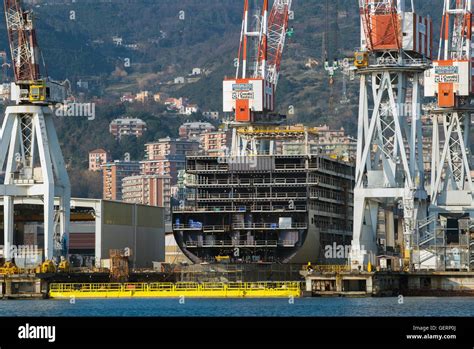
Fincantieri’s innovation record is equally impressive. It built Italy’s first super ocean liner, introduced outdoor swimming pools and onboard air conditioning, pioneered ship stabilizers, and launched some of the fastest passenger vessels of their time. Today, its portfolio includes recent deliveries such as Star Princess, Norwegian Aqua, and Mein Schiff Relax, along with earlier high-profile ships like Queen Anne, Explora II, Viking Vela, and Sun Princess.
Major cruise lines including Carnival, Princess, Holland America, Viking, MSC, Disney, Cunard, and Norwegian rely on Fincantieri for new builds. The company’s shipyards span strategic coastal locations, from Genoa and Palermo to Trieste, allowing simultaneous construction of multiple mega-ships.
Beyond cruise vessels, Fincantieri also produces naval ships, offshore energy platforms, ferries, and ship interiors, giving it a diversified industrial base that further strengthens its cruise ship leadership.
Germany’s Meyer Werft: Precision Engineering and Green Innovation
Germany’s contribution to cruise ship construction is defined by Meyer Werft, a family-owned shipyard with origins stretching back to 1795. Initially focused on wooden sailing vessels, Meyer Werft transitioned into iron and steel ships, gradually building expertise in crafting large vessels capable of navigating narrow waterways.
The shipyard delivered its first cruise ship, Homeric, in 1986. Since then, Meyer Werft has built more than 60 cruise ships, many of which rank among the most technologically advanced afloat. Its recent deliveries include Disney Destiny and Asuka III in 2025, along with Silver Ray in 2024.
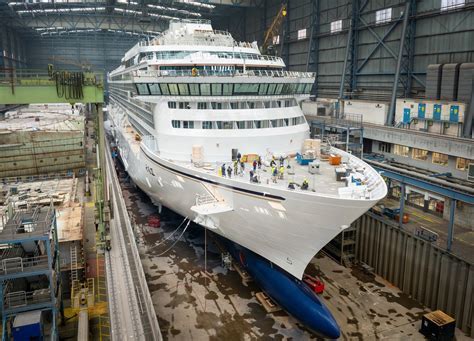
Meyer Werft is particularly renowned for building ships for Royal Caribbean, Disney Cruise Line, Norwegian Cruise Line, and Silversea. Iconic vessels such as Ovation of the Seas, Odyssey of the Seas, Disney Wish, and Norwegian Encore exemplify the yard’s focus on scale, efficiency, and passenger comfort rather than sheer speed.
Environmental innovation is central to Meyer Werft’s strategy. The Silver Nova, launched in 2023, introduced a hybrid energy system combining LNG engines, hydrogen fuel cells, battery storage, and waste-to-energy technology. This system significantly reduces emissions while improving operational efficiency, a model continued with the Silver Ray.
Finland’s Meyer Turku: Home of the Largest Cruise Ships Ever Built
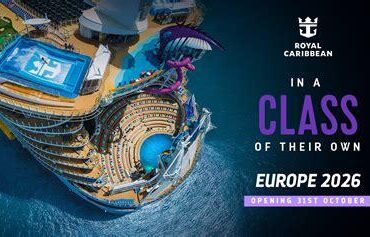
Finland may not build the most cruise ships numerically, but it holds the title for constructing the largest cruise ships in history. The Meyer Turku shipyard, located in Turku, Finland, produced Royal Caribbean’s Icon of the Seas and Star of the Seas, vessels that redefine the limits of maritime engineering.
Each Icon-class ship accommodates 7,600 passengers, measures nearly 1,200 feet in length, and features expansive entertainment zones, water parks, theaters, and dining districts that rival small cities. These ships represent the pinnacle of modular construction, logistical coordination, and structural engineering.
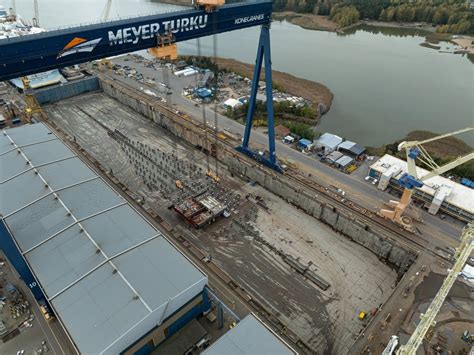
The Turku shipyard’s history dates back to 1737, evolving through mergers, expansions, and ownership changes. Once Finland’s largest employer under Wärtsilä, the yard was later acquired by Meyer Werft, making Meyer Turku its sister shipyard. This partnership combines German engineering precision with Finnish heavy-industry expertise.
Two additional Icon-class ships are scheduled for delivery in 2026 and 2027, reinforcing Finland’s position as the builder of the world’s most ambitious cruise vessels.
France’s Chantiers de l’Atlantique: Heritage Meets Modern Scale
France’s cruise ship legacy is embodied by Chantiers de l’Atlantique, based in Saint-Nazaire. Shipbuilding in this region dates back to 1835, with early achievements including the Normandie, launched in 1932 and awarded the Ruban Bleu for the fastest transatlantic crossing.
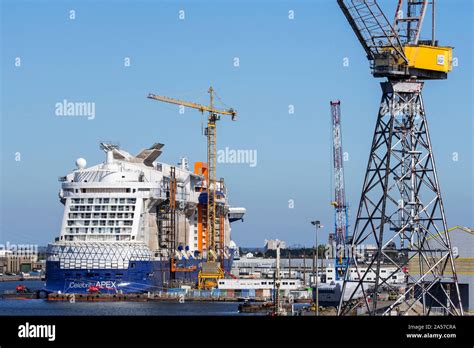
The shipyard endured wartime destruction during World War II, followed by extensive rebuilding. In the post-war era, it produced the famed France ocean liner before transitioning back to cruise ship construction in the 1980s. Landmark orders included Nieuw Amsterdam, Noordam, and later Royal Caribbean’s Sovereign of the Seas.
After periods of Finnish and Korean ownership, modernization efforts culminated in the construction of Harmony of the Seas, one of the largest cruise ships of its time. In 2018, the yard reclaimed its historic name, reaffirming its role as France’s premier cruise ship builder.
Asia’s Rising Challenge: China and South Korea Enter the Arena
While Europe remains dominant, Asia is rapidly positioning itself as the next frontier of cruise ship construction. In 2024, the China State Shipbuilding Corporation announced a partnership with Carnival, signaling China’s intent to become a serious competitor in the mega-cruise segment.
South Korea, already a leader in container ships and LNG carriers, has also entered the cruise market. Samsung’s initiative to develop LNG-powered, environmentally cleaner cruise ships reflects Asia’s strategy of leveraging energy innovation to break into a traditionally European stronghold.
These efforts remain in early stages, but they represent a shift that could reshape the cruise ship industry over the coming decades.
Why Europe Still Builds Most Cruise Ships
Europe’s dominance is not accidental. It stems from deep-rooted expertise, integrated supply chains, strict regulatory alignment, and decades of specialization in cruise ship construction. European shipyards excel at managing the complex choreography of thousands of suppliers, designers, and engineers required to deliver a modern cruise ship on schedule.
While Asia’s industrial scale and cost advantages are formidable, cruise ships demand a level of customization, safety compliance, and interior refinement that European builders have perfected. For now, Italy, Germany, Finland, and France remain the backbone of global cruise ship construction, shaping how millions of passengers experience the world by sea.
As environmental regulations tighten and passenger expectations evolve, the nations that master sustainable propulsion, modular efficiency, and experiential design will define the next era of cruise ships. Today, that future is still being built, block by block, in Europe’s great shipyards.