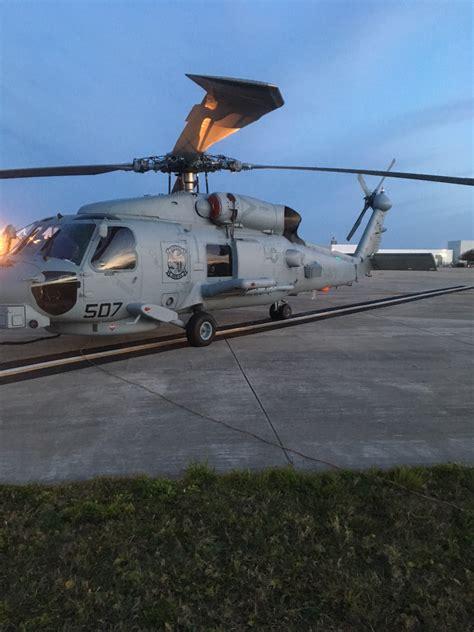
The U.S. Navy’s commitment to bolstering its Anti-Submarine Warfare (ASW) capabilities has taken a decisive leap forward with the integration of Digital Magnetic Anomaly Detection (DMAD) hardware kits into its frontline MH-60R Seahawk helicopters. This modernization effort, formalized through an $18.8 million contract awarded to Lockheed Martin’s Owego facility in New York, aims to significantly sharpen airborne submarine detection in contested maritime environments.
This procurement delivers 25 DMAD hardware kits and associated program management services, adding to the Navy’s ongoing fleet modernization initiatives. Scheduled for completion by January 2027, the project emphasizes not only hardware delivery but also full integration, quality control, and logistical support. The introduction of the DMAD system marks a generational upgrade in submarine detection technology.
A Modern Sensor to Match Modern Threats
The DMAD system offers a sophisticated solution for detecting submerged threats through minute fluctuations in Earth’s magnetic field, caused by the presence of large metallic submarine hulls. When a magnetic anomaly is detected, an audible alert is triggered, and operators are supplied with real-time positional and range data on the display unit—enabling quick response targeting in dynamic combat conditions.
Compact in size and weighing under 9 kilograms, the DMAD hardware is designed for internal installation in the Seahawk’s tail cone. This allows for seamless integration without compromising aerodynamics or sensor array balance. Its lightweight design also supports easier maintenance and long-term reliability—crucial features for forward-deployed naval aviation squadrons.
The transition from older magnetic anomaly systems to the digital DMAD kit brings marked improvements in sensitivity, signal clarity, and reduced false alarm rates, allowing operators to distinguish between real threats and environmental clutter with greater confidence.
MH-60R Seahawk: The Navy’s Sub-Hunting Workhorse
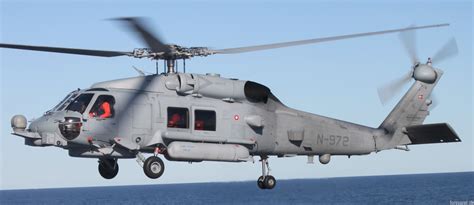
The DMAD kits are being deployed aboard the MH-60R Seahawk, a helicopter engineered by Sikorsky Aircraft and integrated by Lockheed Martin Systems. This rotorcraft serves as the backbone of the Navy’s airborne ASW fleet, having fully replaced the SH-60B and SH-60F by 2010.
Purpose-built for multi-mission maritime operations, the MH-60R operates from aviation-capable warships, including destroyers, cruisers, and aircraft carriers, offering critical reach into expansive oceanic battlespaces. Its core mission profile encompasses:
- Anti-Submarine Warfare (ASW)
- Surface Warfare (SUW)
- Electronic Warfare
- Command & Control
- Naval Fire Support
- Medevac and Search and Rescue
- Special Warfare Insertion
- Intelligence, Surveillance, and Reconnaissance (ISR)
Full-Spectrum Integration for Naval Dominance
The MH-60R is already outfitted with an advanced suite of sensors, including the AN/AQS-22 ALFS dipping sonar, multi-mode radar, FLIR electro-optical sensors, and the recently introduced MAD-XR system—a precursor to the DMAD platform. The DMAD now enters this environment not merely as another sensor, but as a force multiplier, augmenting and complementing existing detection tools for layered, multi-sensor ASW tactics.
Paired with the helicopter’s open-architecture combat systems, the DMAD integrates seamlessly into mission consoles, enhancing operator workflows while reducing cognitive load during high-tempo operations. This digital leap also allows for faster software updates and improved data sharing across networked maritime assets, enabling coordinated ASW efforts on a fleet-wide scale.
Technical Advantages of the DMAD System
What makes the DMAD kit transformational is not just its digital interface, but its modular, scalable design:
- Compact Weight: < 9 kg including cables and mountings
- Internal Mounting: Tail cone installation keeps external footprint minimal
- High Sensitivity: Can detect small anomalies at greater distances
- Low False Alarm Rate: Enhanced discrimination algorithms
- Audio & Visual Alerts: Situationally optimized for multi-role crews
- Full Compatibility: Designed for MH-60R’s current avionics suite

Strategic Implications Amid Global Submarine Proliferation
The U.S. Navy’s DMAD investment is more than a platform upgrade—it’s a strategic necessity. Near-peer adversaries such as China, with a modern submarine fleet exceeding 66 vessels, have focused on expanding their underwater stealth capabilities. This includes air-independent propulsion systems, quieter hull designs, and sophisticated decoy tactics.
In this context, legacy MAD systems increasingly fall short. The DMAD offers the detection granularity and real-time cueing required to detect low-signature threats lurking below thermoclines and deep-layer currents—regions where sonar performance may degrade.
Additionally, adversarial submarines are becoming more emboldened in contested areas such as the South China Sea, Arctic waters, and the Indian Ocean, reinforcing the need for persistent, mobile, and accurate detection platforms like the MH-60R with DMAD.
Program Evolution and Timeline
The DMAD integration is not an overnight effort—it is the product of phased testing and refinement:
- Early 2024: Software updates for MH-60R platforms to support DMAD compatibility.
- September 2024: Initial contract awarded to Sikorsky for 6 prototype kits.
- July 2025: Lockheed Martin receives full-scale production contract for 25 kits.
- 2025–2027: Full integration, testing, and fleet-wide operational deployment.
The program’s careful rollout underscores the Navy’s methodical approach to implementing new ASW capabilities without disrupting current operations. Each aircraft fitted with the DMAD kit represents a mobile ASW node capable of contributing to a larger mesh of underwater domain awareness.
Operational Edge Through Digital Overmatch
The strategic advantage offered by the DMAD system also supports the Navy’s broader Distributed Maritime Operations (DMO) strategy, which aims to dissolve rigid command hierarchies in favor of a more flexible, resilient network of autonomous and manned systems working in concert.
With the DMAD’s high fidelity anomaly detection and real-time data fusion, commanders can deploy MH-60Rs more confidently in forward-deployed missions, knowing they are equipped to locate even the most elusive submarine threats. This technology also aligns with the Joint All-Domain Command and Control (JADC2) initiative, feeding ASW data into larger decision-making ecosystems across air, surface, and undersea platforms.
Looking Ahead: A New Benchmark in ASW
As submarine warfare reemerges as a decisive factor in future naval engagements, technologies like the Digital Magnetic Anomaly Detection kit establish a new benchmark in ASW performance. The convergence of compact hardware, digital analytics, and full systems integration signals a shift in how airborne assets can monitor and defend vast oceanic domains.
With 270 MH-60R helicopters currently in U.S. Navy service, the deployment of DMAD kits across a broad fleet ensures that this upgrade is not symbolic—but operationally impactful. The coming years will see these aircraft hunting quieter and faster adversaries with more precision than ever before.
In an era where undersea dominance determines strategic leverage, the DMAD kit represents the Navy’s commitment to staying ahead of the acoustic and magnetic silence game—a mission-critical investment that may well define the future of ASW dominance.