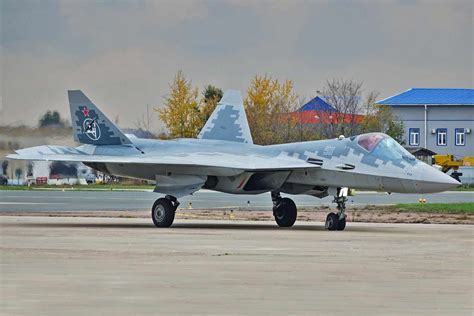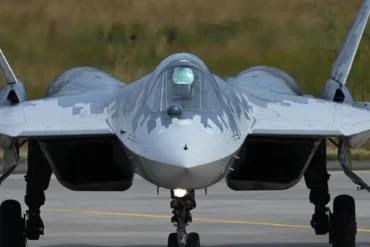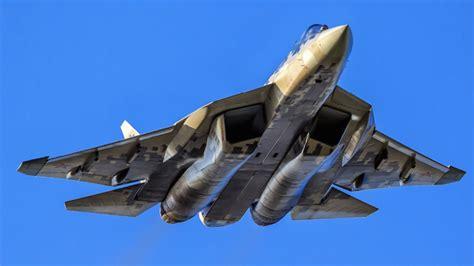
Russia’s United Aircraft Corporation (UAC) has officially unveiled the next-generation Su-57M fighter jet, marking a pivotal leap forward in Moscow’s fifth-generation combat aviation. Revealed on May 15, 2025, through Sukhoi’s design bureau and highlighted by veteran test pilot Sergei Bogdan, the upgraded Su-57M integrates artificial intelligence, improved stealth architecture, and aerodynamic refinements that elevate it beyond previous iterations of Russia’s stealth program.
Strategic Leap in Russia’s Fifth-Generation Fighter Evolution
The Su-57M stands as the most ambitious enhancement to the original PAK FA program, with roots stretching back to the early 2000s. While the original Su-57 entered limited service in 2020, it lacked the maturity and systemic integration seen in its Western counterparts. The Su-57M reverses that narrative decisively. As a multirole, AI-assisted, supersonic-capable platform, it brings Russia’s aerospace ambitions squarely into the high-end, fifth-generation fighter race.
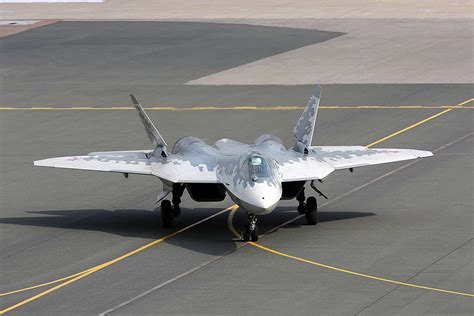
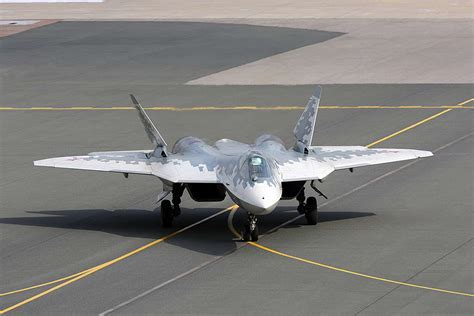
The redesigned airframe now features a wider fuselage, purpose-built to optimize aerodynamic lift and stability at high speeds. This widened structure is essential for achieving supersonic cruise without afterburners, a defining feature of true fifth-generation capability. Engineers at Sukhoi have incorporated a flat, stealth-optimized body, with internal weapons bays fully integrated into the glider structure. This architecture reduces radar cross-section (RCS) and supports low observability, critical for surviving modern air defense environments.
Artificial Intelligence: A New Cockpit Paradigm
One of the standout features of the Su-57M is the integration of AI-enabled pilot assistance systems, which dramatically shift the operational philosophy of Russian air combat doctrine. According to Sergei Bogdan, the fighter’s mission systems can initialize with a single-button press, streamlining all pre-flight diagnostics and mission configuration within seconds. AI modules manage real-time sensor data fusion, reduce cockpit workload, and assist pilots with target acquisition and threat prioritization.
This AI integration signals a notable departure from legacy aircraft operations, in which pilots managed numerous subsystems manually. The Su-57M’s automated logic cores provide battlefield situational awareness, enabling pilots to execute high-stress engagements with faster decision loops and lower cognitive fatigue.
Propulsion and Stealth: Marrying Speed with Invisibility
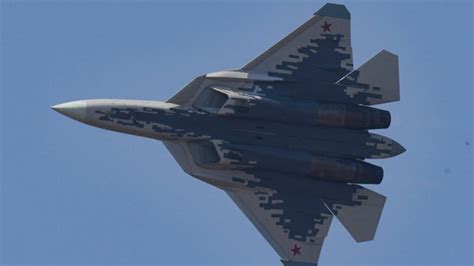
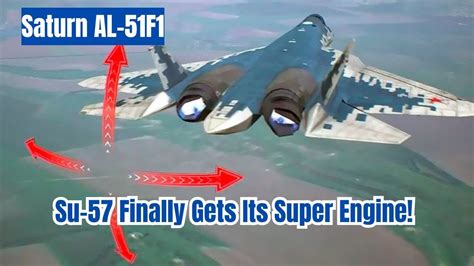
The Su-57M is now equipped with the Saturn AL-51 engines, a significant upgrade over the AL-41F1 used in earlier variants. The AL-51 not only delivers enhanced thrust and fuel efficiency but also supports supercruise—the ability to fly at supersonic speeds without afterburner use. This engine’s design, including improved vectoring nozzles, contributes to superior agility, especially in beyond-visual-range (BVR) engagements and evasive maneuvers.
Complementing these propulsion enhancements is a next-generation radar system, reportedly with extended detection ranges exceeding 400 km. The aircraft’s radar suite, embedded within the stealth geometry, offers multi-band operation, enabling the Su-57M to detect and track even low-RCS targets under heavy jamming conditions.
Tactical Superiority Against Global Rivals
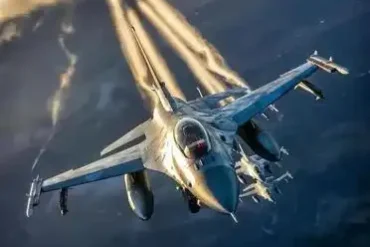
By integrating these upgrades, Russia positions the Su-57M to rival elite fifth-generation fighters such as the F-22 Raptor and China’s J-20 Mighty Dragon. While Western aircraft like the F-35 are known for unparalleled sensor fusion and networked warfare, the Su-57M offers counterbalancing advantages in airframe agility, long-range radar coverage, and AI-assisted solo operations.
Its stealth profile and internal armament enable deep-strike missions without the radar penalties associated with external ordnance. At the same time, the AI systems reduce reliance on large-scale battlefield networks, which may be vulnerable to disruption.
Test pilot Bogdan emphasized the aircraft’s glider design, stating that its lift-to-drag ratio allows for uninterrupted supersonic flight—a feat that many Western aircraft only achieve intermittently. Unlike the Eurofighter Typhoon or Dassault Rafale, which require constant afterburner use to break the supersonic threshold, the Su-57M achieves this with greater fuel economy and mission endurance.
A2/AD Doctrine and Theater-Level Force Projection
The Su-57M plays a pivotal role in Russia’s anti-access/area-denial (A2/AD) doctrine, particularly in high-tension theaters like Eastern Europe, the Arctic Circle, and Central Asia. With NATO expanding its forward presence in Baltic and Black Sea regions, the Su-57M gives the Russian Aerospace Forces a credible air dominance and interception capability in heavily contested airspaces.
Its stealth and detection suite make it a force multiplier when deployed in mixed squadrons alongside UAVs and electronic warfare (EW) aircraft. In this capacity, the Su-57M is not simply a solo performer but an integrated node in Russia’s wider strategic posture.
Furthermore, its deployment demonstrates resilience and continuity in Russia’s defense sector, despite international sanctions and technology embargoes. Sukhoi’s ability to iterate and evolve the airframe amid material and component limitations projects an image of indigenous capability and technological independence.
Export Viability and Geopolitical Messaging
While initially designed for domestic use, the Su-57M’s upgrades have clear implications for Russia’s defense export ambitions. Nations seeking alternatives to Western platforms may find the Su-57M appealing, particularly if offered with customizable mission systems and non-aligned logistical support.
Countries like India, Vietnam, and Algeria, previously considered potential buyers of the original Su-57, may now re-evaluate procurement in light of the improved AI and stealth systems. The Su-57M’s unveiling is thus not just a military development but also a strategic sales pitch, demonstrating Russia’s commitment to remaining a global supplier of high-end defense technology.
The aircraft’s unveiling also serves as a symbol of geopolitical defiance. It underscores that despite mounting pressure from Western coalitions, Moscow continues to invest in technologies that reduce dependency on imported components, particularly in avionics, propulsion, and radar engineering.
Toward Autonomy and Sixth-Generation Integration
Though squarely a fifth-generation platform, the Su-57M introduces key features that act as precursors to sixth-generation capabilities. AI-driven pilot-machine teaming, high-bandwidth data links, and automated diagnostic routines lay the groundwork for future systems that will likely involve unmanned wingmen, hypersonic weapons integration, and cyber-resilient avionics.
Sukhoi’s development trajectory suggests that the Su-57M will act as the baseline for future iterations—possibly an Su-57M1 or Su-57M2—where even higher degrees of autonomy, manned-unmanned teaming, and quantum-resilient communication protocols will be explored. For now, however, the Su-57M firmly reestablishes Russia’s claim to frontline innovation in tactical aviation.
Conclusion: Tactical Tool and Political Statement
The Su-57M is more than an aircraft—it is a strategic instrument. With its fusion of artificial intelligence, next-generation radar, stealth-optimized design, and superior maneuverability, the platform redefines what Russian aerospace ambitions can achieve under pressure.
By addressing past limitations and embracing future-ready architecture, Russia’s latest fighter project asserts both technological credibility and geopolitical resolve. As global airpower competition escalates, the Su-57M stands not only as a tactical solution to battlefield demands but also as a national statement of resilience, capability, and intent.