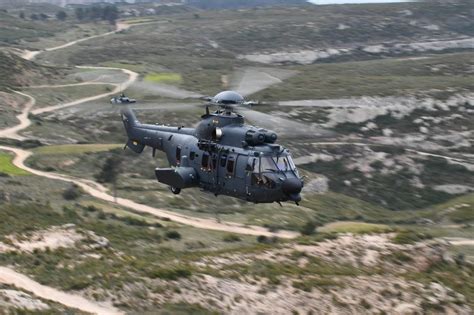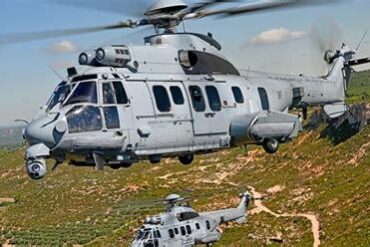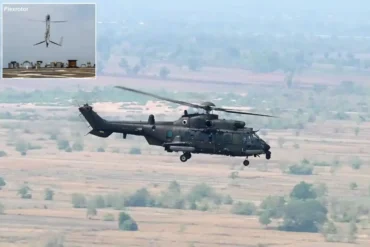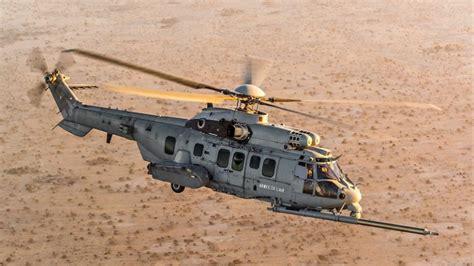
Morocco has taken a decisive leap forward in redefining its aerial warfare capabilities with the acquisition of ten H225M Caracal helicopters from Airbus Helicopters. This strategic procurement marks a watershed moment for the Royal Moroccan Air Force (RMAF), signaling a complete overhaul of its rotary-wing fleet and a significant enhancement in its operational reach across the Saharan and Atlantic theaters.
Strategic Modernization of Morocco’s Rotary-Wing Fleet
With this deal, Morocco initiates a comprehensive modernization effort aimed at phasing out its aging Aérospatiale SA 330 Puma helicopters. The H225M Caracal, derived from the civilian EC225 Super Puma and built for high-end military operations, offers a combination of endurance, modularity, and combat survivability unmatched by its predecessors. The acquisition serves a dual purpose: renewing hardware and restructuring the air force into a modern, Western-aligned combat unit ready to undertake joint, multi-domain operations across complex terrain.
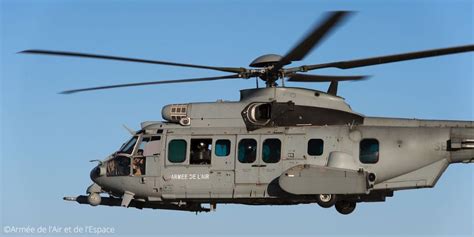
The RMAF’s new rotary assets are tailored for the specific needs of Combat Search and Rescue (CSAR), special forces operations, and long-range tactical transport. Morocco’s selection of the Caracal over the AW101, Sikorsky S-92, and Mil Mi-38 underscores a focused operational doctrine that privileges network integration, aerial refueling, and mission flexibility in both peacetime and contested environments.
Technical Capabilities Optimized for Saharan Operations
At the core of the Caracal’s advantage lies its adaptability to the “hot and high” operating conditions of the Moroccan Sahara. Powered by two Turbomeca Makila 2A turboshaft engines, the H225M delivers robust lift capacity and endurance even under extreme desert temperatures and high altitudes.
The Caracal’s combat-specific modifications include:
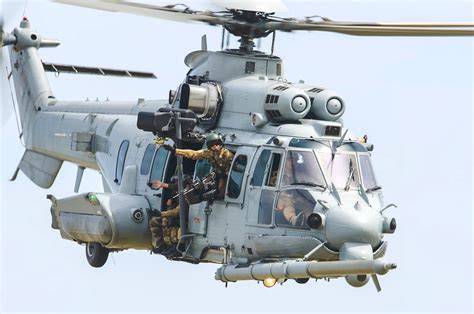
- Safran Euroflir 410 EO/IR turret: Provides HD electro-optical and infrared imagery for targeting, identification, and post-strike assessment.
- Double hoist system: Facilitates rapid extraction or insertion of troops in critical missions.
- Advanced cockpit: Features a fully digital, all-glass avionics suite and a four-axis digital automatic flight control system, optimizing pilot situational awareness and reducing workload during low-level or brownout conditions.
- Self-protection suite: Integrates electronic warfare countermeasures and provisions for door-mounted defensive machine guns, ensuring survivability in hostile zones.
These features collectively transform the H225M into a next-generation force multiplier, capable of supporting Morocco’s rapid deployment doctrine with agility and precision.
Operational Superiority Through Aerial Refueling Capability
What truly sets the Caracal apart is its integrated aerial refueling probe, a rare feature in its weight class. This capability extends the helicopter’s combat radius beyond 1,200 kilometers, enabling deep-penetration missions into the Sahara or sustained maritime patrols along the Atlantic coast.
The long reach ensures that Moroccan special forces can be deployed covertly across vast expanses or conduct time-sensitive missions such as:
- Hostage rescue operations in non-permissive zones
- Strategic reconnaissance behind enemy lines
- Special forces insertions across the Western Sahara berm
This deep-strike capability also positions Morocco ahead of regional adversaries, particularly Algeria, whose helicopter fleet lacks similar extended CSAR functionality and networked mission systems.
Force Integration with Western Platforms and Doctrines
Morocco’s decision to align with Airbus reaffirms its broader strategic goal of integrating into Western defense architectures. The country already operates variants of Super Puma helicopters, and the addition of Caracals offers a seamless transition in terms of logistics, training, and maintenance.
Moreover, Airbus’s commitment to establishing a regional Maintenance, Repair, and Overhaul (MRO) ecosystem inside Morocco signals a strong push toward defense industrial autonomy. This initiative not only enhances the Kingdom’s operational independence but also lays the groundwork for future joint ventures in aerospace production and sustainment.
Geopolitical Implications and Regional Signaling
The acquisition is not just a tactical enhancement—it is a strategic message. Amid rising tensions with Algeria over the Western Sahara dispute, Morocco has chosen to outpace its rival in mobility, ISR, and power projection. The fortified berm separating Moroccan-controlled territory from Polisario positions is increasingly becoming a flashpoint. The ability to respond quickly and decisively across this vast, arid frontier is critical.
The Caracal’s deployment capabilities allow Moroccan forces to perform covert insertions, humanitarian evacuations, and real-time intelligence gathering even in non-permissive environments. These missions are enhanced when integrated with Morocco’s incoming fleet of Boeing AH-64E Apache helicopters, creating a synergistic strike and support framework that mirrors NATO-style joint operations.
Furthermore, the helicopter deal strengthens bilateral defense ties between Morocco and France, a founding partner of Airbus. The procurement aligns with Morocco’s diplomatic shift as France recalibrates its position on Moroccan sovereignty over the Sahara, anchoring Rabat’s place in the Western defense-industrial complex.
From Legacy to Lethality: Replacing the Puma Fleet
Morocco’s previous reliance on Pumas, Hueys, and CH-47D Chinooks exposed limitations in operational reach, survivability, and sensor integration. These older platforms lacked the digital infrastructure necessary for modern warfare, particularly in asymmetric or hybrid conflict scenarios where ISR and rapid mobility are paramount.
With the H225M, the RMAF gains a helicopter that is not just newer, but fundamentally more capable:
- Digitally networked for integration with land, sea, and air units
- Survivable in high-threat environments
- Flexible for a wide array of missions beyond traditional troop transport
The resulting fleet of 10 Caracals gives Morocco the capability to maintain persistent presence over critical zones, including maritime chokepoints and desert interiors, with faster response times and greater mission success probability.
Industrial Sovereignty and Long-Term Sustainability
Beyond the battlefield, the deal offers long-term dividends in the form of industrial capacity building. Airbus’s planned local support infrastructure in Morocco ensures:
- Job creation in high-tech sectors
- Knowledge transfer to Moroccan engineers and technicians
- Reduced dependency on foreign service contracts
This reflects Morocco’s broader strategy to become a regional defense hub in North Africa, not only consuming advanced technology but becoming a stakeholder in its development and maintenance.
Conclusion: A Doctrinal Shift Toward High-End Warfare
The procurement of the H225M Caracal fleet signifies much more than an upgrade in military hardware—it is a doctrinal shift. Morocco is moving toward a high-end, integrated force posture, capable of operating in synchronization with its Western allies and prepared for the full spectrum of modern conflict.
In an era where mobility, intelligence, and adaptability define success on the battlefield, the H225M provides Morocco with a critical edge. As threats evolve and competition intensifies across the Maghreb, these helicopters will serve as both a deterrent and a decisive tool, embodying the Kingdom’s intent to lead, not lag, in the defense of its sovereignty and strategic interests.