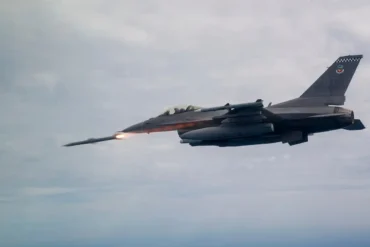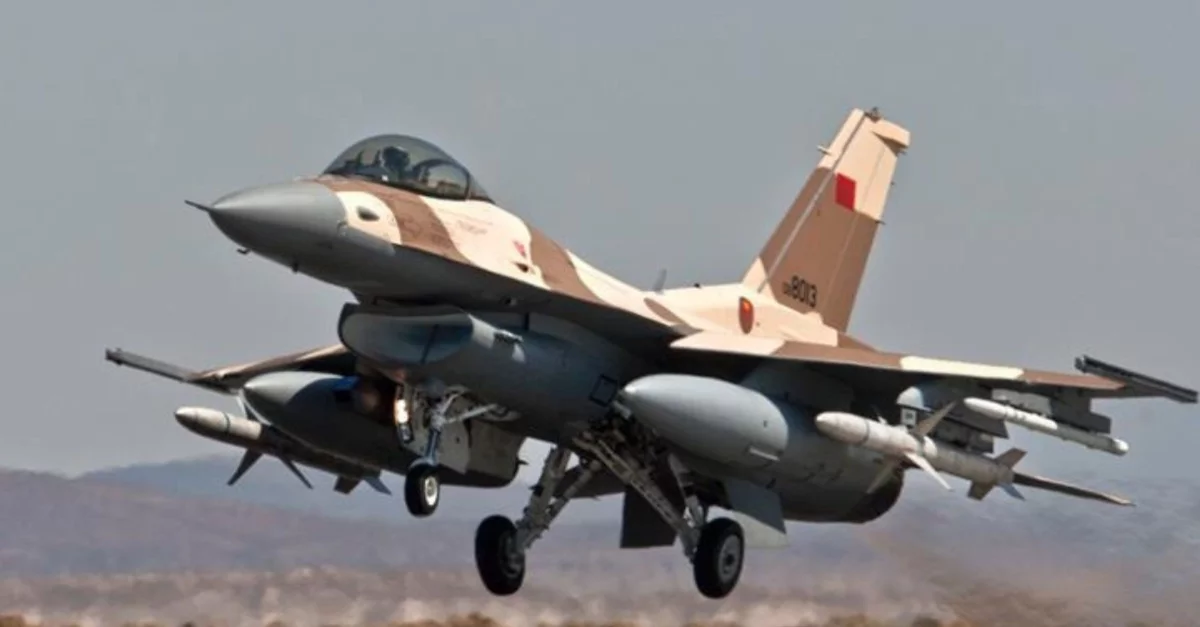
The Royal Moroccan Air Force (RMAF) has taken a significant leap forward in maritime defense with the integration of AGM-84 Harpoon Block II missiles onto its F-16 Fighting Falcon fleet. This development enhances Morocco’s ability to defend its 3,500 km coastline, ensuring maritime security and reinforcing its strategic posture in North Africa. This article explores the acquisition, capabilities, strategic implications, and broader military context of this integration.
Acquisition and Integration of Harpoon Missiles with F-16s
Harpoon Block II Procurement
The Moroccan government acquired 10 AGM-84 Harpoon Block II anti-ship missiles through a $62 million deal, approved by the U.S. State Department in April 2020. This procurement aligns with Morocco’s broader military modernization strategy under King Mohammed VI, aimed at enhancing its defense capabilities.
F-16 Fleet Upgrade for Harpoon Integration
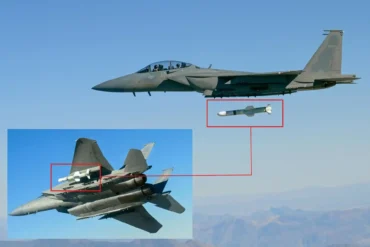
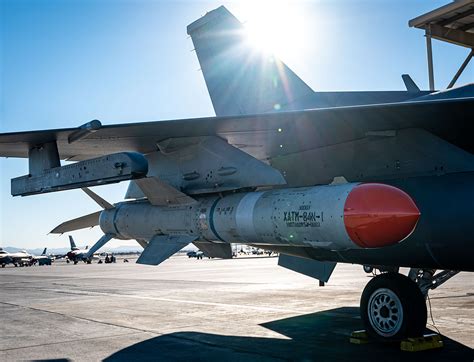
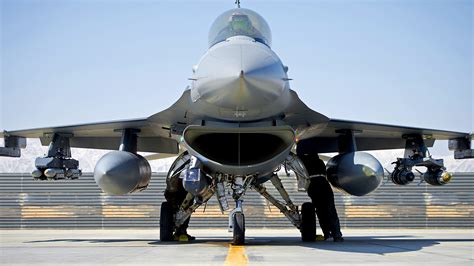
To facilitate the integration of Harpoon missiles, Morocco’s F-16 Viper fleet is undergoing critical modifications. These include the addition of BRU-57/A weapon release units, effectively doubling the aircraft’s ability to carry smart munitions such as JDAMs (Joint Direct Attack Munitions). Additionally, Morocco is set to receive 24 advanced F-16V jets by 2026, further strengthening its aerial capabilities.
Technical Capabilities of the Harpoon Block II
Range and Warhead
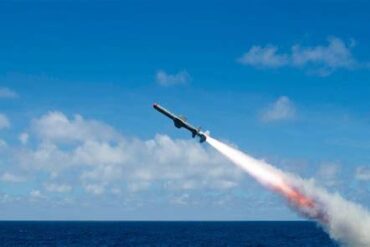
The AGM-84 Harpoon Block II is a highly capable anti-ship missile with a maximum range of 280 km. It carries a 525 kg blast-fragmentation warhead, ensuring devastating impact against enemy maritime assets. This gives the RMAF the ability to strike enemy vessels far beyond its territorial waters.
Advanced Guidance System
The missile incorporates active radar homing and GPS-aided navigation, allowing for highly precise targeting. However, due to political restrictions, Morocco’s Harpoons are software-limited to coastal targeting, preventing their use against land-based targets.
Multi-Platform Launch Capability
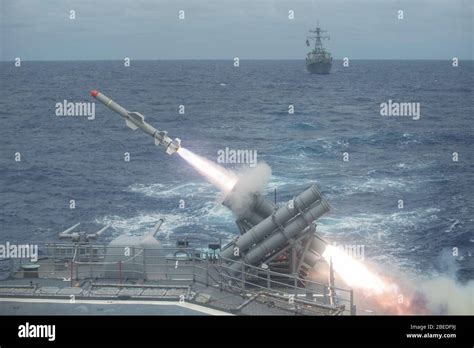
The Harpoon Block II is designed for deployment from various platforms, including aircraft, ships, and submarines. However, Morocco’s primary focus remains on air-launched operations via F-16s, significantly expanding its maritime strike capability.
Strategic Implications for Morocco
Enhanced Maritime Security
With a coastline spanning 3,500 km, Morocco faces persistent maritime threats. The integration of Harpoon missiles into its F-16s allows the RMAF to effectively patrol and defend its waters, deterring potential adversaries and ensuring national security.
Boosting Defense Autonomy
This acquisition is part of Morocco’s broader strategy to reduce dependence on foreign military support. Alongside legislative projects to bolster domestic defense production, the Harpoon-F-16 integration exemplifies Morocco’s move toward greater self-sufficiency in defense.
NATO Interoperability and Regional Influence
By integrating the Harpoon Block II with its F-16s, Morocco aligns itself with NATO standards, strengthening its role as a key U.S. security partner in North Africa. This move enhances Morocco’s regional influence, particularly amid escalating tensions in the Mediterranean and North African geopolitical landscape.
Comparison with Other F-16 Armaments
While the Harpoon Block II enhances anti-ship strike capabilities, the Moroccan F-16 fleet carries a diverse array of weapons for various combat scenarios:
Air-to-Air Weapons
- AIM-120 AMRAAM – Long-range radar-guided missile for beyond-visual-range (BVR) combat
- AIM-9 Sidewinder – Short-range infrared-guided missile for dogfighting
Air-to-Ground Weapons
- AGM-65 Maverick – Precision-guided missile for strike missions
- GBU-12/24 Paveway – Laser-guided bombs for high-accuracy ground attack
Electronic Warfare Capabilities
- AGM-88 HARM – Designed to neutralize enemy radar systems
By adding the Harpoon Block II, Morocco’s F-16s now possess long-range maritime strike capability, filling a gap previously reliant on shorter-range weapons such as the AGM-65 Maverick.
Broader Context: The Global F-16 Modernization Trend
Radar and Avionics Upgrades
As part of its broader military modernization, Morocco is retrofitting its F-16s with cutting-edge technologies such as the AN/APG-83 AESA radar. This significantly improves target detection and tracking, making the Harpoon missile even more effective in complex environments.
Next-Generation Missile Integration
Morocco is also set to integrate SLAM-ER (Standoff Land Attack Missile – Expanded Response) onto its F-16s. While Harpoon remains focused on maritime targets, SLAM-ER expands Morocco’s precision strike capabilities to include land-based objectives.
Extending the F-16’s Lifespan
Despite being in service since the 1970s, the F-16 Fighting Falcon remains one of the most versatile and widely used fighter jets worldwide. The integration of modern weaponry such as the Harpoon Block II ensures its relevance in 21st-century warfare, allowing Morocco to maintain a cutting-edge air force.
Conclusion
The integration of Harpoon Block II missiles into Morocco’s F-16 fleet marks a significant leap in the nation’s maritime defense strategy. This move not only enhances Morocco’s ability to monitor and protect its territorial waters but also strengthens its strategic partnerships and aligns its military capabilities with global standards. By combining long-range precision weaponry with advanced avionics and multirole capabilities, the RMAF is set to play a formidable role in North African security dynamics for years to come.
Frequently Asked Questions (FAQ)
1. Why is Morocco integrating Harpoon missiles into its F-16s?
Morocco is integrating AGM-84 Harpoon Block II missiles into its F-16 fleet to enhance its maritime strike capabilities, ensuring better coastal defense and regional deterrence.
2. How does the Harpoon Block II compare to other F-16 weapons?
Unlike traditional air-to-air and air-to-ground weapons on the F-16, the Harpoon Block II specializes in long-range anti-ship attacks, allowing Morocco to engage naval threats from a safe distance.
3. What future upgrades are planned for Morocco’s F-16 fleet?
Morocco is modernizing its F-16s with AN/APG-83 AESA radar, BRU-57/A weapon release units, and potential integration of SLAM-ER missiles, ensuring continued combat effectiveness in evolving military landscapes.