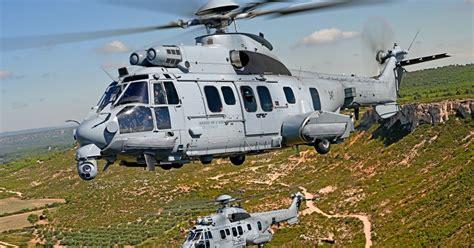
Romania is poised to enter a transformative stage in its military aviation modernization with the upcoming negotiations for Airbus H225M Caracal helicopters, supported by a €1 billion allocation under the European Union’s SAFE (Strategic Armament for Europe) funding mechanism. This marks a critical shift in Romania’s defense strategy, aiming not just to replace its aging helicopter fleet but also to position itself more strategically within Europe’s defense industrial framework.
A Strategic Leap in Helicopter Modernization
The Romanian Ministry of Defence’s decision to explicitly name the Airbus H225M and H175 helicopters in its SAFE-funded projects list signals a strong commitment to operational modernization. The move breaks from the pattern seen in other SAFE applications, where countries typically reference generic capabilities. This specificity not only highlights Romania’s clear platform preference but also intensifies anticipation for upcoming negotiations with Airbus.
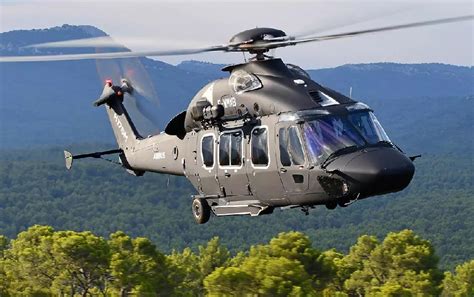
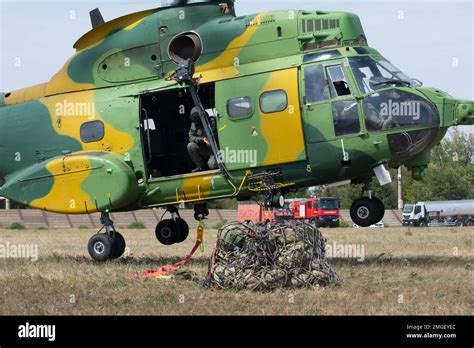
The funding allocation of around €1 billion, while substantial, reflects only a portion of the projected need. Romania’s broader helicopter replacement strategy is estimated to require up to 90 aircraft to fully replace the IAR-330 Puma fleet—aging platforms that have served since the Cold War era. As these helicopters near the end of their operational lifespan, Romania’s hand is forced by urgent operational imperatives, making the H225M acquisition less a matter of choice than one of necessity.
SAFE Funding and Its Transformative Potential
The European SAFE mechanism offers over €16 billion in low-interest loans and grants, designed to stimulate defense collaboration and strategic autonomy across the EU. Romania’s eligibility for this funding provides a rare opportunity to synchronize its national military objectives with broader European industrial goals.
By explicitly including the H225M and H175 helicopters under this framework, Romania ensures that its modernization push will also contribute to shared European defense capabilities. However, this inclusion also raises unresolved questions:
- How many helicopters will be ordered?
- What will be the delivery timeline?
- Will local Romanian industry play a role in production or maintenance?
These key elements remain subject to negotiations expected to culminate around May 2026.
The Brașov Conundrum: Industry vs. Capability
Romania’s aerospace sector, particularly the Airbus Helicopters facility in Ghimbav near Brașov, is central to the local industrial debate. Built in 2016 in partnership with IAR Brașov, the plant was intended to support domestic helicopter production. Airbus’s offer to license production of the H215M in Romania was initially seen as a way to anchor helicopter manufacturing on Romanian soil.
However, the Romanian military rejected the H215M, arguing that the platform no longer met future operational needs. They instead favored the more advanced H225M Caracal, a newer and more capable evolution in the Super Puma family. The catch? Airbus did not offer a license for domestic production of the H225M, leaving Romania torn between supporting local industry and acquiring the best-fit helicopter for military missions.
Defense Priorities Take the Lead
This internal tension was crystallized in late 2025 when Radu Miruță, then Minister of Economy and now Minister of Defence, publicly acknowledged the dilemma. He emphasized that while local production is desirable, it cannot override operational priorities. The military requires a platform like the H225M, which offers greater performance, survivability, and mission versatility compared to the older H215M.
The H225M’s lineage traces back to the Aérospatiale SA 330 Puma, license-built in Romania as the IAR-330. This was later modernized into the AS532 Cougar and eventually into the Eurocopter EC725 Caracal, now branded as the H225M. Its capabilities far exceed its predecessors and align more closely with Romania’s modern tactical and strategic requirements.
H225M: A Platform Designed for Modern Battlefields
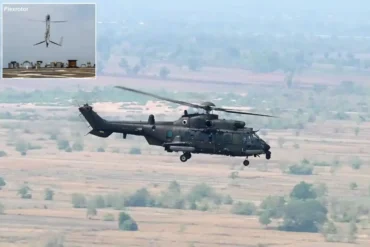
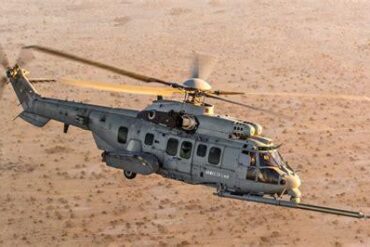
The Airbus H225M Caracal is a twin-engine multi-role military helicopter renowned for its adaptability and endurance. With a maximum takeoff weight exceeding 11 tonnes, it is powered by two Safran Makila 2A1 engines, providing superior lift and payload capacity compared to older platforms. The aircraft can carry up to 28–30 fully equipped troops, and its range can reach 700 nautical miles, extendable through aerial refueling.
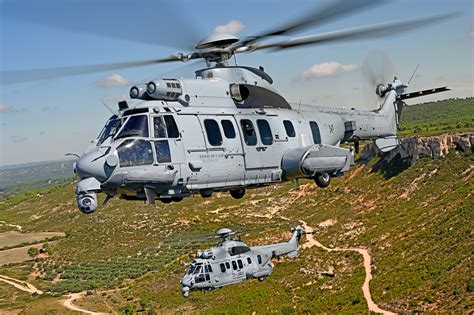
In terms of avionics and systems, the H225M boasts a fully digital glass cockpit, four-axis automatic flight control, and compatibility with night vision goggles. These features enable precision flying even in degraded visual environments, expanding mission readiness in all weather conditions. The helicopter is also equipped with survivability systems such as:
- Energy-absorbing landing gear
- Self-sealing fuel tanks
- Ballistic protection for cockpit and cabin
- Integrated defensive aids suite (MAWS, RWR, LWR, chaff/flares)
Its adaptability for special operations, search and rescue, troop transport, and armed escort missions makes it a true multi-role platform.
Regional Pressures and Strategic Timing
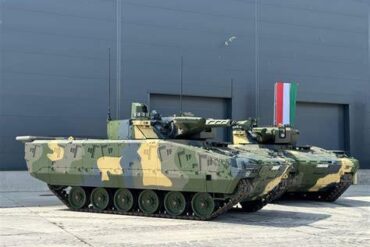
Romania’s urgency is also shaped by regional dynamics. Neighboring Hungary already operates 16 H225M helicopters, setting a precedent for the platform’s role in the region. Additional European users and export customers have created a growing backlog for Airbus, with estimated delivery lead times of around three years. This amplifies the pressure on Romania to finalize procurement decisions promptly if it hopes to secure early delivery slots.
Further complicating the landscape is the competitive presence of Lockheed Martin’s Black Hawk helicopters, manufactured in Poland by PZL Mielec. Though operationally solid and already deployed in Romania by certain services like the Ministry of Interior, their U.S. origin reduces alignment with the EU’s SAFE funding emphasis on European defense industrial cooperation.
Local Involvement: Still on the Table?
While Airbus has so far withheld a production license for the H225M in Romania, discussions around local assembly, maintenance, and lifecycle support are still very much in play. If Romanian negotiators succeed in securing a more significant role for the Brașov aerospace sector, this deal could serve both operational and industrial goals.
The key will be striking a balance—ensuring the Romanian Armed Forces receive a platform that meets modern operational standards, while also retaining economic benefits within the national industrial base. Whether through assembly, component production, or sustainment infrastructure, the Ghimbav facility could still feature prominently in the long-term helicopter ecosystem.
Conclusion: Negotiations Will Shape Romania’s Military Future
Romania stands at a crossroads where defense modernization, industrial policy, and European integration intersect. With clear platform preferences declared, funding secured, and negotiations on the horizon, the next few months will determine not just which helicopters Romania flies, but also how deeply it integrates into Europe’s collective defense production landscape.
The upcoming deal for the Airbus H225M Caracal, framed by the EU SAFE program, has the potential to become more than a procurement exercise. It could redefine Romania’s defense posture, consolidate its industrial sovereignty, and elevate its status as a proactive contributor to European defense resilience.