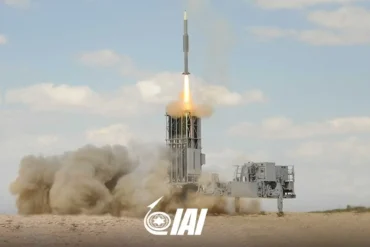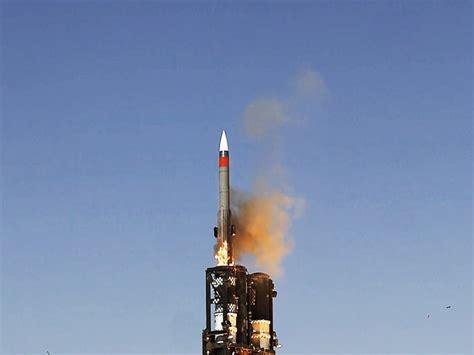
In a bold move to accelerate national defense modernization, the Greek government has revealed plans to request €1.2 billion in financial support from the European Union under the SAFE (Support to Ammunition, Fuel, and Equipment) program. The funds, if approved, will underpin the implementation of Greece’s newly unveiled “Achilles Shield” initiative, a strategic shift that aims to bring forward high-priority military projects originally scheduled for post-2030. At the heart of this ambitious plan is the acquisition of the BARAK MX air and missile defense system, a combat-proven platform developed by Israel Aerospace Industries (IAI), already deployed in neighboring Cyprus.
Greece’s “Achilles Shield” Initiative: A Strategic Leap Forward
The Achilles Shield program represents a comprehensive acceleration of Greece’s defense capabilities in response to intensifying regional tensions and the evolving landscape of aerial threats. Spearheaded by Prime Minister Kyriakos Mitsotakis, the initiative targets the rapid procurement and integration of advanced systems capable of countering modern aerial and missile threats. With this move, Greece signals not only its commitment to national security but also its alignment with broader NATO and EU defense modernization frameworks.
The proposed acquisitions under this initiative are not limited to the BARAK MX system alone. Greece is also eyeing the Precise and Universal Launching System (PULS) multiple rocket launchers, another cutting-edge platform from Israel, estimated at €690 million. Combined, these systems represent a significant leap in operational capability, allowing Greece to close capability gaps and reinforce its role as a strategic bulwark on NATO’s southeastern flank.
BARAK MX: A Comprehensive Shield Against Modern Aerial Threats
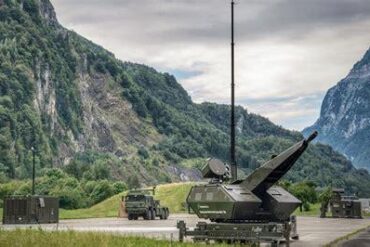
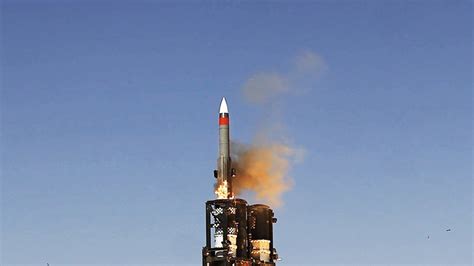
The BARAK MX is more than a traditional air defense platform. It is an integrated, modular, and scalable air and missile defense ecosystem, capable of operating across a broad spectrum of threat environments. Developed by Israel Aerospace Industries, the BARAK MX consists of:
- A Battle Management Center (BMC) that oversees system operations and target engagement priorities
- AESA multi-mission radar systems, specifically the ELM-2084 radar from ELTA Systems, featuring gallium nitride (GaN) technology for superior detection capabilities
- A unified land-based launcher capable of vertical 360-degree interception
The system employs three interceptor variants, tailored for different ranges:
- MRAD: Medium-Range, up to 35 km
- LRAD: Long-Range, up to 70 km
- ER: Extended Range, up to 150 km
Each interceptor uses active radar guidance and is capable of maneuvering up to 50 g, ensuring high effectiveness against fast-moving and evasive targets. Whether facing drones, helicopters, fighter aircraft, cruise missiles, or precision-guided munitions, the BARAK MX offers a formidable response capacity. Its architecture allows seamless integration into existing command-and-control networks, making it ideal for joint force operations.
Why BARAK MX? Greece’s Strategic Calculus
Greece’s interest in the BARAK MX is rooted in several key considerations:
- Combat-Proven Credibility: Already deployed by Cyprus, India, and Israel, the BARAK MX has demonstrated reliable performance under operational conditions.
- Interoperability: Its design supports integration with NATO-standard command systems, offering flexibility for coalition operations.
- 360° Vertical Launch Capability: This feature ensures simultaneous coverage against multiple incoming threats from any direction.
- Mobility and Deployment Speed: The modular system is highly mobile and can be deployed rapidly, even in rugged or contested terrain.
- Adaptability to Emerging Threats: Future upgrades can be integrated without replacing the core architecture, ensuring long-term viability.
This decision aligns with Greece’s broader aim to deterrent strategy and rapid response posture. In the face of increased Turkish drone activity, ongoing instability in the Middle East, and the unpredictable trajectory of Russian influence in the Eastern Mediterranean, such a platform is seen as essential to securing Greek airspace.
EU SAFE Program: Financing European Defense Sovereignty
The SAFE program, introduced by the European Commission, aims to support EU member states in acquiring ammunition, equipment, and strategic assets critical to defense readiness. Greece’s €1.2 billion loan application stands out not just for its size, but for its strategic coherence: both BARAK MX and PULS systems meet SAFE’s funding criteria, being defensive, modular, and deployable systems that contribute to the collective defense posture of the EU.
The funding is expected to support:
- Initial procurement costs
- Training and integration
- Infrastructure upgrades required for system deployment
- Spare parts and logistical support
Although formal submission and approval of the request are pending, Brussels has shown increasing openness to funding member-state defense procurement, especially when the assets in question strengthen Europe’s outer defense perimeters.

Complementary Acquisition: Israeli PULS Multiple Rocket Launcher
Parallel to the BARAK MX, Greece plans to procure 36 PULS multiple rocket launchers, an artillery system offering scalable firepower and long-range strike options. PULS stands out due to its modular design, capable of launching a range of munitions — from short-range rockets to precision-guided tactical missiles. The launcher platform is vehicle-mounted, ensuring mobility and survivability in forward-operating scenarios.
This dual-track acquisition — BARAK MX for air defense and PULS for ground strike capabilities — represents a multi-domain enhancement of Greek forces. Together, these systems address both offensive and defensive strategic layers, offering a deterrent against airspace violations and potential incursions.
Domestic and Geopolitical Implications
The Mitsotakis administration’s push for early procurement marks a decisive turn in Greece’s national security doctrine. The Achilles Shield initiative sends a clear message of strategic assertiveness, not only to domestic constituents but also to regional rivals and EU defense partners.
Domestically, this move will likely garner support within military and policy circles, particularly as the public becomes more aware of regional threats. Politically, it strengthens the ruling government’s narrative of defense sovereignty and proactive risk mitigation.
Regionally, the move reinforces the Athens-Nicosia-Jerusalem axis, an informal but increasingly prominent defense and energy partnership. With both Cyprus and Israel already operating BARAK MX systems, Greece’s acquisition further cements trilateral interoperability.
Final Outlook: A Strategic Realignment in the Making
If the SAFE program funding is approved, Greece would not only benefit from state-of-the-art air and missile defense capabilities but also emerge as a key security contributor within the EU and NATO architecture. By moving its defense modernization agenda forward by at least five years, the Greek government demonstrates its intent to shift from reactive to proactive defense planning.
As the global defense landscape becomes more volatile and unpredictable, the decision to adopt the BARAK MX and PULS systems could very well mark a turning point in Greek military strategy. It signifies not just a procurement decision, but a strategic realignment, ensuring that Greek skies remain sovereign, secure, and shielded — now and into the next decade.
The coming months will be pivotal, with Brussels expected to weigh the political, technical, and financial dimensions of Greece’s SAFE application. Should the proposal proceed without major hurdles, Greece may begin receiving its first BARAK MX systems as early as 2026, setting a new standard for integrated air defense in Southeastern Europe.