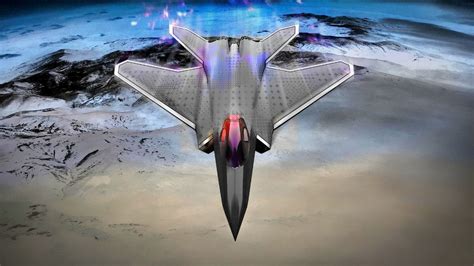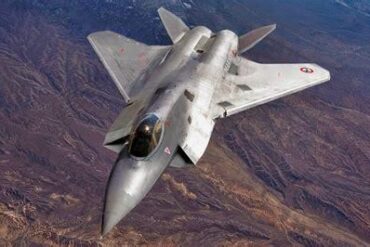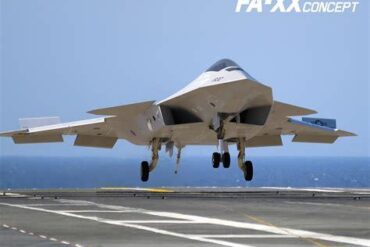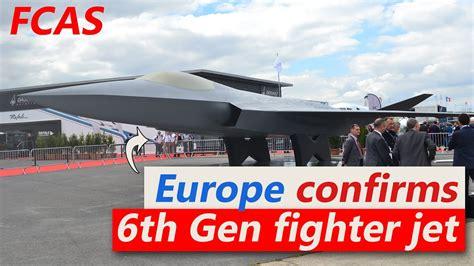
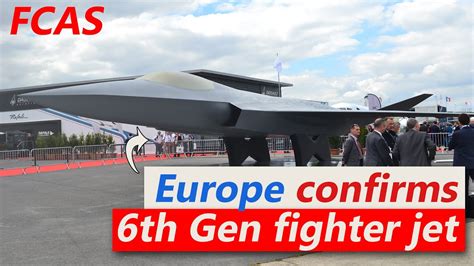
The Future Combat Air System (FCAS)—Europe’s flagship sixth-generation fighter jet program—faces an uncertain future as internal rifts threaten to unravel years of multinational cooperation. Spearheaded by France, Germany, and Spain, FCAS was envisioned as a next-generation leap beyond the Eurofighter Typhoon, designed to counter rising global threats and maintain Europe’s aerospace sovereignty. However, deep disagreements over workshare, leadership roles, and strategic autonomy are casting serious doubt on whether the project can survive in its current form.
France Pushes for Rethink as Delays Mount
At the heart of the crisis is France’s call for a fundamental restructuring of the tripartite program. The French Directorate General for Armament (DGA) has publicly urged partners Germany and Spain to reconsider the distribution of industrial responsibilities and project governance. According to a statement from the DGA, France seeks to “strengthen industrial leadership” and draw lessons from the troubled early years of FCAS cooperation to avoid slipping further behind schedule.
This request comes after multiple delays have already set back critical design and prototype phases. The project’s official 2040 target for initial operational capability now appears tenuous, with industry insiders like Dassault Aviation CEO Éric Trappier warning that 2045 may be a more realistic date.
The DGA emphasized that FCAS is a project of “unprecedented complexity,” which may necessitate a complete “reworking of the division of labor” between participating companies—primarily Dassault (France), Airbus (Germany), and Indra (Spain).
A Legacy of Discord: France’s Historical Exit Pattern
This isn’t the first time France has grown disillusioned with multinational defense collaborations. The pattern dates back decades, revealing a recurring tension between French defense industrial autonomy and pan-European military ambitions.
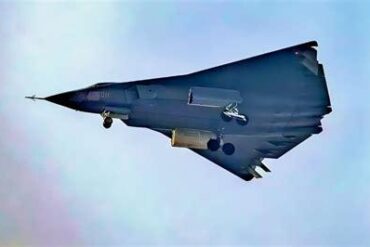
In the 1960s, France abandoned an early NATO collaborative fighter initiative, opting instead to develop the Mirage 2000 through Dassault Aviation. In the 1980s, France initially helped form the European Fighter Aircraft Program, only to withdraw over disputes regarding aircraft roles and decision-making control. That departure resulted in the independent development of the Dassault Rafale, a twin-engine, omnirole fighter that closely resembles the multinational Eurofighter Typhoon—yet remains uniquely French in design, supply chain, and deployment philosophy.
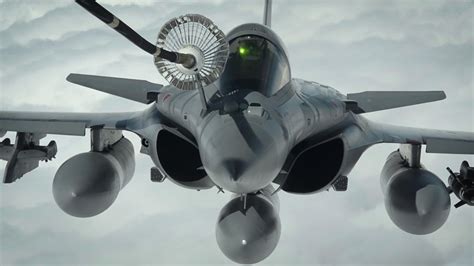
France’s insistence on strategic independence, particularly in areas such as nuclear deterrence, further complicates joint development efforts. Any future fighter designed through FCAS must be capable of carrying France’s airborne nuclear weapons, a demand not shared by Germany or Spain, whose Eurofighters are not nuclear-certified. This divergence adds yet another layer of friction within the consortium.
FCAS vs. Tempest: A Tale of Two Programs
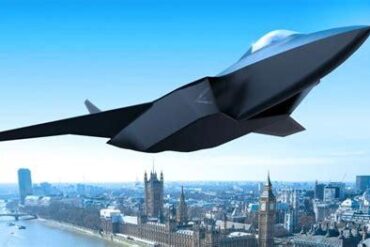
The FCAS project is being overshadowed by the rapidly advancing Global Combat Air Programme (GCAP)—a trilateral partnership between the United Kingdom, Italy, and Japan. Their sixth-generation fighter, formerly known as Tempest, is not just staying on schedule but has also cemented its structure with the creation of a joint venture called Edgewing. This entity will coordinate design, development, and production, with Saudi Arabia rumored to be eyeing participation to gain access to a non-U.S. fifth- or sixth-generation platform.
In contrast, FCAS has yet to formalize its industrial arrangements to the same extent. The lack of a binding joint venture has bred ambiguity around intellectual property rights, technological ownership, and future export controls. These omissions risk undermining long-term sustainability and trust among the FCAS nations.
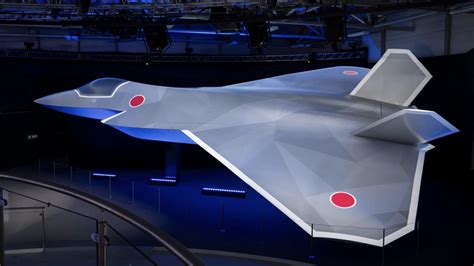
The GCAP team is aiming for operational readiness by 2035—five years earlier than FCAS’s currently projected timeline. The GCAP’s progress is not only a strategic challenge but a political embarrassment to the FCAS bloc, especially as both programs compete for future market share in Europe, the Middle East, and potentially the Indo-Pacific.
Leadership Power Struggles Threaten the Core
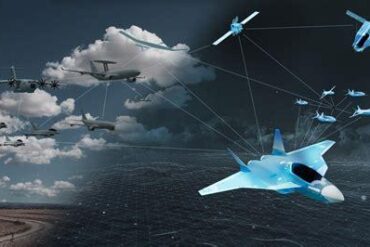
While the program was initially led by France with Dassault as the prime contractor, Germany’s Airbus has increasingly asserted influence, seeking a more equal role in major design elements like the Next Generation Fighter (NGF), manned-unmanned teaming, and AI integration. Spain, though the smallest partner, also demands a meaningful slice of the program’s industrial benefits.
However, Dassault has openly clashed with Airbus over key technological responsibilities. Trappier has repeatedly voiced concerns that too much collaborative input risks diluting accountability and slowing progress. “There is only one captain in a ship,” Trappier has said, signaling Dassault’s desire for clear, centralized control over core aircraft development.
Germany, meanwhile, emphasizes an equitable model where all three partners share leadership across different technology pillars. Berlin has also tied FCAS closely to broader European defense integration goals, which often collide with France’s more independent doctrine.
The Nuclear Deterrent Dilemma
Perhaps the most sensitive issue revolves around France’s nuclear doctrine. Any sixth-generation fighter produced under FCAS must be compatible with the Air-Sol Moyenne Portée (ASMP) nuclear cruise missile or its successor. This capability is non-negotiable for Paris.
However, neither Germany nor Spain shares this requirement, nor do they possess independent nuclear forces. Incorporating nuclear delivery capabilities adds significant design complexity, including secure command-and-control systems, specialized hardening, and stringent safety standards. These modifications could make the aircraft more expensive and politically contentious for Berlin and Madrid, who may not want to foot the bill for French strategic interests.
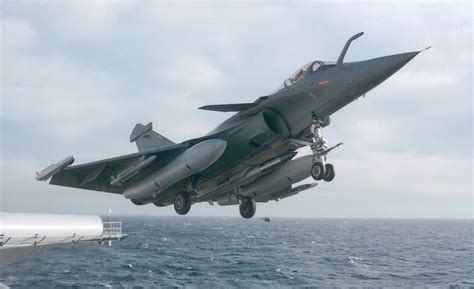
The nuclear question is thus more than a technical detail—it’s a strategic wedge. If unresolved, it could lead to design bifurcation, where France develops its own variant of the FCAS fighter, undermining the very purpose of a shared European platform.
Financial Overruns and Delayed Timelines
Budgetary concerns are also mounting. While exact figures remain classified, FCAS is expected to cost tens of billions of euros over its lifecycle, encompassing development, testing, procurement, and maintenance. The longer governance disagreements persist, the more likely it becomes that the project suffers cost overruns, missed milestones, and political fatigue.
European defense ministries are already juggling competing priorities, including aid to Ukraine, cyber defense, and energy security. In this context, FCAS must prove its value not just as a defense platform, but as a symbol of European unity and technological leadership. Internal squabbles severely undermine that narrative.
Can the Project Be Salvaged?
Despite its troubles, FCAS is not yet doomed. There are active discussions underway to reframe industrial roles and re-establish a shared vision. Some analysts believe a compromise could see Dassault retain prime responsibility for the core fighter, with Airbus and Indra leading subsystems such as sensors, AI, and remote carriers (unmanned drones).
There are also signs that France may not want to repeat the Rafale scenario, which—while successful—limited France’s access to shared production and export networks. Given the intensifying pace of global sixth-generation fighter development, going it alone may no longer be viable, even for a defense giant like Dassault.
What remains to be seen is whether political leaders can rise above industrial rivalries and short-term interests to secure the long-term viability of a genuinely European sixth-generation fighter.
The Clock Is Ticking
With the GCAP Tempest fighter rapidly approaching prototype stages, FCAS cannot afford further delays. By 2030, the global fighter market will be defined by stealth, AI, and networked warfare. If FCAS cannot deliver on those promises—on time and with unity—it risks becoming irrelevant before it even takes flight.
Europe has the industrial base, talent, and ambition to lead in sixth-generation air power. But unless it can also summon the political will to collaborate, FCAS may go the way of its many predecessors—promising in concept, but fractured in execution.