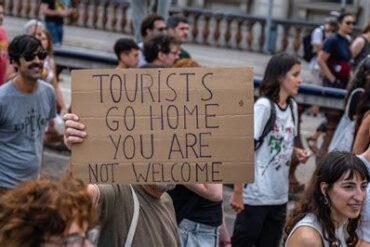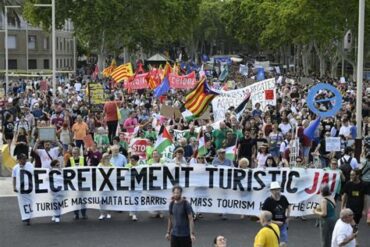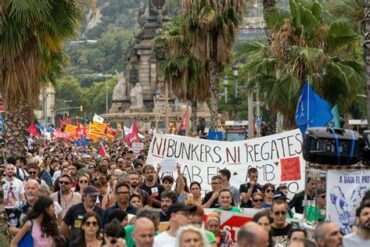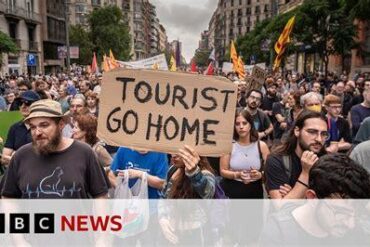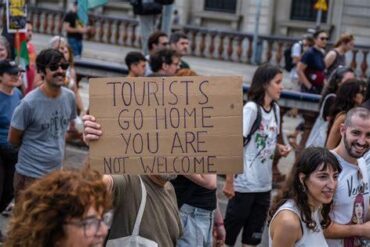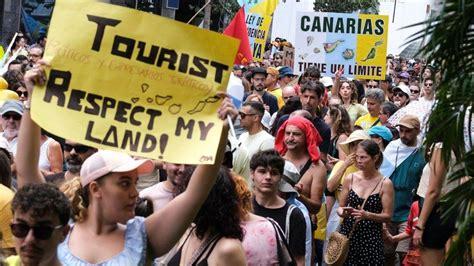
Europe’s beloved summer destinations are under siege — not from a pandemic or economic collapse, but from their own popularity. As the tourism season surges into high gear, a powerful backlash is brewing across Spain, Portugal, and Italy, with coordinated protests scheduled for this weekend. Local communities are rallying against what they call the destructive consequences of over-tourism, threatening to paralyze travel to Barcelona, Lisbon, and Venice, among others.
The wave of dissent is no longer isolated. It’s growing louder, more organized, and increasingly international in tone.
Tourism’s Boiling Point: From Celebration to Crisis
For decades, southern Europe has capitalized on its appeal to international tourists. Whether it’s the cobbled alleys of Lisbon, the canals of Venice, or the beaches of Barcelona, these destinations have been magnets for travelers from North America, Europe, and Asia. But now, the very people who once welcomed tourists with open arms are pushing back.
In Mallorca, local activists have taken to the streets, decrying housing shortages and unlivable conditions caused by mass tourism. Their grievances are echoed in Ibiza, Granada, and Palma, forming a cross-border movement fueled by frustration. And the discontent isn’t just symbolic — protest organizers are deliberately planning blockades at airports, seaports, and tourist landmarks, targeting peak travel hours this weekend.
The atmosphere is one of tension and urgency. These demonstrations are not flash-in-the-pan events. They represent a boiling pot of economic disparity, environmental decay, and cultural erosion.
Lisbon’s Reckoning: Locals Versus Luxury Rentals
Lisbon, once a relatively undiscovered gem, has transformed into one of Europe’s hottest destinations — and it’s burning out. Neighborhoods like Alfama and Bairro Alto have been hollowed out by short-term vacation rentals, often driven by platforms like Airbnb. Rents have skyrocketed, evictions have become routine, and locals are being priced out at alarming rates.
This weekend, multiple activist groups are organizing marches through central Lisbon, calling for the restriction of foreign property investment and the regulation of short-term lets. Local unions have joined in, and even municipal leaders are warning of a tipping point.
The tourism model that once promised prosperity has turned parasitic in the eyes of many residents. What was once an opportunity has become a crisis — one that many in Lisbon say is long overdue for a reset.
Barcelona: The Epicenter of Discontent
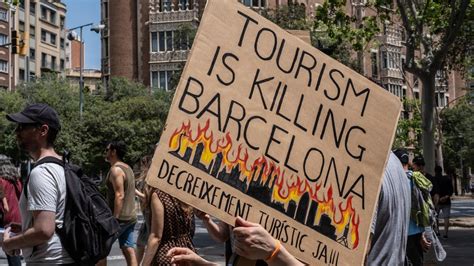
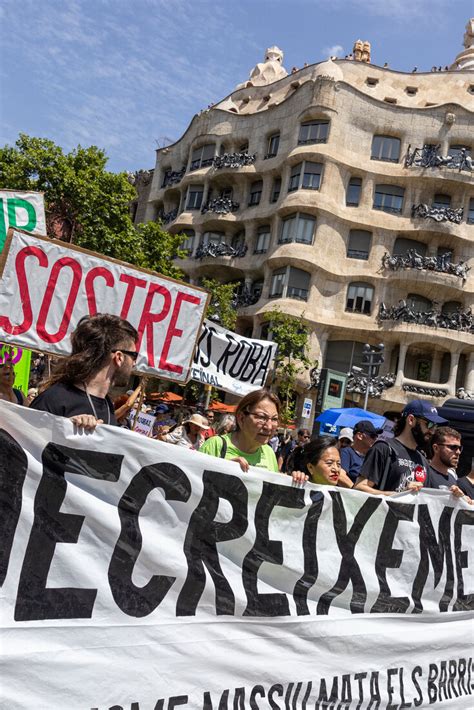
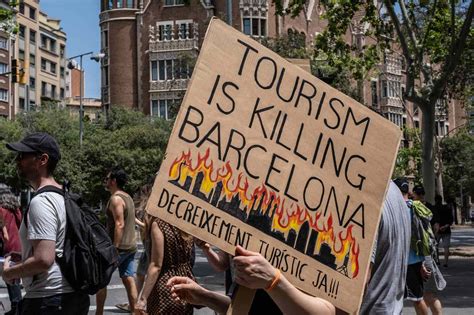
Barcelona has long been the poster child for both the success and consequences of mass tourism. In the Gothic Quarter, the strain is visible: overflowing garbage bins, overburdened public transport, and a disappearing sense of community. This weekend, activists will block access to La Rambla, the Sagrada Familia, and the Barceloneta beach area, demanding urgent government action.
Barcelona’s protest organizers aren’t pulling any punches. They’ve issued warnings to tourists and travel agencies, urging cancellations and reroutes. Their message is clear: “You are not welcome if your stay displaces a family or damages our home.”
The Catalonian capital expects tens of thousands to participate in these demonstrations, which could result in widespread disruption of tours, transport, and even accommodations.
Venice Fights Back: The War on Cruise Ships and Crowds
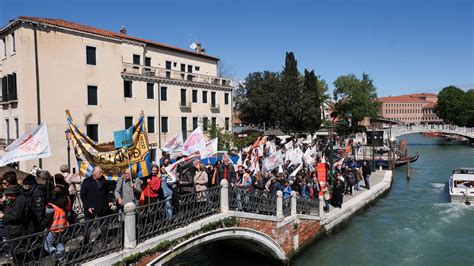
Italy is no stranger to the pressures of tourism, and nowhere is this more palpable than in Venice. With just 50,000 permanent residents and more than 20 million visitors per year, Venice has become a case study in unsustainable tourism.
Recent municipal policies have attempted to curb the influx — including daily tourist taxes and cruise ship restrictions — but locals say it’s too little, too late. Grassroots organizers have taken matters into their own hands. This weekend, they plan to occupy key ferry terminals and protest in St. Mark’s Square, coinciding with the peak tourist rush.
Their aim is to draw global attention to what they see as Venice’s cultural extinction. With mega-ships docking mere meters from ancient palazzos, and souvenir shops replacing bookstores, the very soul of the city is evaporating.
Why Now? Timing and Geopolitical Undercurrents
This coordinated protest weekend isn’t accidental. It falls at the height of summer bookings, just as millions from the U.S. and Canada arrive for their vacations. That timing is strategic — it maximizes media coverage and puts pressure on local governments that rely heavily on tourism dollars.
The protests are also tapping into broader geopolitical concerns:
- Housing crisis: Tourists have outbid locals in central districts across southern Europe.
- Climate degradation: Over-tourism contributes significantly to air pollution, water waste, and environmental strain.
- Labor exploitation: Many tourism workers face poor conditions while global companies reap profits.
The result is a perfect storm, one that threatens to redefine the travel narrative in Europe.
U.S. and Canadian Travelers: What You Need to Know
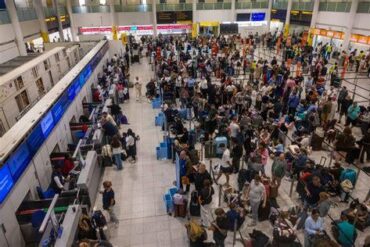
If you’re planning to travel to Spain, Portugal, or Italy this weekend, expect delays, closures, and possibly even cancellations. International airports such as Barcelona-El Prat, Lisbon Humberto Delgado, and Venice Marco Polo are on high alert for civil disruption.
Tour operators are issuing advisories, and major airlines may reroute flights or delay schedules. American and Canadian tourists are advised to:
- Monitor local news and embassy updates
- Avoid large gatherings and protest zones
- Have contingency plans for tours, transportation, and accommodation
From Celebration to Confrontation: The Future of European Travel
This isn’t just a one-off flare-up — it’s a symptom of a deeper reckoning. The post-pandemic travel boom has reignited conversations about what sustainable tourism really looks like. Activists are no longer asking for awareness. They’re demanding a complete transformation of tourism policy.
Expect tighter regulations, stricter zoning laws, and new taxes aimed at controlling tourist numbers. Already, cities like Amsterdam, Florence, and Dubrovnik are watching closely, potentially preparing their own versions of this weekend’s protests.
The stakes are high. Southern Europe stands at a crossroads — either to double down on a model that extracts wealth at the cost of its communities, or to build a new framework that respects residents, preserves culture, and protects the environment.
Is the Tourist Always the Villain? A More Nuanced Perspective
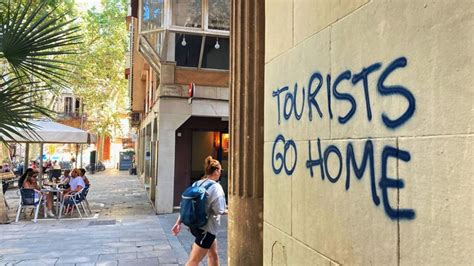
While many of the protests target tourists explicitly, some critics argue that the real culprit is policy failure — not travelers. Tourism itself is not inherently destructive; it’s the unregulated saturation and profit-driven planning that breaks cities.
There’s growing support for a balance-based model, where tourist flow is limited by permits, infrastructure is adapted to serve both residents and visitors, and businesses are incentivized to preserve local character.
This moment may catalyze that shift. As travelers and governments grapple with this new reality, the concept of “vacation” in Europe may be forever altered.
Final Thoughts: Travel in the Age of Reckoning
Southern Europe’s most iconic destinations are no longer simply backdrops for Instagram photos or cruise excursions. They are battlegrounds in a war between economic interest and civic dignity. As this weekend unfolds, the world will witness more than just protests — it will see a continent confronting the consequences of its own allure.
If you’re heading to Lisbon, Venice, or Barcelona, you’re not just visiting — you’re walking into the eye of a storm.