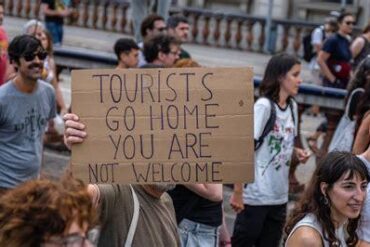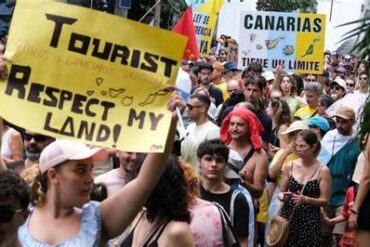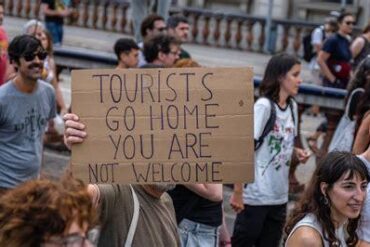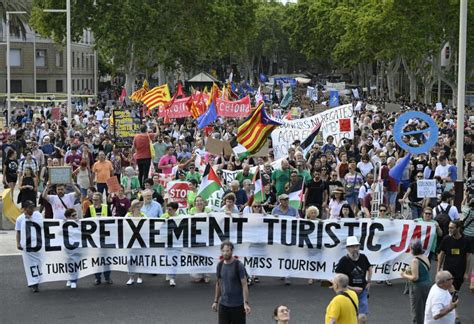
Southern Europe is in the throes of a seismic shift. Spain, Italy, and Portugal have erupted in coordinated anti-tourism protests that challenge the foundations of modern travel. In scenes reminiscent of political uprisings, locals are demanding an urgent reset of the region’s tourism model. While these protests spread like wildfire across iconic Mediterranean cities, Greece stands notably absent, watching from the sidelines as its neighbors rise in revolt.
The Streets Erupt: A Message from Locals to the World
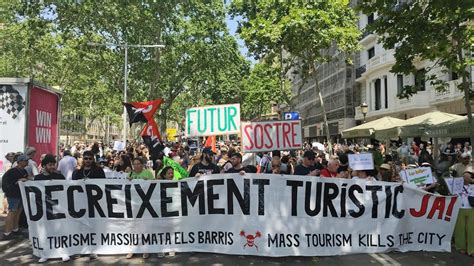
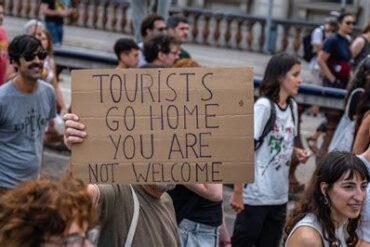
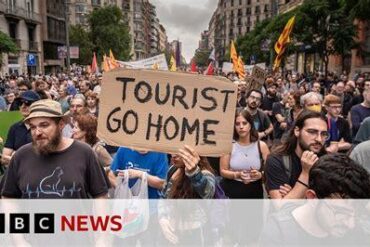
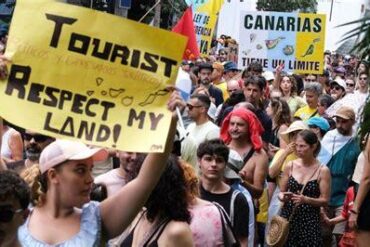
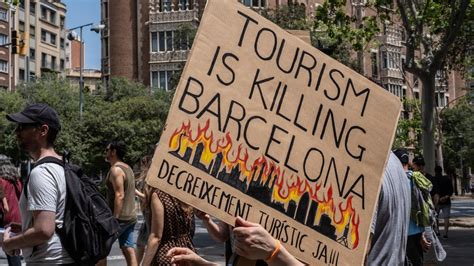
What began as scattered grumblings has now escalated into an unprecedented continental movement. From Barcelona’s graffiti-laced plazas to Lisbon’s ancient alleyways, and Venice’s sun-drenched canals, tens of thousands have taken to the streets. Their message is thunderous: “Tourism is killing our cities.”
In Palma de Mallorca, over 8,000 protestors marched with mock eviction notices, symbolizing the steady displacement of locals by holiday rental takeovers. In Barcelona, protesters armed with water pistols squirted at tourist buses, a symbolic act of resistance against a system that has prioritized short-term visitors over long-term residents.
In these places, banners fluttered from balconies that used to bear potted plants. Now, those balconies are part of Airbnbs. These visual cues represent a fading sense of community as tourism-fueled gentrification continues to push locals out.
Cultural Collateral Damage: The Invisible Toll
The cost of overtourism isn’t just higher rent or crowded metros—it’s cultural erasure. Residents of Lisbon’s Alfama, for instance, describe a disorienting transformation. Traditional fado bars are replaced by souvenir shops. Small bakeries are overwhelmed by tourist queues. Historic festivals have become Instagram backdrops, staged more for social media appeal than for local tradition.
In Barcelona’s Gothic Quarter, families are moving out, unable to compete with the astronomical rents offered by vacation companies. In Venice, traditional trades like gondola repair and artisan crafts are dying, crowded out by the tidal wave of tourist-centric services.
The Numbers Behind the Uprising
The surge in tourism post-pandemic has been staggering. Southern Europe was always a magnet for global travelers, but the bounce back from COVID-19 was explosive. In 2024, Barcelona welcomed 26 million tourists—a staggering figure for a city of just 1.6 million residents.
With international travel spending expected to hit $838 billion in 2025, local governments once hungry for tourism dollars now face a bitter reality: the wealth generated does not trickle down evenly. In fact, it often comes at the expense of the very people who make these cities so desirable.
Short-term rentals have transformed housing markets. Landlords evict tenants to make way for lucrative tourist stays. The result? Rising homelessness, youth migration, and the disappearance of entire communities.
Southern Europe Network Against Touristification: A Movement Gathers Momentum
The coordination of these protests is not random. It’s led by the Southern Europe Network Against Touristification (SET), a coalition uniting activists across borders with a singular purpose—to demand sustainable tourism policies.
SET’s influence is rapidly growing. What began in city squares is now a multi-country alliance challenging governments, investors, and the global travel industry.
In Venice, local outrage has focused on two new hotel projects adding over 1,500 new beds to an already saturated city. In Naples and Genoa, demonstrations are gaining momentum against cruise ships flooding tiny harbors with thousands of day-trippers.
Portugal, too, is feeling the strain. Lisbon’s historic quarters, once a haven for multigenerational families, are now almost exclusively populated by tourists. The city’s skyline has changed—not with new architecture, but with the absence of locals.
Notably Absent: Greece’s Silence Amid the Storm
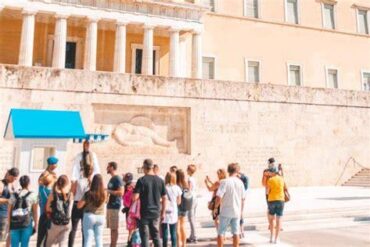
While its Mediterranean neighbors raise a ruckus, Greece has chosen not to join the protest wave. The reasons are complex. Tourism accounts for nearly 25% of Greek GDP, and post-pandemic recovery was especially reliant on a travel boom.
Additionally, Greece’s tourism strategy has historically been spread more evenly across islands and mainland destinations, avoiding some of the hyper-concentration seen in cities like Barcelona or Lisbon. But this silence may not last. Pressure is mounting in areas like Santorini and Mykonos, where infrastructure strains mirror those in protesting countries.

What Are Cities Doing? Early Responses from Local Governments
The backlash has not gone unnoticed. Barcelona has pledged to eliminate all tourist apartment licenses by 2028, a bold move aimed at restoring housing equity. Lisbon has implemented zoning rules prioritizing locals in key districts.
Venice now requires pre-booking for day-trippers—a world-first experiment in managing visitor volume. While controversial, it signals a new paradigm: the era of open-door, unregulated tourism may be ending.
These are not anti-tourism policies. They are pro-resident protections—efforts to preserve what made these destinations worth visiting in the first place.
Travel Industry: Wake-Up Call or Ignored Alarm?
Major industry stakeholders have been slow to react. Airlines continue adding routes to saturated cities. Hospitality chains keep erecting hotels in fragile historic centers. Tech platforms push viral travel content with no accountability for the strain it causes.
But this protest wave changes the game. Any brand ignoring the public outcry risks both reputation and regulation. Tour operators must pivot—fast. Emphasizing off-season travel, lesser-known locations, and community-based tourism is no longer an optional branding exercise. It’s a business imperative.
The Traveler’s Role: From Tourist to Ally
While the spotlight is on governments and corporations, travelers hold power too. You shape demand. You influence policy through your choices.
- Opt for locally owned accommodations.
- Travel off the beaten path.
- Respect local rhythms and cultural norms.
- Ask hard questions: Who profits from your stay? Is your presence adding or extracting value?
It’s not about guilt—it’s about responsibility. Travel can still be a force for good. But only if it’s guided by respect, not exploitation.
Southern Europe at a Crossroads: What Will Be Preserved?
This isn’t the end of travel in Southern Europe—it’s the beginning of a new kind of tourism. One that prioritizes community over consumerism, culture over commerce, and connection over conquest.
The protests flooding Spain, Italy, and Portugal are a cry for sanity. For sustainability. For homes that aren’t turned into commodities. For plazas filled with neighbors, not just tourists.
Southern Europe has issued a challenge—to itself, to the travel industry, and to the global traveler. Will we listen? Will we adapt? Or will we let paradise erode beneath our footsteps?
The answer will define the next decade of global tourism.