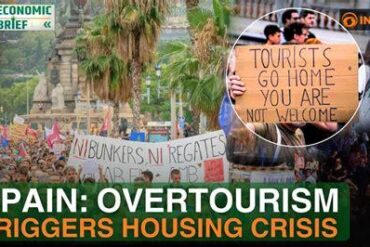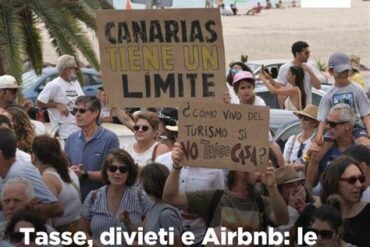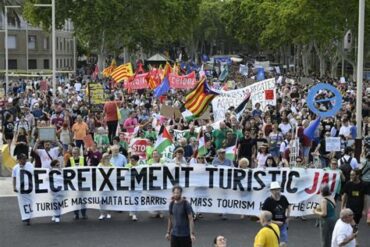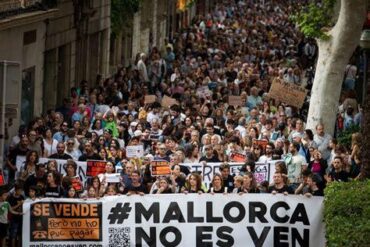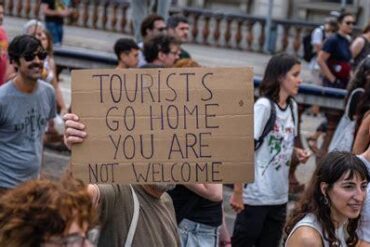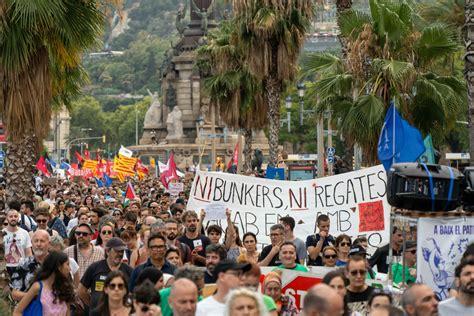
Barcelona is at the forefront of a fierce travel backlash sweeping across southern Europe, as locals express their anger through creative protests against the overwhelming pressures of mass tourism. With water pistols in hand and smoke bombs ignited, residents are rallying against the rising rents, overcrowded streets, and the gradual erosion of their local culture, demanding urgent action to reclaim their neighborhoods. The recent protests, which unfolded on a Sunday in mid-June 2025, saw coordinated demonstrations in major cities including Barcelona, Venice, Lisbon, Palma, and Naples, uniting residents under the banner of the SET alliance—Southern Europe Against Touristification.
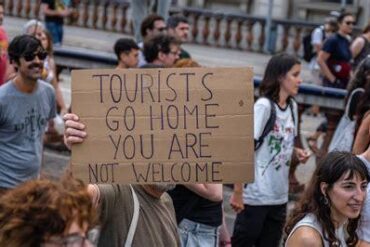
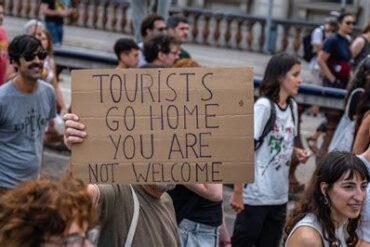
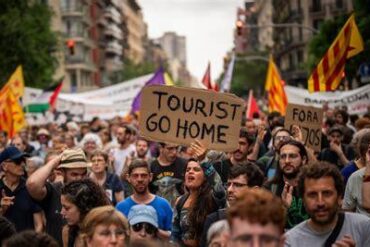
In Barcelona, where the population stands at approximately 1.6 million, the impact of tourism has reached critical levels. Last year, the city welcomed an astonishing 26 million tourists, a statistic that underscores the economic benefits of tourism but also highlights the growing discontent among residents. Many locals feel that they are being priced out of their own neighborhoods, with once-vibrant community shops replaced by souvenir stores catering to tourists. As chants of “Your holidays, my misery” echoed through the narrow streets, demonstrators wielded handmade signs declaring “mass tourism kills the city” and “their greed brings us ruin.” This loud and clear message reverberated through the heart of the city, signaling that many residents have reached their breaking point.
While only around 600 protesters were officially counted in Barcelona, the fervor of their actions transcended numbers. They marched through iconic streets, dousing storefronts with water from their pistols while filling the air with colorful smoke. Their grievances were not just about tourism’s financial footprint; they highlighted how the influx of visitors has transformed the very fabric of their communities. City officials had previously promised to ban short-term tourist rentals by 2028, but for many Barcelonans, such promises feel insufficient and delayed.
This uprising against tourism is not confined to Spain. In Portugal, demonstrators gathered in Lisbon, expressing their frustrations over spiraling housing costs and the pervasive impact of platforms like Airbnb, which have contributed to a rental market increasingly unattainable for locals. Similar sentiments echoed across Italy, where protests erupted in cities like Venice, Milan, Palermo, Naples, and Genoa. In Venice, activists specifically condemned plans for new hotel developments that would add 1,500 more beds to a city already grappling with the challenges of overtourism. Residents lament that their city’s historic charm is being replaced by a homogenized, tourist-centric version of itself.
As Barcelona captured headlines, other Spanish cities also joined the fray. Protests erupted in Ibiza, Palma de Mallorca, San Sebastián, Granada, and Málaga—all popular destinations feeling the burden of tourism. The complaints shared across these cities are strikingly similar: emergency services stretched thin, beaches overcrowded, and rent prices spiking. In Ibiza, residents have protested in the past against cruise ship visits and the rampant party tourism that disrupts their community life.
What set the recent protests apart were not just the signs or chants, but the unconventional methods employed by demonstrators. In both Barcelona and Palma de Mallorca, protesters armed themselves with vibrant water pistols, using them as a symbolic tool of protest rather than mere play. They targeted tourists seated in cafés and sprayed hostel entrances, releasing pink smoke bombs in front of major tourist attractions to dramatize the chaos they attribute to mass tourism. At one protest in Palma, an estimated 5,000 people turned out, making it the largest gathering of the day, with many brandishing water pistols and chanting “Everywhere you look, all you see are tourists.” While some tourists laughed off the playful splashes, the underlying message struck a poignant chord: local identity and affordability are fading away under the weight of tourism.
Tensions flared at one large hostel in Barcelona when protesters unleashed their squirt guns at two workers guarding the entrance. The situation escalated as demonstrators set off firecrackers and lit a pink smoke canister, illustrating the palpable frustration simmering beneath the surface. As one worker, visibly angered, spat at the crowd and slammed the doors shut, the scene epitomized the conflict between locals and the tourism industry. Meanwhile, others in the crowd found lightness in the moment, using their water pistols to cool down in the summer heat, demonstrating the duality of the protest—both a cry for help and an assertion of community spirit.
Amidst this backdrop of discontent, international travel spending in Europe continues to climb. Forecasts suggest that spending will surge by 11% this year, reaching $838 billion, with Spain and France leading the charge. While such figures are promising for airports and tour operators, the reality on the ground for residents is starkly different. Locals argue that the financial windfall rarely translates into improved public services, infrastructure, or affordable housing. Instead, it fuels a short-term economy centered on visitors, leaving residents to grapple with the long-term repercussions of overtourism.
The protests across southern Europe are not merely expressions of frustration; they serve as a call to action for cities to reconsider the dynamics of tourism. Protesters advocate for a more sustainable approach—one that does not seek to eradicate tourism altogether but aims to establish limits that protect local communities. Calls for visitor caps, stricter regulations on short-term rentals, and a shift towards community-first travel models are gaining traction. Activists emphasize the necessity of political will, urging city leaders to prioritize the needs of their residents over the demands of the market. As one Barcelona protester, Eva Vilaseca, poignantly stated, “Tourism only brings prosperity when it lifts everyone. Right now, it’s crushing us.”
As the anti-tourism movement gains momentum across southern Europe, it raises critical questions about the future of travel and its impact on local communities. Will cities heed the warnings of their residents, or will the allure of tourist dollars continue to overshadow the rights and wellbeing of locals? The answer may determine not only the fate of these iconic cities but also the broader landscape of tourism in a post-pandemic world.