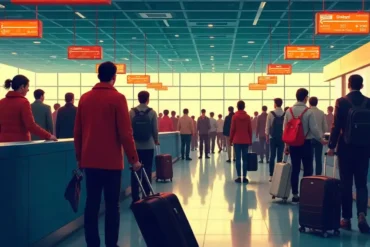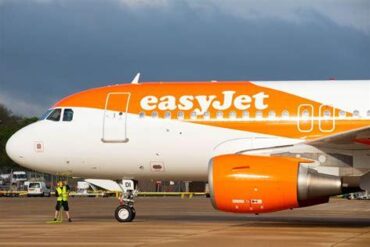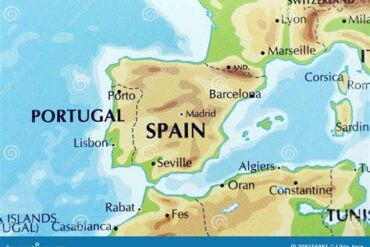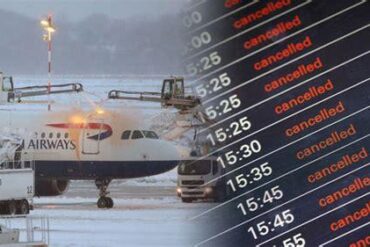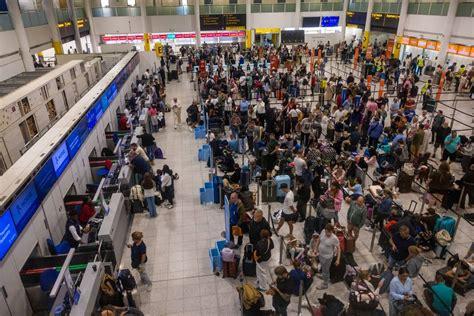
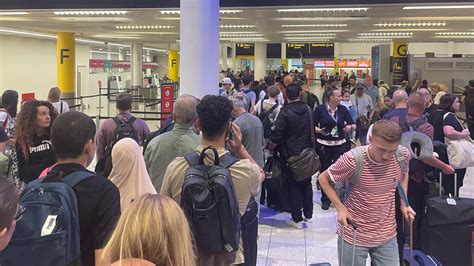
Thousands of travelers faced serious holiday disruption at London Gatwick Airport on Friday, as flights bound for Spain, Portugal, and Greece encountered extensive delays. With airlines EasyJet and Ryanair at the epicenter of the chaos, passengers saw their summer getaways postponed or cancelled entirely. The issue highlights persistent structural and operational weaknesses at the UK’s second busiest airport, now cementing its reputation as the UK’s most delay-prone major airport.
Gatwick: UK’s Worst Airport for Delays
Gatwick Airport has long struggled to maintain efficient operations, particularly during peak travel seasons. According to the UK Civil Aviation Authority (CAA), Gatwick recorded the highest average flight delay of any large UK airport for the second consecutive year in 2024. With average departure delays sitting at 23 minutes last year, the situation has only worsened in the high-demand summer period of 2025.
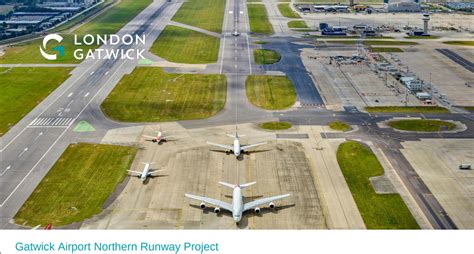
Constrained by its single runway, Gatwick’s operations are highly sensitive to disruptions. Any minor delay or late inbound flight can create a domino effect, compounding passenger frustration and operational complexity.
Single Runway Operations: Gatwick’s Bottleneck Problem
Gatwick’s infamous single-runway configuration remains one of the primary reasons for its delay-prone performance. Unlike major European hubs such as Heathrow or Schiphol, Gatwick’s single runway must handle both landings and take-offs, severely restricting its capacity to absorb any unforeseen operational hiccups.
On high-traffic days, such as the current mid-July holiday rush, even a brief delay in a departing or arriving flight can cripple the day’s entire flight schedule. Passengers traveling to Mediterranean holiday spots—including Barcelona, Lisbon, Faro, Athens, and Thessaloniki—felt this impact most acutely, with flights repeatedly marked as delayed or awaiting updated departure times.
Mediterranean Flights Suffer the Worst
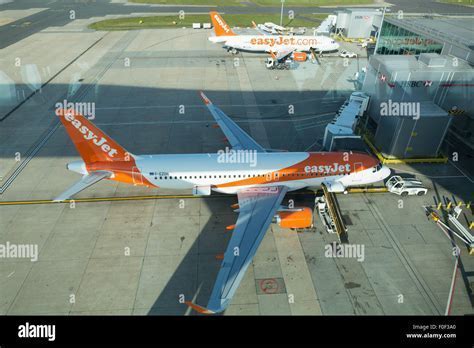
EasyJet and Ryanair operate many of the short-haul routes from Gatwick to southern European destinations. On Friday, flights to Spain, Portugal, and Greece saw consistent disruptions. This forced thousands of holidaymakers to endure extended waits inside Gatwick terminals, grappling with missed connections and rebooked hotel reservations at their destinations.
For these airlines, which specialize in high-frequency, low-cost services, every delayed rotation has a cascading operational cost. Passengers found themselves caught between minimal customer service support and unclear rescheduling processes, exacerbating their frustrations.
French ATC Restrictions and European Airspace Bottlenecks
Further complicating Gatwick’s operations are French air traffic control (ATC) restrictions, which impact a critical transit corridor for UK flights bound southward. According to EUROCONTROL, Europe’s air traffic management body, congestion risk is currently elevated across numerous airspace sectors. For flights departing the UK and routing toward southern Europe, these congested French corridors represent significant chokepoints.
Flights scheduled to transit this busy airspace often face enforced holding patterns or rerouted paths, leading to operational delays that manifest before aircraft even leave UK airspace. Gatwick, already strained by ground-side inefficiencies, cannot absorb these unpredictable airborne delays without widespread disruption.
Ground Operations Stretched Beyond Capacity
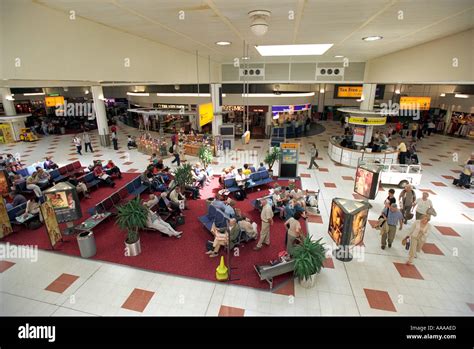
Gatwick’s staffing and infrastructure continue to buckle under the resurgence of post-pandemic travel volumes. With increased summer demand, ground-side operations—from baggage handling to refueling—have encountered chronic bottlenecks. Any delay in processing an incoming aircraft can block gates and slow down outbound departures, as evident in the latest wave of EasyJet and Ryanair delays.
Critically, even minor European operational delays elsewhere—like a late inbound Ryanair from Italy or a delayed EasyJet arrival from Germany—can paralyze Gatwick’s tightly packed schedule, sparking cascading delays that ripple throughout the day.
Passenger Rights and Compensation Entitlements
While airlines have a legal obligation to provide food, drinks, and accommodation when delays extend past a reasonable threshold, compensation eligibility remains murky for many passengers. Under current UK law, airlines are only required to offer financial compensation if delays were within their control, such as technical failures or crew shortages. Delays caused by air traffic control restrictions or severe weather are classed as extraordinary circumstances, exempting airlines from compensation payouts.
The Civil Aviation Authority advises passengers to document their experiences thoroughly, retaining receipts for meals, hotels, and alternative transport costs. In case airlines refuse direct reimbursement, passengers can escalate their claims via the Alternative Dispute Resolution (ADR) schemes listed on the CAA’s official site.
How Passengers Can Protect Themselves
Travelers navigating the uncertain world of summer 2025 air travel should adopt a defensive strategy. Frequent flight status checks, ample arrival lead times at airports, and full awareness of passenger rights are critical steps to mitigate disruption risks. Those bound for the sunny resorts of Spain, Portugal, or Greece should prepare mentally for possible delays—even with major carriers like Ryanair and EasyJet.
For those caught in Friday’s chaos, immediate action includes:
- Contacting your airline with detailed records of delay.
- Retaining all receipts for extra expenditures.
- Seeking written explanations of delay causes, if possible.
- Filing formal compensation claims promptly.
- Escalating unresolved cases via ADR after eight weeks.
The Bigger Picture: Gatwick’s Future Looks Challenging
Unless significant operational changes are introduced, Gatwick’s single-runway structure will remain its Achilles heel. Proposals for adding a second runway have long been stalled amid political, environmental, and local opposition. With no immediate capacity expansion on the horizon, airlines and passengers must contend with Gatwick’s finite infrastructure.
Meanwhile, as EUROCONTROL continues to warn of sustained airspace congestion over southern Europe and French ATC restrictions persist, Gatwick’s outbound flights to Mediterranean destinations will likely continue suffering in the coming weeks.
For now, passengers’ best defense is preparation and persistence. But until infrastructure investment or traffic management improvements occur, Gatwick Airport will remain a hotspot for summer holiday disruption.