The Transportation Security Administration has just issued a comprehensive travel alert for all U.S. air travelers, unveiling a series of updated rules, procedures, and advanced screening methods designed to bolster both security and efficiency at domestic airports. With air travel surging in 2025 and new threats emerging—ranging from unconventional smuggling attempts to evolving screening technologies—passengers must familiarize themselves with these changes to avoid delays, fines, or worse, denied boarding.
Introduction: Purpose of the New Travel Alert
This latest TSA notification comes at a pivotal moment as the agency refines its protocols to keep pace with increasing passenger volumes and innovative threats. By outlining specific requirements for identification, baggage, and screening procedures, the TSA aims to minimize airport congestion while maintaining the highest security standards. For seasoned flyers and first‑timers alike, understanding these updates is essential to navigating checkpoints smoothly and focusing on the journey ahead rather than last‑minute hurdles.
Unprecedented Smuggling Attempts Trigger Renewed Warning
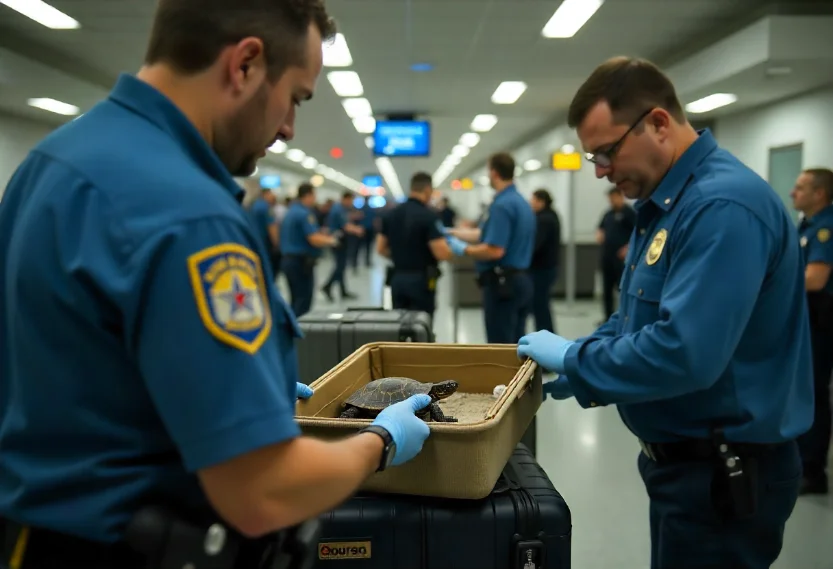
A pair of highly unusual incidents—involving passengers attempting to smuggle live turtles through security—has prompted the TSA to issue a renewed warning highlighting the risks and legal ramifications of concealing wildlife. These cases underscore the agency’s expanding mandate beyond weapon detection: protecting vulnerable species and upholding federal wildlife laws.
Miami International Airport Incident: Turtles in a Bra
In April 2025 at Miami International Airport, Advanced Imaging Technology flagged an anomaly in a female passenger’s chest region during routine screening. Further inspection revealed two live turtles—one wrapped meticulously in medical tape, the other encased in plastic wrap—tucked into her bra. TSA officers immediately notified the Miami‑Dade Sheriff’s Office, U.S. Customs and Border Protection, and the Florida Department of Fish and Wildlife. The reptiles were retrieved unharmed, and the passenger faced denial of boarding. The TSA took to X (formerly Twitter) with a tongue‑in‑cheek plea: “We’re back with another desperate plea to stop hiding animals in weird places on your body before airport security,” driving home the absurdity and danger of such acts.
Newark Liberty International Airport Incident: Turtle in Pants
Just weeks earlier, on March 7, 2025, a Pennsylvania man at Newark Liberty International Airport attempted a similarly audacious smuggling technique. A body scanner alarm prompted a pat‑down, which uncovered a five‑inch live turtle wrapped in a blue towel concealed in his pants. The man voluntarily surrendered the reptile to U.S. Fish and Wildlife and was escorted off the premises, denied boarding. Thomas Carter, TSA’s Federal Security Director for New Jersey, remarked, “We’ve seen travelers try to conceal knives and other weapons, but this is the first time we’ve encountered a live turtle hidden down someone’s pants.” These events highlight the importance of vigilance and advanced screening capabilities in catching even the most unconventional threats.
TSA’s Expanded Role: Beyond Weapon Detection
While the TSA’s core mission focuses on neutralizing weapons and explosive threats, these smuggling cases illustrate the agency’s additional responsibility for wildlife protection and enforcement of animal‑transport regulations. Working closely with the U.S. Fish and Wildlife Service and local animal control authorities, TSA officers ensure that any wildlife discovered is handled humanely and in compliance with federal statutes governing species conservation.
Legal Consequences of Concealing Live Animals
Attempting to smuggle live animals through airport security carries serious legal repercussions. Under federal and state wildlife laws, unauthorized transport of protected or exotic species can result in substantial fines, criminal charges, and immediate denial of boarding privileges. Travelers must secure proper permits and documentation for all pets and exotic animals, adhering to airline policies and federal guidelines. Failure to do so not only endangers animal welfare but also undermines conservation efforts and can lead to long‑lasting legal entanglements.
Advanced Security Measures: How TSA Detects Concealed Threats
TSA relies on Advanced Imaging Technology (AIT) body scanners to detect anomalies—whether they be weapons, explosives, or unexpected objects like live turtles. These scanners generate detailed images that flag unusual shapes or densities on a passenger’s body, prompting secondary inspections. In both turtle‑smuggling cases, AIT enabled officers to pinpoint concealed items quickly, demonstrating the effectiveness of modern screening tools in safeguarding aviation security.
Complete Guide to TSA Rules for 2025
Role of TSA
Established in the aftermath of September 11, 2001, the TSA has evolved to address new security challenges while managing soaring passenger numbers. Its dual mandate ensures both national security and streamlined travel experiences for millions of flyers each day.
Carry‑On Baggage: Key Requirements
- 3‑1‑1 Rule for Liquids, Aerosols, and Gels: Containers must hold no more than 3.4 oz (100 ml) each and fit into a single quart‑sized resealable plastic bag. Passengers are limited to one bag. Medically necessary items and baby formula are exempt but must be declared for additional screening.
- Electronics: Laptops, tablets, and other large devices must be removed from carry‑on bags and placed in separate bins for X‑ray screening to ensure clear imaging.
- Tools & Sharp Objects: Items exceeding 7 inches in length—such as hammers or screwdrivers—are prohibited in carry‑ons and must be checked. Scissors with blades shorter than 4 inches are generally permitted.
Checked Baggage: Restrictions and Best Practices
- Firearms: Must be unloaded, locked in a hard‑sided container, and declared to the airline. Firearms are strictly prohibited in carry‑on luggage.
- Lithium Batteries: Spare lithium‑ion or lithium‑metal batteries, including power banks, must be carried in carry‑on luggage only due to fire risk.
- Hazardous Materials: Most flammable liquids, chemicals, and fireworks are banned. Travelers should review TSA’s restricted items list to avoid confiscation and delays.
Security Screening Procedures
- REAL ID Requirement (Effective May 7, 2025): All travelers aged 18 and older must present a REAL ID‑compliant driver’s license or an acceptable alternative (passport, military ID) to board domestic flights.
- TSA PreCheck: For an $85 fee (five‑year membership), PreCheck members enjoy expedited screening: no need to remove shoes, belts, light jackets, laptops, or compliant liquids from bags.
- Screening for Children and Infants: Children under 12 generally keep shoes on during screening. Parents may bring breast milk, baby formula, and baby food beyond the 3‑1‑1 limit after declaring them to officers.
Recent Policy Updates for 2025
In July 2025, TSA revised its shoe removal policy: most travelers no longer need to remove shoes at security checkpoints, streamlining the process. Additionally, TSA is evaluating potential changes to the long‑standing 3‑1‑1 liquids rule, as emerging screening technologies could allow larger quantities of liquids in carry‑ons.
Traveler Tips for a Smooth Airport Experience
Arriving at the airport well‑prepared can save valuable time and stress:
- Arrive at least two hours before domestic flights and three hours before international departures.
- Organize carry‑on bags so that the quart‑sized liquids bag and electronics are easily accessible.
- Check the TSA website or mobile app for real‑time updates on rules and waiting times.
Key Takeaways for Traveling with Animals
Transporting pets or exotic species requires careful planning:
- Verify airline pet policies and federal regulations well before departure.
- Obtain all necessary permits for exotic or protected animals.
- Declare every animal to TSA officers to avoid legal complications and ensure proper handling.
Conclusion: Respecting Security and Wildlife
The bizarre turtle‑smuggling incidents at MIA and EWR serve as stark reminders that neither creativity nor desperation can outsmart modern security measures. Concealing live animals in clothing or luggage risks animal welfare, legal penalties, and travel disruptions. By adhering to TSA’s updated protocols—from the 3‑1‑1 rule to REAL ID requirements—and collaborating with wildlife authorities, travelers can ensure a safe, efficient journey and contribute to the protection of both passengers and our planet’s biodiversity.