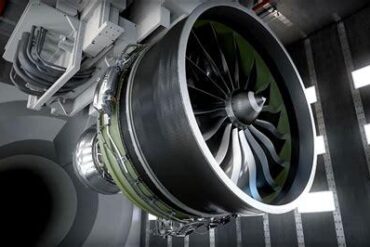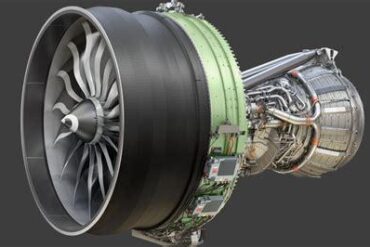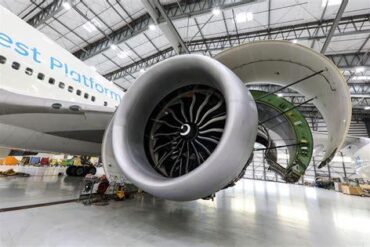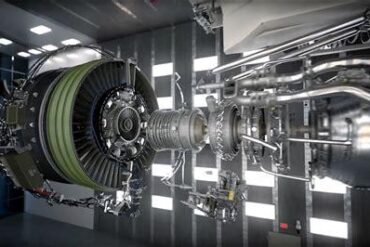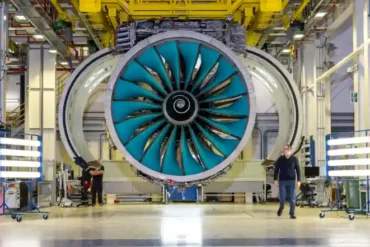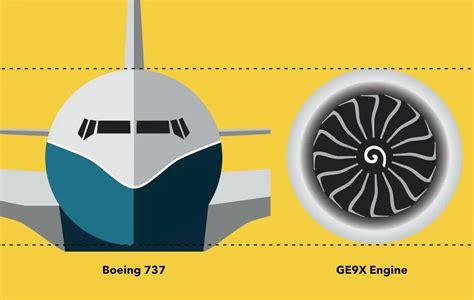
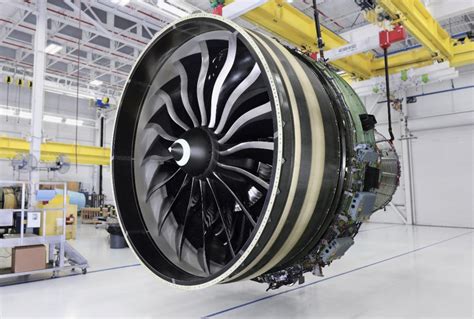
The GE9X does not announce itself quietly. It arrives with a fan so large that it forces a rethink of what a commercial turbofan engine is supposed to look like, how it is supposed to work, and where the limits of efficiency actually sit. With a fan diameter stretching roughly 134 inches, the GE9X claims the title of the largest turbofan engine ever built, but size alone is not the headline. The real breakthrough lies in what that diameter enables: a fundamental shift in how thrust is produced, how fuel is converted into motion, and how long-haul aviation balances physics against economics.
At its core, aviation propulsion has always wrestled with the same tradeoff. Engines can move a small mass of air very fast, or a large mass of air more slowly. The second option is dramatically more efficient, but it demands a fan of enormous proportions. For decades, engineers edged cautiously in that direction. With the GE9X, General Electric stopped edging and stepped forward decisively, embracing scale as a performance multiplier rather than a compromise.
This decision reshapes everything from airline fuel bills to airport noise contours. It also explains why the GE9X feels less like an incremental upgrade and more like a statement of intent about the future of long-haul flight. The fan diameter is not a marketing flourish; it is the engine’s organizing principle, the axis around which every other design choice rotates.
The Physics Behind Fan Diameter and Propulsive Efficiency
The magic of a massive fan lies in propulsive efficiency, a term that sounds abstract until it is translated into something tangible. Propulsive efficiency measures how effectively an engine turns fuel energy into forward motion rather than wasted heat and noise. The slower the exhaust jet compared to the aircraft’s speed, the less energy is thrown away. A huge fan makes this possible by accelerating a far larger column of air by a much smaller amount.
In the GE9X, this principle reaches an extreme. Instead of relying on brute exhaust velocity, the engine leans on airflow volume. The fan pulls in an immense mass of air, most of which bypasses the engine core entirely. That bypass air provides the majority of thrust, quietly and efficiently. The result is a bypass ratio approaching 10:1, a figure that would have sounded implausible for a commercial engine not long ago.
This approach has cascading benefits. Lower exhaust velocity reduces noise, making the GE9X noticeably quieter than its predecessors despite its size. It also lowers fuel burn, translating directly into reduced operating costs for airlines and fewer carbon emissions per seat for passengers. The fan diameter is therefore not just an engineering curiosity; it is a financial instrument and an environmental lever rolled into one.
Why Bigger Fans Were Once Impractical
If giant fans are so efficient, the obvious question is why the industry did not adopt them sooner. The answer lies in the compounding penalties of scale. A larger fan demands a wider nacelle, which increases aerodynamic drag. It requires blades that are both extremely light and extraordinarily strong. It complicates ground clearance, wing design, and structural loads. Every extra inch introduces new stresses, vibrations, and certification challenges.
For years, these penalties canceled out the theoretical gains. Engines could be made bigger, but the drag and weight erased much of the efficiency advantage. The GE9X crosses this barrier because materials science and computational design finally caught up with ambition. Composite fan blades, carbon-fiber fan cases, and advanced aerodynamic modeling allow the engine to grow without becoming prohibitively heavy or inefficient.
This is why the fan diameter matters so much. It marks the point where technology tipped the balance. The GE9X proves that ultra-large fans can deliver net gains even after accounting for drag, structure, and durability. That proof has implications far beyond a single engine program.
The GE90: The Giant That Paved the Way
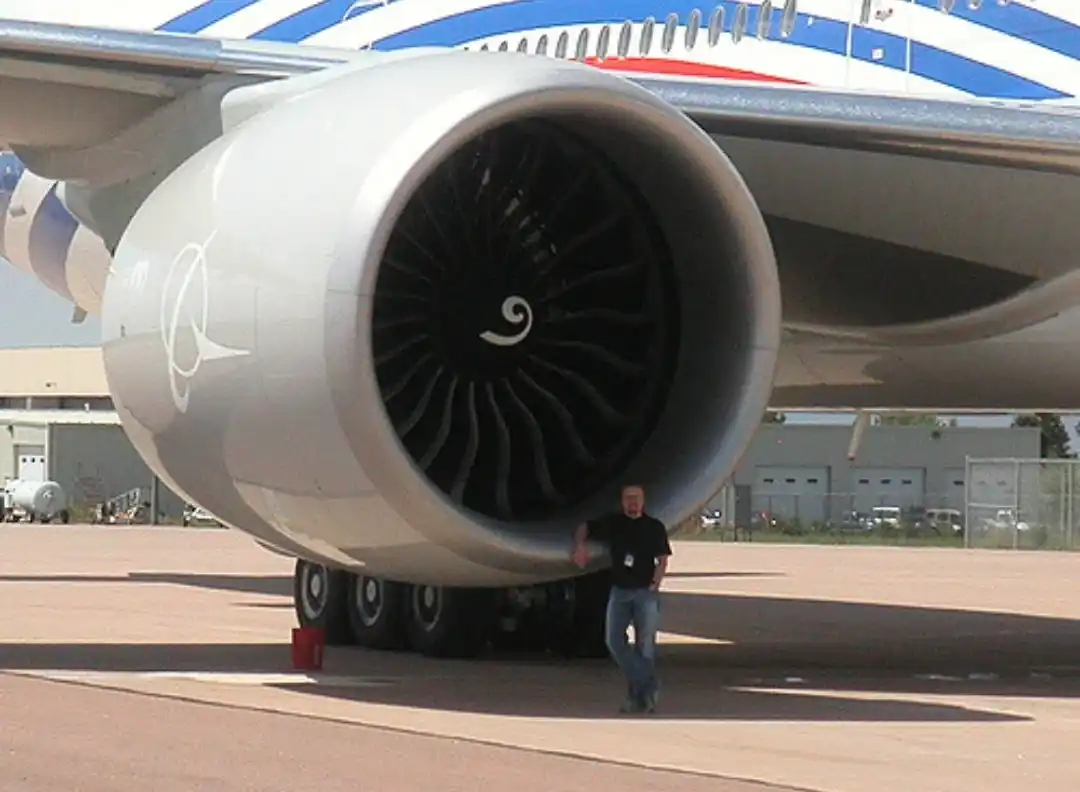
The GE9X did not emerge in isolation. Its lineage traces directly back to the GE90, the engine that transformed the Boeing 777 into a long-range icon. When the GE90 entered service in the 1990s, it was already radical, featuring composite fan blades and unprecedented thrust levels. Its fan diameter, which eventually reached 128 inches, was once considered almost excessive.
The GE90 demonstrated that size could be tamed. It showed airlines that a two-engine widebody could reliably fly ultra-long routes once reserved for four-engine aircraft. It also proved that composite fan blades could survive bird strikes, fatigue cycles, and years of airline abuse. Without the operational success of the GE90, the GE9X’s audacious fan would have remained a paper exercise.
What the GE9X does is take that philosophy and push it to its logical extreme. It builds on decades of data, refining blade aerodynamics, reducing blade count to just sixteen, and optimizing airflow with three-dimensional shaping that would have been impossible to design or manufacture in the past.
Designing a Fan That Redefines Scale
The GE9X fan is not merely larger; it is smarter. Each blade is sculpted to manage airflow precisely across its entire span, from the root near the hub to the tip sweeping close to the nacelle. This matters because airflow behaves very differently at different radii. Managing those variations efficiently is essential when the diameter grows so large.
The blades themselves are made from advanced carbon-fiber composites, a material choice that keeps weight under control while delivering exceptional strength. These blades must withstand enormous centrifugal forces, bird impacts at takeoff speed, and subtle vibrations that can accumulate damage over thousands of cycles. The fact that the GE9X does this with fewer blades than the GE90 reduces aerodynamic interference and further improves efficiency.
Surrounding the fan is a composite fan case designed not only to save weight but also to contain a blade in the extremely unlikely event of a failure. Certification rules demand that the engine safely contain such an event without endangering the aircraft. Meeting those standards at this scale is one of the quiet triumphs of the GE9X program.
The Nacelle Drag Tradeoff
A larger fan inevitably means a larger nacelle, and a larger nacelle creates more drag. This is the fundamental tax on size. The GE9X minimizes this penalty through careful shaping and integration with the Boeing 777X wing. The nacelle is designed to manage airflow smoothly around the engine, reducing separation and pressure losses.
This is where modern computational fluid dynamics earns its keep. Engineers can simulate thousands of flight conditions, tweaking contours by millimeters to shave off drag. The result is a nacelle that looks imposing on the ground but behaves cleanly in the air. The fan diameter would be meaningless without this obsessive attention to external aerodynamics.
The 777X itself plays a role here. Its long, high-aspect-ratio wing provides the clearance and structural support needed for such engines. The folding wingtips allow the aircraft to operate at existing gates despite its enormous span, making the GE9X’s size operationally viable rather than merely impressive.
Noise Reduction Through Sheer Volume
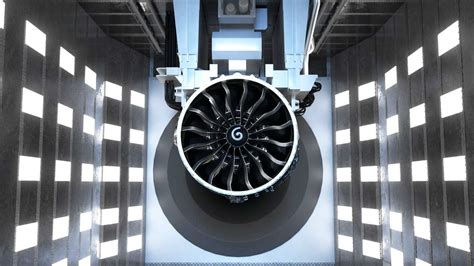
One of the more counterintuitive benefits of the GE9X fan diameter is noise reduction. Large fans moving air slowly generate less acoustic energy than smaller fans pushing air violently. This matters enormously for airports facing strict noise regulations and for communities living under flight paths.
The GE9X combines its large fan with advanced acoustic liners inside the nacelle, further absorbing sound. The result is an engine that, despite its physical presence, is quieter than earlier designs. For airlines, this translates into fewer restrictions on night operations and more flexibility in scheduling. For passengers, it means a noticeably calmer cabin environment.
Noise has always been one of aviation’s most stubborn public relations problems. The GE9X demonstrates that efficiency and community acceptance can advance together when design choices are aligned with fundamental physics.
The Core: Letting the Fan Do the Work
Because the fan handles so much of the thrust generation, the GE9X core can focus on what it does best: extracting maximum energy from fuel. The engine boasts an overall pressure ratio exceeding 60:1, a staggering figure that reflects how aggressively the air is compressed before combustion.
This high pressure ratio improves thermal efficiency, meaning more of the fuel’s chemical energy becomes useful work. Advanced materials such as ceramic matrix composites allow turbine components to operate at higher temperatures without excessive cooling. Less cooling air means more air available for combustion and thrust, closing the efficiency loop.
The fan diameter enables this division of labor. By offloading thrust production to the fan, the core becomes an efficiency engine rather than a brute force generator. This synergy is central to why the GE9X sets new benchmarks rather than merely matching competitors.
Certification at the Edge of Possibility
An engine of this scale does not glide through certification. The GE9X endured thousands of hours of testing, including extreme scenarios involving bird strikes, ice ingestion, crosswinds, and endurance cycles that simulate years of airline service. The fan blades and case, in particular, faced intense scrutiny.
Blade containment tests are especially unforgiving. Regulators require proof that a failed blade will be safely contained without compromising the aircraft. Achieving this with such a large fan diameter demands exceptional material performance and structural design. The GE9X met these requirements, earning certification in 2020 even as the aircraft it was designed for remained grounded by delays.
This asymmetry highlights an important point. The engine is not the bottleneck. The fan diameter, radical as it is, has already proven itself under regulatory fire.
Economic Impact for Airlines
From an airline’s perspective, the GE9X fan diameter translates into lower fuel burn per seat, the single most important metric for long-haul profitability. Fuel costs dominate operating expenses on ultra-long routes. Even a few percentage points of efficiency improvement can shift route economics from marginal to viable.
The GE9X promises double-digit fuel burn reductions compared to earlier 777 engines when paired with the 777X airframe. This opens the door to longer nonstop routes, higher payloads, or simply healthier margins on existing services. In a competitive market, these gains are not optional luxuries; they are survival tools.
Maintenance economics also benefit. Fewer fan blades mean fewer components to inspect and maintain. Composite materials resist corrosion better than traditional metals, potentially extending service intervals. The fan diameter, paradoxically, simplifies some aspects of long-term operation even as it complicates initial design.
Environmental Stakes and Carbon Pressure
Aviation faces increasing pressure to cut emissions. While sustainable aviation fuels and future propulsion concepts attract headlines, near-term gains come from efficiency. The GE9X’s fan diameter directly addresses this reality. By burning less fuel for the same work, the engine reduces carbon dioxide emissions without waiting for new infrastructure or fuel supplies.
This matters because the 777X targets high-capacity, long-range routes where emissions per flight are substantial. Improvements here have outsized impact. The fan diameter is therefore not just an engineering choice but a response to regulatory and societal demands that are only intensifying.
Implications for the Future of Jet Engines
The GE9X sets a precedent. It signals that the industry has crossed a threshold where ultra-large fans are not only possible but advantageous. Future engine programs will inevitably be measured against this benchmark. Designers will ask how far the fan-centric philosophy can be pushed before diminishing returns reappear.
There are limits, of course. Ground clearance, drag, and structural integration will eventually reassert themselves. But the GE9X expands the feasible design space. It invites bolder thinking about open rotors, geared architectures, and hybrid concepts that further exploit the principle of moving more air more gently.
In this sense, the GE9X fan diameter is less an endpoint than a signpost. It marks where the road of conventional turbofan design currently leads, and it hints at where the next turns might lie.
Why the Fan Diameter Truly Matters
Strip away the numbers and accolades, and the importance of the GE9X fan diameter becomes clear. It represents a commitment to physics over fashion, to efficiency over incrementalism. It shows what happens when an engineering team decides not merely to optimize within constraints but to challenge the constraints themselves.
The GE9X does not rely on a single miracle technology. Its breakthrough is holistic. Materials, aerodynamics, certification discipline, and aircraft integration all converge around the fan. That convergence is what makes the diameter meaningful rather than theatrical.
For aviation, this matters because progress rarely comes from one dramatic leap. It comes from moments when multiple threads finally align. The GE9X fan diameter is one of those moments, quietly redefining what a jet engine can be while looking unapologetically enormous as it does so.