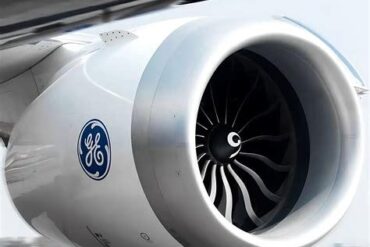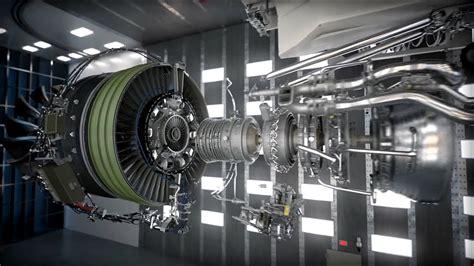
The modern aviation arms race is no longer defined by wingspan or passenger capacity—it is defined by raw engine power, fuel efficiency, and engineering dominance. At the center of this high-stakes competition sits the GE9X jet engine, a machine so ambitious in scale and capability that it is quietly reshaping the balance of power between Boeing and Airbus.
This is not just another incremental upgrade in propulsion technology. The GE9X represents a philosophical shift in how long-haul aviation is engineered, pushing twin-engine aircraft into performance territory that once required four engines. And in doing so, it gives Boeing a weapon that is both brutally efficient and strategically disruptive.
The implications ripple far beyond a single aircraft program. They reach into airline economics, environmental policy, and the very future of aircraft design.
The Rise of Giant Twin Engines and the Fall of the Four-Engine Era
Aviation history has always been shaped by constraints—fuel costs, reliability, and range. For decades, long-haul aircraft depended on four engines to cross oceans safely. That paradigm began to collapse with the introduction of the Boeing 777, powered by the legendary GE90 engine.
The GE90 shattered expectations by delivering unprecedented thrust levels exceeding 115,000 pounds, enabling twin-engine aircraft to handle routes previously reserved for jumbo jets like the Boeing 747 or Airbus A380.
This shift wasn’t just technological—it was economic. Airlines discovered that two engines meant:
- Lower maintenance costs
- Reduced fuel consumption
- Simplified operations
The industry pivoted almost overnight. Four-engine aircraft became symbols of excess, while twinjets became the new standard of efficiency.
The GE9X is the culmination of that evolution—a machine designed to dominate this new era completely.
Engineering the Largest Jet Engine Ever Built
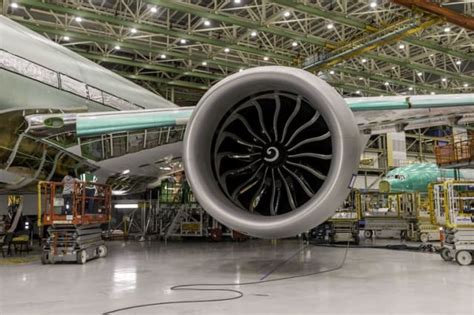
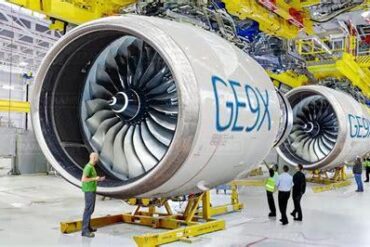
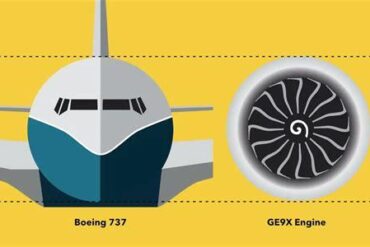
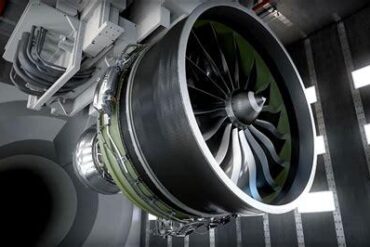
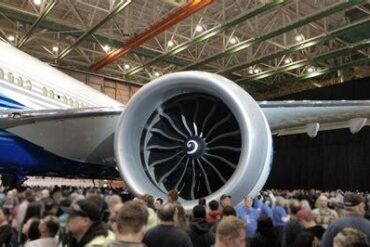
At first glance, the GE9X seems almost unreal. With a fan diameter of 134 inches, it is wider than the fuselage of a Boeing 737. Its sheer size is not just for spectacle—it is the foundation of its efficiency.
A larger fan moves more air around the engine core rather than through it, dramatically improving fuel burn. This principle, known as a high bypass ratio, is central to modern turbofan design. The GE9X pushes this concept to new extremes with a 10:1 bypass ratio, enabling it to deliver both power and efficiency at unprecedented levels.
But size alone doesn’t explain its dominance. The real magic lies in its materials and internal architecture.
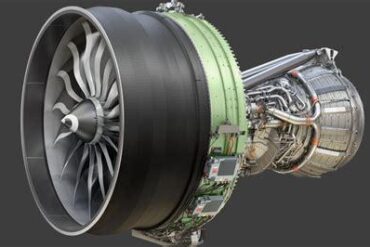
Inside the engine, ceramic matrix composites (CMCs) replace traditional metal components in high-temperature areas. These materials are lighter, stronger, and capable of withstanding extreme heat without requiring as much cooling air. That translates directly into higher efficiency and lower fuel consumption.
The GE9X also features:
- A 27:1 compressor pressure ratio, the highest ever achieved in a commercial engine
- Only 16 composite fan blades, fewer than its predecessor, reducing drag and weight
- Advanced cooling systems that allow hotter, more efficient combustion
Together, these innovations deliver a 10% fuel efficiency improvement over the GE90, a massive leap in an industry where even a 1% gain is considered significant.
Power Meets Precision: Why Airlines Care
For airlines, the GE9X is not just an engineering marvel—it is a profit-generating machine.
Fuel is one of the largest operating costs in aviation, often accounting for 20–30% of total expenses. Even marginal improvements in efficiency can translate into millions of dollars in annual savings per aircraft.
Now consider what a 10% improvement means across a global fleet.
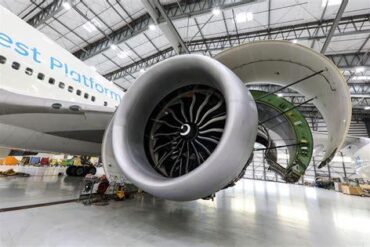
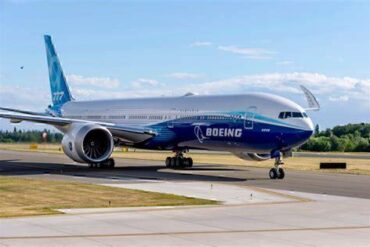
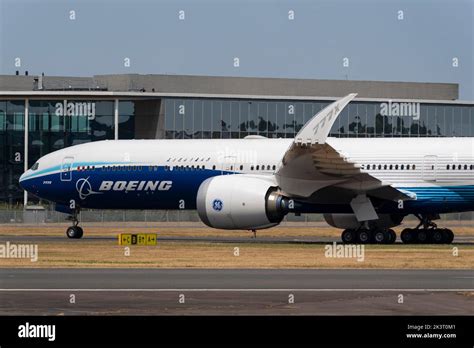
The Boeing 777X, powered exclusively by the GE9X, leverages this efficiency to offer:
- Longer range with fewer fuel stops
- Lower emissions per passenger
- Reduced noise footprint
These advantages are not theoretical—they directly impact route planning, regulatory compliance, and profitability.
Airlines can open new ultra-long-haul routes that were previously uneconomical. They can operate in regions with stricter environmental regulations. And they can do all this while maintaining competitive ticket pricing.
In a brutally competitive industry, that combination is devastatingly effective.
Why Airbus Should Be Paying Attention
The rise of the GE9X places immense pressure on Airbus, particularly its flagship Airbus A350 program, powered by the Rolls-Royce Trent XWB.
The Trent XWB is no slouch. It is widely regarded as one of the most efficient engines currently in service. But the GE9X pushes performance into a new category—one defined by extreme thrust combined with next-generation efficiency gains.
This creates a strategic dilemma for Airbus.
Unlike Boeing, which partnered closely with GE Aerospace, Airbus relies heavily on Rolls-Royce for its widebody engine solutions. While that partnership has produced excellent results, it now faces a growing gap in sheer engine scale and thrust capability.
Airbus must decide whether to:
- Push incremental upgrades to existing engines
- Accelerate next-generation programs like UltraFan
- Or rethink aircraft design entirely to maintain parity
Each option carries risk, cost, and time delays—luxuries the market does not always allow.
The UltraFan Threat: A Sleeping Giant
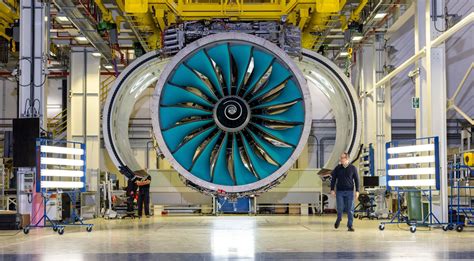
While the GE9X dominates the present, the future may belong to the Rolls-Royce UltraFan.
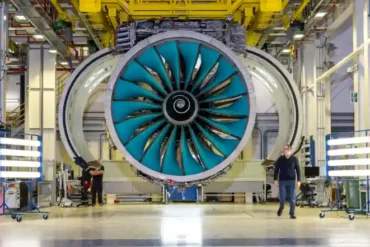
Still in development, UltraFan is designed as a modular, scalable engine platform capable of powering both narrowbody and widebody aircraft. Its most striking feature is its massive 140-inch fan diameter, surpassing even the GE9X.
But size is only part of the story.
UltraFan introduces a geared architecture, allowing the fan and turbine to operate at optimal speeds independently. This improves efficiency dramatically, especially at higher bypass ratios—targeted at an astonishing 15:1.
The engine also incorporates:
- Carbon-titanium fan blades for strength and weight reduction
- Composite casing to minimize structural mass
- A lean-burn combustion system to reduce emissions
Rolls-Royce claims UltraFan could deliver up to 25% better fuel efficiency compared to older engines like the Trent 700.
If those numbers hold true in real-world operations, UltraFan could leapfrog the GE9X entirely.
But there is one critical catch: timing.
Timing Is Everything in Aviation Dominance
The GE9X is expected to enter service with the Boeing 777X around 2027, giving Boeing a multi-year head start over any potential UltraFan-powered aircraft.
In aviation, this lead is enormous.
Aircraft programs are planned decades in advance. Airlines place orders years before delivery. Infrastructure, training, and maintenance ecosystems are built around specific platforms.
By the time UltraFan reaches commercial service—likely in the 2030s—the GE9X will already be deeply embedded in global fleets.
This creates a powerful network effect advantage for Boeing. Airlines that invest in the 777X ecosystem may be less inclined to switch platforms later, even if a marginally better engine becomes available.
In other words, the GE9X doesn’t just compete—it locks in market share.
The Open-Fan Revolution on the Horizon
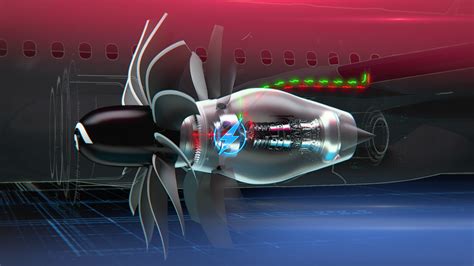
Beyond GE9X and UltraFan lies an even more radical concept: open-fan propulsion.
Companies like CFM International are developing the RISE program, which abandons the traditional engine nacelle entirely. Instead, large, exposed fan blades generate thrust more efficiently by eliminating airflow restrictions.
This design could deliver:
- Up to 20% lower fuel consumption
- Reduced noise through improved airflow dynamics
- Greater scalability for future aircraft
The implications are staggering. Open-fan engines could redefine aircraft design entirely, forcing manufacturers to rethink wing structures, engine placement, and aerodynamics.
While still experimental, this technology signals a future where today’s “monster engines” may eventually be outclassed.
Why the GE9X Is Winning Right Now
Despite future challengers, the GE9X holds a commanding position today because it strikes a rare balance between innovation and readiness.
It is not a concept. It is not a prototype waiting for validation. It is a certifiable, near-service-ready engine backed by years of testing and billions of dollars in development.
Its advantages are clear:
- Record-breaking thrust capabilities
- Proven efficiency gains in real-world testing
- Integration with a next-generation aircraft already ordered by airlines
And perhaps most importantly, it arrives at exactly the right moment—when airlines are under pressure to cut emissions, reduce costs, and expand long-haul networks simultaneously.
That alignment of technology and market demand is what makes the GE9X so formidable.
The Strategic Impact on Boeing vs Airbus
The GE9X does more than power an aircraft—it reshapes the competitive landscape between Boeing and Airbus.
For Boeing, it provides:
- A clear technological edge in the widebody segment
- A flagship product that differentiates the 777X from competitors
- A platform to rebuild confidence after years of setbacks
For Airbus, it creates urgency.
The company must accelerate innovation or risk ceding ground in the high-capacity, long-haul market. While Airbus remains strong with the A350, the GE9X-powered 777X introduces a level of performance that cannot be ignored.
This is no longer a quiet rivalry. It is a high-stakes technological duel, with engines at the center of the battlefield.
A Glimpse Into Aviation’s Next Decade
The story of the GE9X is not just about one engine—it is about the direction of an entire industry.
Aviation is moving toward a future defined by:
- Ultra-efficient propulsion systems
- Sustainable aviation fuels (SAF) compatibility
- Radically new engine architectures
The GE9X stands as the bridge between legacy engineering and next-generation innovation. It proves that massive gains are still possible within the turbofan framework, even as the industry experiments with more radical ideas.
For now, it reigns as the most powerful and advanced commercial jet engine ever built—a title that carries both prestige and strategic weight.
And until its rivals catch up, it will continue to crush the competition, one flight at a time.