Commercial aviation rarely changes its silhouette, and when it does, the reason is never cosmetic. Airbus is now preparing to expose one of the most visually radical ideas in modern engine design by stripping away the cowling that has wrapped jet engines for more than half a century. The open-fan concept, long considered a technological curiosity, is being repositioned as a serious contender for powering the next generation of single-aisle aircraft, driven by urgency around fuel efficiency, emissions, and operating economics.
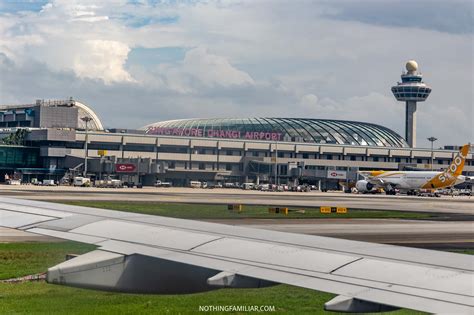
At the center of this shift is Singapore, which has secured a pivotal role in the future of propulsion technology. Through a landmark agreement announced at the Changi Aviation Summit, Airbus, CFM International, and the Civil Aviation Authority of Singapore have committed to building the world’s first airport-based testbed dedicated to next-generation engines. This facility is designed to move open-fan propulsion out of laboratories and wind tunnels and into real operational environments, where assumptions meet asphalt.
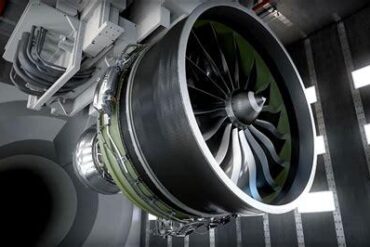
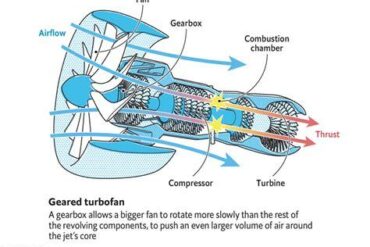
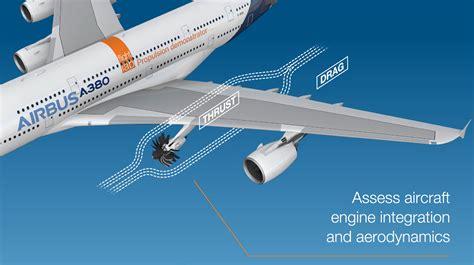
The technology being tested under CFM’s RISE programme challenges the evolutionary path that defined jet engines since the early turbofan era. Instead of enclosing ever-larger fans within nacelles to boost bypass ratios, the open-fan design removes the duct entirely. The fan blades are exposed, allowing the engine to move vast amounts of air more efficiently while shedding weight and aerodynamic losses associated with traditional housings.
Why Airbus Is Willing To Break A 50-Year Design Tradition
The appeal of open-fan propulsion is rooted in physics rather than fashion. Propulsive efficiency improves when an engine accelerates a large mass of air by a small amount, rather than a small mass of air by a large amount. By eliminating the nacelle, the RISE engine architecture can achieve bypass ratios potentially exceeding 50:1, dwarfing the roughly 11:1 ratios seen on today’s most advanced LEAP engines. The result, according to CFM, is a fuel burn and CO₂ reduction of more than 20%, a margin that incremental refinements can no longer deliver.
Weight savings compound these gains. Removing the cowling reduces structural mass and avoids the drag penalties created by ducted airflow. For airlines operating narrowbody fleets at high utilization rates, even single-digit efficiency improvements translate into billions in lifetime savings. A 20% step-change redefines route economics, aircraft sizing, and long-term fleet planning.
The RISE programme is not speculative. Thousands of engineers across Airbus and CFM have already conducted hundreds of component tests and logged thousands of endurance cycles focused on open-fan technologies. Blade designs rely on advanced composites with tailored failure behavior, while digital modeling allows engineers to simulate conditions that were impossible to predict accurately during earlier unducted fan experiments.
Noise, Safety, And The Hard Lessons Of Past Failures
Open-fan engines are not new ideas, and history explains why they disappeared. In the 1980s, unducted fan concepts promised efficiency but struggled with excessive noise and limited design tools. Certification frameworks were immature, and public acceptance proved elusive. Today’s revival is built on three decades of progress in computational fluid dynamics, acoustic modeling, and materials science.
Modern open-fan blades are shaped to rotate more slowly at their tips, reducing shock formation and tonal noise. Variable pitch systems optimize performance across flight phases, while airframe integration studies focus on shielding noise away from the ground. Noise is no longer treated as an afterthought but as a core design constraint influencing engine placement and aircraft geometry.
Safety concerns, particularly bird strikes, remain central. Without a casing to contain debris, the design philosophy shifts toward prevention, durability, and controlled outcomes. Reinforced composite blades are engineered to withstand impacts while failing predictably under extreme loads. Engineers also analyze debris trajectories at the aircraft level, ensuring that critical structures remain protected even in worst-case scenarios.
Certification And Aircraft Integration Redefine The Equation
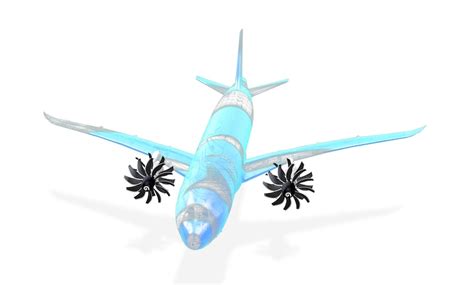
Certification will determine whether open-fan propulsion becomes mainstream or remains experimental. Regulators must evaluate not only engine behavior but its interaction with the entire aircraft. Airbus has explored multiple configurations, including rear-mounted installations that balance efficiency with noise shielding and safety margins.
Singapore’s airport-based testbed offers something no laboratory can: exposure to real operational variables. Ground handling procedures, acoustic performance during taxi and takeoff, and maintenance workflows can be studied in conditions identical to airline service. Data gathered here will inform future certification standards, reducing uncertainty for manufacturers and operators alike.
The Civil Aviation Authority of Singapore brings regulatory credibility to the initiative. Its involvement signals that authorities are preparing for propulsion architectures that fall outside traditional assumptions. By validating procedures early, the industry avoids the bottlenecks that often delay revolutionary designs late in development.
What Open-Fan Engines Mean For The Single-Aisle Market
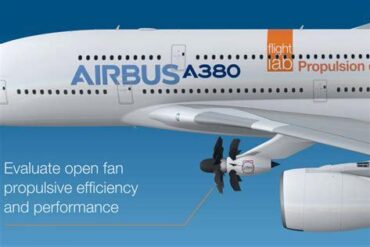
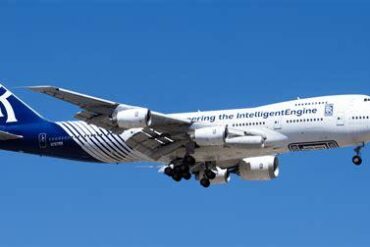
The single-aisle segment is aviation’s economic backbone, and it is where efficiency gains matter most. Airbus plans to validate the RISE open-fan concept through large-scale flight testing later this decade, including trials using a modified A380 as a flying test platform. These flights will generate critical data on performance, noise, and integration at scale.
If results meet expectations, open-fan engines could enter service in the mid-to-late 2030s, fully compatible with 100% sustainable aviation fuel and adaptable to hybrid-electric assistance. This flexibility aligns with airline decarbonization strategies while preserving range and payload capabilities.
Ultimately, removing the cowling is not an aesthetic gamble but a strategic response to diminishing returns in conventional engine design. The open-fan revolution reflects a broader truth about aviation’s future: meaningful progress now demands visible change. Efficiency, emissions, and economics will decide the outcome, and the exposed blades turning over Singapore may define the next era of flight.