Origins and Evolution
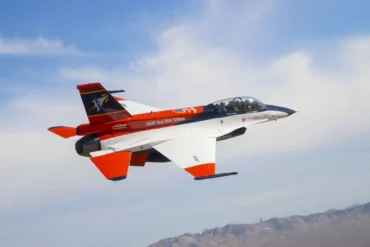
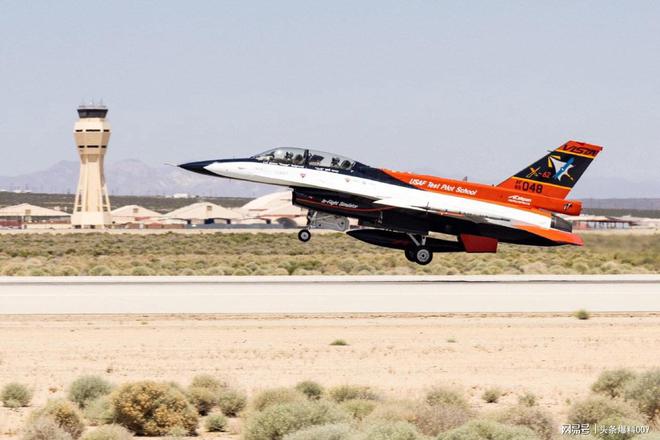
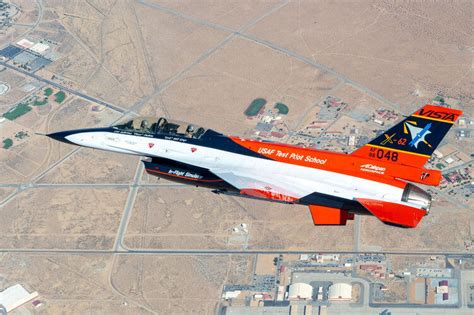
The F-16 VISTA (Variable Stability In-Flight Simulator Test Aircraft) is a cutting-edge technology demonstrator based on the F-16D Block 30 fighter jet. Originally produced in 1992, this aircraft underwent extensive modifications by Lockheed Martin to serve as a variable stability flight test platform. Its primary mission is to evaluate advanced flight control systems, AI-driven autonomous combat capabilities, and thrust vectoring technologies.
The key innovation in VISTA is its variable stability control system, which allows it to emulate the flight characteristics of other aircraft, such as the F-22 Raptor or Su-57 Felon. This capability enables pilots and engineers to test new flight dynamics and AI-controlled maneuvering under real-world conditions.
AI-Driven Aerial Combat Testing
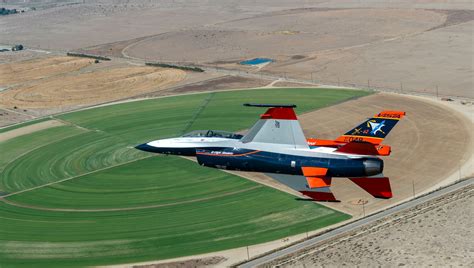
In 2023, the aircraft was rebranded as X-62A VISTA and integrated with two state-of-the-art AI systems:
- Autonomous Air Combat Operations (AACO), developed by the U.S. Air Force Research Laboratory.
- Air Combat Evolution (ACE), a project under the Defense Advanced Research Projects Agency (DARPA).
These AI systems enable VISTA to execute autonomous air combat maneuvers, including beyond-visual-range (BVR) engagements and close-range dogfighting tactics. The AI is designed to analyze threats, adapt to enemy tactics, and execute real-time combat decisions with minimal human input.
A milestone test occurred in May 2024, when U.S. Air Force Secretary Frank Kendall participated in a flight aboard the X-62A VISTA without directly controlling the aircraft. This demonstration validated AI-driven combat capabilities, proving that AI can manage complex aerial engagements, including tactical maneuvers, threat responses, and autonomous weapon selection.
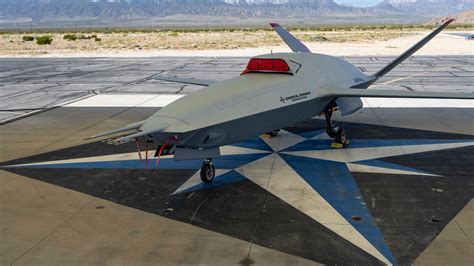
Looking ahead, the U.S. Air Force plans to deploy a fleet of 1,000 AI-controlled unmanned combat aircraft by 2028, with VISTA playing a pivotal role in shaping this future.
Key Technical Features and Upgrades
Thrust Vectoring Technology
One of VISTA’s most significant contributions to aerial combat research is its role in testing Multi-Axis Thrust Vectoring (MATV). By employing Axisymmetric Vectoring Exhaust Nozzle (AVEN) technology, the aircraft achieved unprecedented maneuverability, including:
- 70-degree high-angle-of-attack (AoA) flight, enhancing dogfighting capabilities.
- Supermaneuverability techniques, allowing extreme post-stall maneuvers similar to those seen in the Su-35 and F-22 Raptor.
This thrust vectoring research has influenced the development of next-generation fighters, improving agility, sustained turn rates, and air-to-air combat performance.
Structural Modifications
To accommodate advanced avionics and AI systems, VISTA underwent extensive structural redesigns, including:
- Enhanced dorsal spine compartment, similar to the Israeli F-16I Sufa, providing extra space for computing hardware and electronic warfare (EW) systems.
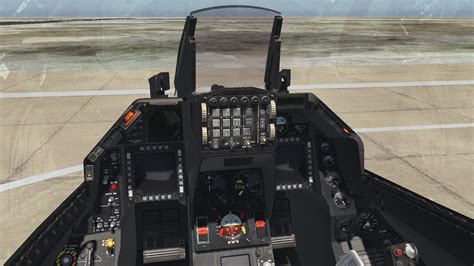
- Redesigned cockpit, featuring a central control stick instead of the traditional side-stick configuration, optimizing control for test pilots and AI simulation.
- Streamlined instrument panel, improving ergonomics for AI-assisted flight operations.
Software and AI Integration
A major overhaul in 2022 equipped VISTA with three new software modules, including:
- Simulated Autonomous Control System (SACS), enabling real-time integration of AI decision-making algorithms.
- Flight simulation modules, allowing VISTA to mimic different aircraft types and test AI-driven combat strategies.
- Customizable mission software, ensuring adaptability to evolving aerial combat scenarios.
These enhancements make VISTA a crucial testbed for refining AI algorithms before their deployment in future unmanned combat aerial vehicles (UCAVs).
Comparison with Other Experimental Aircraft
F-16 VISTA vs. F-15 ACTIVE
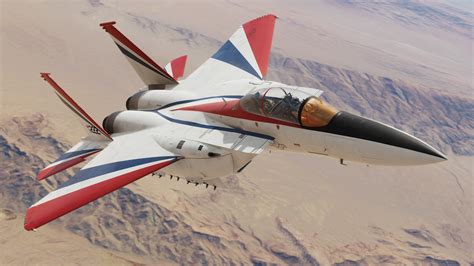
The F-15 ACTIVE (Advanced Control Technology for Integrated Vehicles) is another testbed aircraft known for its three-axis thrust vectoring capability. However, key differences between the two platforms include:
- Thrust Vectoring Implementation: The F-15 ACTIVE employs 3D thrust vectoring for full-directional control, while VISTA focuses on simplified vectoring designs to balance maneuverability with stealth considerations.
- AI-Driven Combat: VISTA leads in AI combat research, whereas F-15 ACTIVE was primarily used for mechanical thrust vectoring studies.
- Stealth and Sensor Optimization: VISTA’s design aligns with next-generation fighter requirements, emphasizing sensor fusion and autonomous decision-making.
These differences highlight VISTA’s unique role as a bridge between manned and AI-controlled air combat.
Ethical and Technological Challenges
AI-Controlled Warfare Ethics
The increasing autonomy of AI-driven combat aircraft raises significant ethical concerns, particularly regarding:
- Weapon deployment decisions: Should AI be allowed to engage targets without human intervention?
- Operational accountability: Who is responsible if an AI-controlled aircraft makes an erroneous attack?
- Potential for escalation: Could fully autonomous combat systems lead to unintended conflicts?
Despite assurances from military officials, human rights organizations continue to advocate for strict oversight on AI weaponization policies.
Technical Maturity and Reliability
Although VISTA’s AI systems have undergone extensive testing, real-world operational deployment presents ongoing challenges:
- Countermeasure Resistance: Adversaries are developing electronic warfare (EW) tactics to disrupt AI decision-making.
- Adaptability in Combat: AI systems require continuous training to adapt to evolving enemy strategies.
- Software Complexity: Over 100,000 lines of AI code have been revised to improve decision-making accuracy, yet further refinements are necessary.
These technical hurdles emphasize the need for continued AI testing and refinement before full-scale deployment.
Conclusion
The F-16 VISTA stands at the forefront of AI-integrated aerial warfare, pioneering the next era of autonomous combat aviation. By combining variable stability flight simulation, thrust vectoring capabilities, and AI-driven combat decision-making, VISTA has established itself as the premier test platform for future unmanned fighter aircraft. However, the transition to fully autonomous combat introduces ethical dilemmas and technological challenges that must be addressed to ensure responsible AI deployment in military aviation.
FAQ
1. What makes the F-16 VISTA unique compared to standard F-16 fighters?
The F-16 VISTA is a test aircraft equipped with a variable stability control system, enabling it to simulate different flight characteristics. It also integrates advanced AI algorithms for autonomous aerial combat research.
2. How does AI enhance the combat capabilities of the F-16 VISTA?
The AI systems in VISTA, including AACO and ACE, allow it to execute autonomous air-to-air engagements, analyze threats, and optimize combat maneuvers without pilot input, making it a critical tool for future unmanned combat aviation.
3. What are the ethical concerns surrounding AI-controlled fighter jets?
Key concerns include autonomous weapon deployment, accountability in AI decision-making, and the potential risks of uncontrolled escalation in combat scenarios. These issues require careful policy oversight to ensure responsible AI integration in military operations.