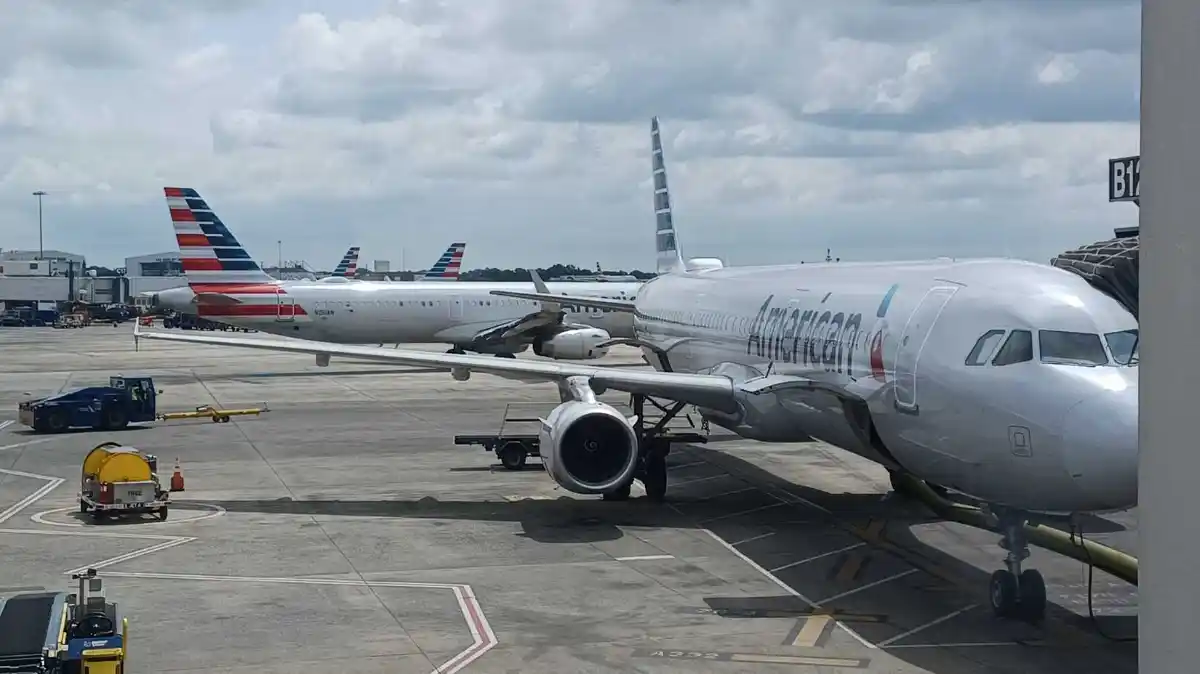
A passenger’s laptop caught fire aboard American Airlines Flight 2398 during its approach to Dallas/Fort Worth International Airport on August 21, 2026, prompting an emergency response after smoke filled the rear section of the Airbus A321. The incident highlights the continuing risks associated with lithium-ion batteries on commercial aircraft, even though laptops are responsible for only a small share of reported battery-related aviation incidents.
Flight 2398 was operating from Hartsfield-Jackson Atlanta International Airport (ATL) to Dallas/Fort Worth International Airport (DFW) with 133 people aboard. As the aircraft approached Dallas on Friday evening, the flight crew notified air traffic control that there was a cabin fire in the back of the airplane. The crew identified a passenger’s laptop as the source and reported that flight attendants were attempting to contain the device.
The situation became more serious when one of the pilots told controllers that approximately four to five passengers may have been burned. Although the aircraft remained under control throughout the event, the report of multiple possible injuries resulted in an emergency response being prepared at DFW. The A321 ultimately landed safely and was met by emergency personnel before taxiing under its own power to a gate in Terminal C.
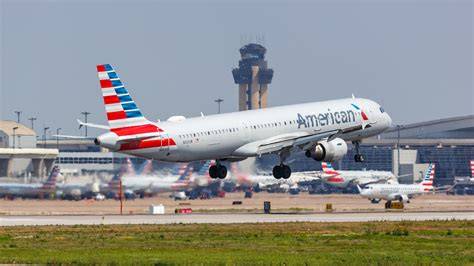
American Airlines Flight 2398 Declares Emergency After Laptop Fire
Air traffic control recordings provide an important account of the incident because they capture the crew describing the developing situation while the aircraft was still airborne. The pilots reported smoke and a cabin fire involving a passenger’s laptop, while flight attendants worked to control the device and prevent the situation from spreading.
American Airlines later confirmed that the aircraft landed safely after reports of smoke from a customer’s device. The airline credited the crew with responding quickly and containing the problem before the aircraft completed its landing. The incident therefore appears to have remained localized rather than developing into a larger cabin fire.
That distinction is critical in an aircraft environment. A burning electronic device can produce intense heat, smoke and potentially hazardous gases, while a damaged lithium-ion battery can continue generating heat even after visible flames disappear. The ability of cabin crew to identify the source and act quickly can therefore make a significant difference.
How a Laptop Battery Can Catch Fire on an Airplane
The most serious battery-related aviation incidents generally involve a phenomenon known as thermal runaway. This occurs when a lithium-ion battery begins overheating and enters a self-reinforcing cycle in which rising temperature triggers chemical reactions that generate still more heat. Eventually, the battery can vent, ignite or release smoke.
A battery can become vulnerable for several reasons, including physical damage, manufacturing defects, improper handling or exposure to conditions that compromise the battery. A laptop that has been dropped or damaged may not immediately show obvious signs of trouble, which makes battery-related incidents particularly difficult to predict.
Commercial aircraft are equipped with procedures and equipment designed to address these events. Flight attendants can isolate problematic devices and use specialized thermal containment equipment when necessary. Keeping spare lithium batteries and power banks in the cabin rather than checked baggage is also an important safety measure because cabin crew can respond to a battery problem much faster than they could if it occurred inside an inaccessible cargo compartment.
Laptop Fires Are Uncommon Compared With Other Battery Incidents
Despite the dramatic nature of the American Airlines event, laptops are not among the most frequent sources of lithium-battery incidents on passenger aircraft. According to the reference data, the FAA recorded more than 90 thermal runaway events in 2025, with the majority occurring on passenger aircraft.
Only eight of the 93 incidents recorded that year were attributed to laptops. Battery packs and power banks were the leading source, followed by e-cigarette devices and mobile phones. The figures help place the American Airlines incident in context: laptops can certainly become dangerous, but they represent only a relatively small portion of the broader battery-safety problem facing airlines.
The increasing use of portable electronics has nevertheless encouraged airlines to strengthen their policies. American Airlines, Delta, Southwest and United have all introduced additional restrictions concerning portable chargers in recent years. Laptops generally remain permitted in the cabin, but passengers are expected to follow airline instructions and keep potentially hazardous devices where they can be observed and accessed.
Previous Laptop Incidents Show Another Major Risk
A laptop does not necessarily need to catch fire immediately to create a serious aviation problem. One of the more important hazards involves a device becoming trapped inside a passenger seat.
Modern premium cabins often feature reclining or lie-flat seats with complex mechanical structures. If a laptop slips between the seat and surrounding components, moving the seat can potentially crush or damage the battery. Passengers may not realize that the device has become trapped until the damage has already occurred.
Previous incidents demonstrate why crews take such situations seriously. A United Airlines flight from London Heathrow to Washington Dulles reportedly diverted to Dublin after a laptop became inaccessible after falling into an area near the cabin wall. In another incident, an American Airlines aircraft at San Francisco International Airport was evacuated in July 2024 after a laptop inside a passenger’s bag caught fire before departure, reportedly injuring three people.
What the American Airlines Incident Means for Passengers
The Flight 2398 incident is a reminder that lithium-ion battery safety remains an important part of air travel, even when the device involved is an everyday laptop. Passengers should avoid using visibly damaged electronics, should not place laptops where they can become trapped by moving seats, and should immediately alert cabin crew if a device becomes unusually hot, begins smoking or shows other signs of battery failure.
For American Airlines, the successful landing also underscores the importance of cabin-crew training and rapid coordination between the cockpit, flight attendants and ground emergency teams. Flight 2398 reached Dallas safely, and the response prevented a laptop battery problem from becoming a much more serious aircraft emergency.
The reported injuries to up to five passengers make the event particularly significant, but the outcome also demonstrates why aviation authorities and airlines place such emphasis on keeping lithium-battery devices accessible inside the cabin. As passengers carry more powerful electronics on every flight, fast detection and professional intervention remain essential to keeping a small battery fire from becoming a major aviation emergency.