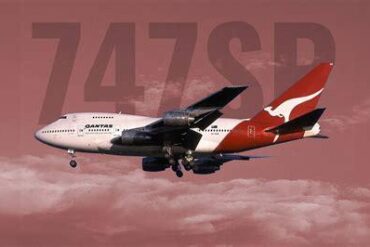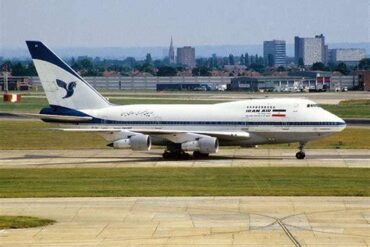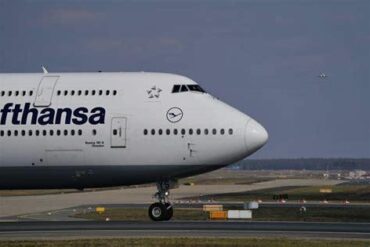
The Boeing 747SP was one of the strangest and most fascinating members of the 747 family. While most versions of Boeing’s iconic jumbo jet followed a familiar formula of becoming longer, heavier, more capable, and more technologically advanced, the 747SP went in the opposite direction. Boeing took the enormous 747 and made it dramatically shorter, creating an aircraft that looked almost unusually compact when viewed beside its full-size siblings. Yet beneath that shortened fuselage was an aircraft designed around an ambitious goal: flying farther and performing better on difficult long-distance routes.
The aircraft’s name, 747SP, stood for “Special Performance,” and that description captured its purpose perfectly. It was not simply a smaller 747 intended for airlines that could not fill a standard jumbo jet. Boeing redesigned the aircraft to deliver exceptional range, higher cruising performance, and improved runway capability. The result was an aircraft capable of connecting cities that were extremely difficult to serve nonstop during the 1970s.
The 747SP therefore occupies a fascinating position in commercial aviation history. It was technologically impressive, operationally specialized, and eventually commercially unsuccessful. Boeing expected to sell around 200 examples, but only 45 production 747SPs were ultimately delivered to airlines, followed by a final VIP aircraft years later. The aircraft became a sales disappointment, yet many of its engineering ideas influenced later generations of the 747.
Why Boeing Created the 747SP
To understand the 747SP, we have to return to the early 1970s, when the original 747 was still a relatively young aircraft. The 747-100 had transformed long-haul aviation by combining enormous passenger capacity with the efficiency advantages of a widebody design. Its four-engine configuration and huge fuselage allowed airlines to carry hundreds of passengers across oceans, while its partial upper deck gave the aircraft the distinctive silhouette that would eventually become one of aviation’s most recognizable shapes.
However, the original 747 also had limitations. Its enormous size was not ideal for every route, and its early engines restricted both payload and range. Boeing was already developing the improved 747-200, which introduced greater fuel capacity, structural improvements, and more powerful engines. Even so, some airlines wanted something different: an aircraft capable of carrying a useful payload over exceptionally long distances without requiring the full capacity of a conventional 747.
The most important initial request came from Pan Am and Iran Air. Both airlines wanted a large aircraft that could reliably fly nonstop between New York and Tehran, a route stretching thousands of nautical miles. At the time, such a mission pushed the capabilities of existing widebody aircraft. Rather than designing an entirely new aircraft, Boeing saw an opportunity to modify the 747.
That decision was driven by economics as much as engineering. Boeing did not have the resources in the early 1970s to develop a completely new smaller widebody aircraft. At the same time, the market was becoming increasingly competitive. The McDonnell Douglas DC-10 and Lockheed L-1011 TriStar were smaller than the 747 and were attracting airlines that did not need the capacity of a jumbo jet.
Boeing therefore had two problems to solve simultaneously. It needed a long-range aircraft for demanding intercontinental routes, and it needed a product capable of competing in the smaller widebody market. The 747SP became Boeing’s answer.
How Boeing Turned the 747 Into a “Baby Queen”
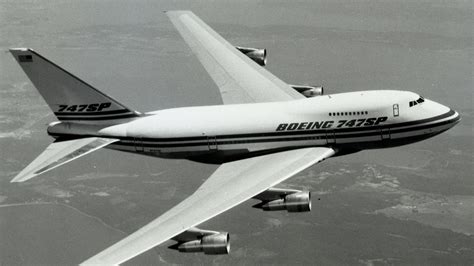
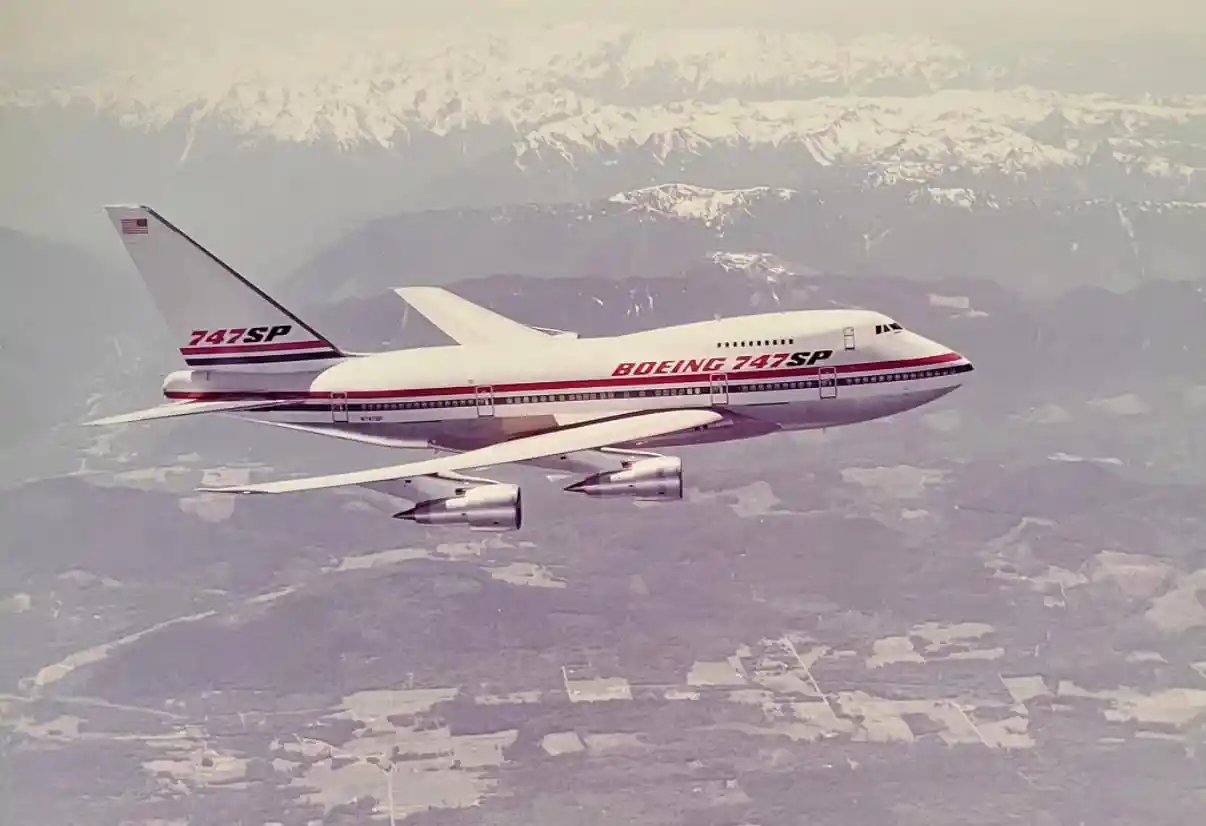
The most obvious feature of the 747SP was its radically shortened fuselage. The standard 747-100 measured approximately 231 feet 10 inches (70.6 meters) long, while the 747SP was reduced to about 183 feet 3 inches (55.85 meters). That meant Boeing removed nearly 50 feet of fuselage while retaining the same enormous wingspan of approximately 195 feet 8 inches (59.64 meters).
The result was an unusual set of proportions. The aircraft looked like a 747 that had been compressed from both ends, but the shortened fuselage was only part of the engineering story. Boeing removed sections both forward and aft of the wing, modified the center fuselage, and redesigned the tail. Because shortening the aircraft changed its aerodynamic characteristics, the 747SP received a taller vertical stabilizer to maintain appropriate directional stability.
The wings also received important modifications. Instead of the more complex triple-slotted flap arrangement used on standard 747s, the 747SP incorporated a simpler single-slotted system on the outer wing sections. Boeing also redesigned several structural components to reduce weight. These changes helped the aircraft achieve the performance characteristics that gave it the “Special Performance” name.
The 747SP retained the 747’s basic four-engine architecture, but its smaller fuselage significantly reduced the aircraft’s overall weight and drag. Its maximum takeoff weight was lower than that of the 747-100, while its fuel consumption was also reduced. Most importantly, the aircraft was optimized around range rather than capacity.
Its published maximum range reached approximately 6,650 nautical miles (12,325 kilometers), although actual airline range naturally depended on payload, weather, routing, reserves, and operating conditions. At its introduction, this made the 747SP the longest-range airliner in the world.
The 747SP Was Built for Routes That Other Jets Struggled to Serve
The aircraft’s range was not simply a number on a specification sheet. It allowed airlines to rethink routes that had previously required intermediate stops or careful payload restrictions. The original New York–Tehran concept demonstrated exactly what Boeing had in mind, although Pan Am ultimately deployed its first 747SP on a different prestigious route.
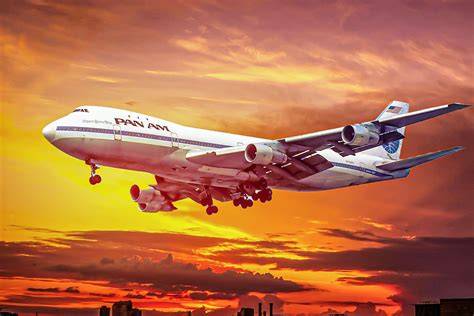
Pan Am used the aircraft on the New York–Tokyo market, demonstrating how the aircraft could be used for long-distance services across the Pacific. The 747SP could also carry a meaningful payload over routes that pushed the limits of other widebodies.
Qantas became another important operator because of the aircraft’s field performance. The Australian carrier had particularly demanding requirements for some of its routes. Qantas acquired the 747SP partly because it could operate between Sydney and Wellington, where runway limitations and challenging weather conditions made performance particularly important.
The aircraft also opened the door to exceptionally long nonstop missions. Routes such as Los Angeles–Auckland, New York–Tokyo, and Los Angeles–Sydney demonstrated the enormous geographic reach of the type. For airlines operating at the edge of the route map, the 747SP was not simply a smaller jumbo. It was a specialized long-range tool.
The aircraft could also cruise faster than most other 747 variants, with a typical cruise speed of approximately Mach 0.86. Its service ceiling remained around 45,100 feet, but the SP had the performance necessary to operate close to that altitude more routinely than other versions of the 747. That combination of speed, altitude, and range made it a remarkable aircraft for its era.
Why the 747SP Failed Commercially
On paper, the 747SP looked like an excellent solution. It was smaller, easier to fill, exceptionally long-ranged, and capable of operating from airports where a standard 747 faced greater limitations. Boeing expected substantial demand.
But aviation economics rarely follow engineering logic alone.
The central problem was that the 747SP remained fundamentally a 747, even after Boeing shortened it. The aircraft was much smaller than a standard 747, but it retained much of the structural weight and complexity associated with a substantially larger aircraft. This created a fundamental disadvantage when it was compared with aircraft designed from the beginning around the smaller widebody market.
The DC-10 and L-1011 were both trijets, while the 747SP remained a quadjet. Four engines meant additional weight, maintenance requirements, and fuel consumption. The SP could carry fewer passengers than a standard 747, but its operating economics were not reduced proportionally.
This was particularly damaging because the 747SP entered service during an extraordinarily difficult period for the airline industry. Boeing formally launched the aircraft in 1973, when fuel remained relatively inexpensive and airlines were optimistic about the future of long-distance international travel. Later that same year, the 1973 oil crisis dramatically changed the economics of commercial aviation.
Fuel prices surged, and airlines became far more sensitive to fuel burn. Suddenly, an aircraft that carried the weight of a much larger jumbo while offering fewer seats looked considerably less attractive.
The 747-200 Became the Biggest Threat to the 747SP
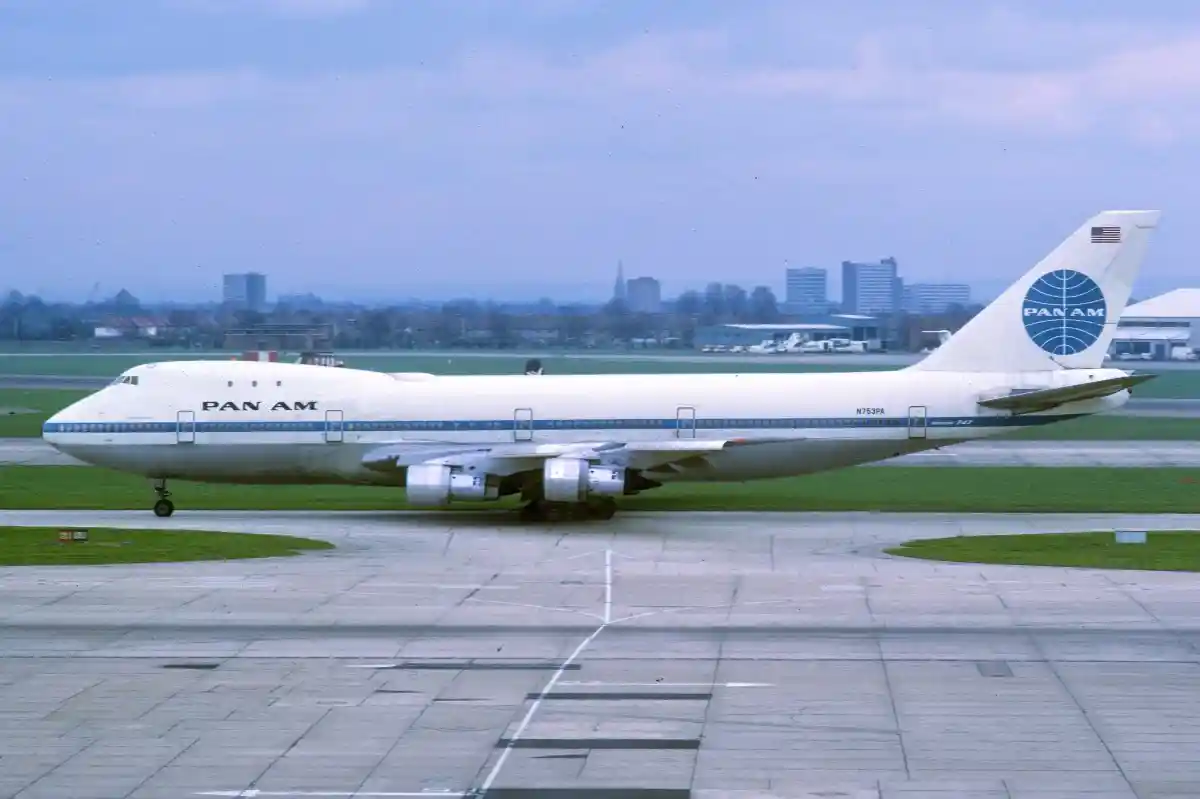
Perhaps the most ironic problem facing the 747SP was not just competition from the DC-10 and L-1011. It was the continued improvement of the 747-200 itself.
The early 747-100 had relatively limited range because its Pratt & Whitney JT9D-3 engines struggled to provide sufficient thrust for such a massive aircraft. Boeing addressed many of those limitations with the 747-200. The newer aircraft featured greater fuel capacity, structural improvements, a higher maximum takeoff weight, and more powerful engines.
As engine technology improved, the 747-200 became increasingly capable. Pratt & Whitney developed more powerful versions of the JT9D, while General Electric and Rolls-Royce also improved their engines. These advances gradually increased the range and performance of later 747-200 aircraft.
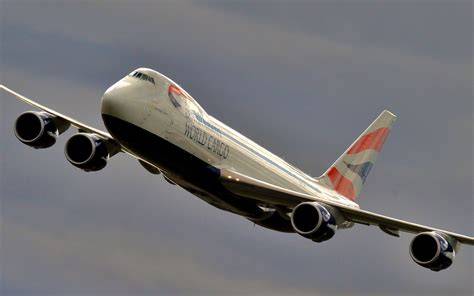
This created a serious problem for the SP. The aircraft’s primary selling point was its extraordinary range, but the conventional 747 was steadily closing the gap. Eventually, an airline could operate a 747-200 with some seats empty and still achieve economics that were competitive with, or better than, those of a fully loaded 747SP.
That was a devastating development. Airlines do not necessarily need the aircraft with the greatest theoretical range. They need the aircraft that can generate the best combination of revenue, operating cost, payload, and route flexibility.
The SP excelled at range, but its advantage became increasingly difficult to monetize.
The “Baby Queen” Was a Technical Success but a Market Failure
Only 45 747SPs were sold, dramatically below Boeing’s original expectation of around 200 aircraft. In purely commercial terms, the program was therefore a failure. Yet calling the aircraft unsuccessful without considering its technical achievements would miss much of the story.
The 747SP became the fastest member of the 747 family, with its typical cruise speed around Mach 0.86. It was also the only 747 variant capable of regularly operating close to its 45,100-foot service ceiling. For passengers and crews, that meant the aircraft occupied an unusual position at the top end of conventional subsonic aviation.
Its range also enabled remarkable flights. The aircraft participated in world-record-setting round-the-world flights, while a delivery flight from Seattle to Cape Town achieved an exceptionally long nonstop unrefueled journey that remained a record for more than a decade.
These achievements reinforced the aircraft’s reputation as the “Baby Queen”: smaller than the traditional Queen of the Skies, but possessing an extraordinary ability to cross oceans and continents.
The 747SP Changed the Design of Later 747s
Perhaps the most important legacy of the 747SP was not the number of aircraft Boeing sold. It was the engineering work that eventually influenced later 747 models.
One particularly important feature was the design of the upper-deck extension. On earlier 747 variants, the upper-deck hump ended well before the wings. On the 747SP, the upper deck was extended much farther aft, ending around the wing area. This arrangement created a distinctive appearance and provided valuable lessons for Boeing.
Those ideas were later incorporated into the 747-300, which essentially combined the 747-200 concept with a significantly stretched upper deck. The design continued into the highly successful 747-400, and Boeing also offered related upper-deck modifications for some earlier aircraft.
In that sense, the SP served as a kind of experimental stepping stone. Its sales numbers were disappointing, but its engineering solutions were not wasted. Boeing learned from the aircraft and carried some of those lessons into variants that would become far more commercially important.
Why Airlines Eventually Chose Bigger 747s
The fundamental weakness of the 747SP was the mismatch between its exceptional capability and the limited number of routes that genuinely required it.
Its field performance was valuable, but relatively few airlines faced airport constraints severe enough to make that capability decisive. Its range was extraordinary, but as the 747-200 improved, the number of routes where the SP offered a meaningful advantage declined. Its smaller cabin made it easier to fill than a full-size 747, but the aircraft still carried many of the costs associated with the larger design.
That left airlines with an uncomfortable choice. They could buy the specialized SP for missions requiring extreme range, or they could buy a more capable 747-200 and accept a slightly lower range while gaining significantly more passenger and revenue potential.
For most airlines, the second option made more financial sense.
The irony is that the 747SP was almost too specialized for its own era. It solved problems that were real but relatively uncommon, while its competitors were better suited to the broader middle and long-haul markets. The aircraft’s extraordinary performance became a niche advantage rather than a mass-market selling point.
The Final 747SP and Its Lasting Legacy
The last commercial 747SP left Boeing’s production line in 1982, bringing an unexpectedly early end to the aircraft’s production run. One additional aircraft was eventually built in 1989 for a VIP customer, but the commercial story was already over.
By then, Boeing had moved toward aircraft with better overall economics, while the 747 family itself was continuing to evolve. The later 747-300 and especially the 747-400 demonstrated that Boeing could achieve impressive range and capacity without relying on such an extreme reduction in fuselage length.
Yet the SP remained historically important. When it entered service in 1976, it represented the longest-range airliner in the world. It pushed the limits of conventional subsonic passenger aircraft and demonstrated that a widebody could be optimized around a very specific mission.
Its story also illustrates an enduring principle of aircraft design: maximum capability does not automatically equal commercial success. An airline may admire an aircraft’s range, speed, or runway performance, but it ultimately has to make money carrying passengers and cargo.
Why Boeing Built the 747SP
The answer to the question “Why did Boeing build the 747SP?” is therefore more complicated than simply saying that airlines wanted a smaller 747.
Boeing built the 747SP because airlines needed exceptional nonstop range, particularly for demanding intercontinental routes such as the proposed New York–Tehran service. Boeing also needed a way to challenge the smaller DC-10 and L-1011 without spending the enormous sums required for an entirely new widebody design. By shortening the 747 and reducing its weight, Boeing could create a specialized aircraft relatively quickly while leveraging an existing airframe and production system.
The strategy made engineering sense. The commercial environment, however, changed almost immediately. The 1973 oil crisis increased fuel costs, competing trijets offered better economics for the SP’s passenger capacity, and improvements to the 747-200 gradually eliminated much of the aircraft’s range advantage.
The 747SP was therefore a classic case of an aircraft arriving at exactly the wrong moment. It was too expensive to operate like a smaller widebody, yet too small to generate the revenue of a conventional 747. Only a limited number of airlines had missions where its exceptional range and runway performance outweighed those disadvantages.
That is what makes the “Baby Queen” so fascinating. It was not a bad aircraft. Quite the opposite: the Boeing 747SP was one of the most technically distinctive airliners of its generation. It simply solved a specialized problem at a time when airline economics were rapidly changing.
The 747SP ultimately proved that shrinking a giant does not necessarily create the perfect smaller aircraft. But it also proved something equally important: even a commercial misstep can leave behind engineering ideas that shape future successes. The 747-300 and 747-400 benefited from lessons learned through the SP, ensuring that Boeing’s unusual “Baby Queen” would remain part of the 747’s much larger story long after its production ended.