From Dubai and Riyadh to New York and Los Angeles, the world’s biggest airport projects are reshaping aviation infrastructure on an extraordinary scale.
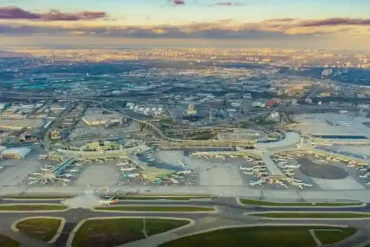
Airports are no longer simply places where passengers board and leave aircraft. The largest international gateways have become enormous transportation ecosystems, combining terminals, runways, rail systems, roads, logistics zones, hotels, retail districts, and even entire commercial communities. That transformation is becoming particularly visible in 2026, as several countries and major cities commit tens of billions of dollars to expand aviation capacity and prepare for decades of passenger growth.
The scale is difficult to appreciate from inside a terminal. John F. Kennedy International Airport, for example, is undergoing a roughly $19 billion transformation involving new terminals, roadways, and transportation infrastructure. At Los Angeles International Airport, a broader modernization program is changing everything from terminal buildings to airport access. Meanwhile, Saudi Arabia and the United Arab Emirates are pursuing projects that go far beyond conventional terminal expansions, effectively creating new global aviation hubs.
These investments reflect different strategic priorities. Some airports are struggling with aging infrastructure and congestion, while others are being built around ambitious forecasts for tourism, trade, logistics, and connecting traffic. The result is a remarkable collection of projects that will redefine airport capacity during the 2030s and beyond.
5. John F. Kennedy International Airport — $19 Billion
New York’s John F. Kennedy International Airport occupies fifth place on this list, although its $19 billion transformation would be considered extraordinary almost anywhere else. The project is not one single construction contract. Instead, it is a coordinated redevelopment of JFK’s terminals, road network, and transportation infrastructure intended to turn an aging international gateway into a more coherent airport for the New York region.
The two most prominent components are the $9.5 billion New Terminal One and the $4.2 billion Terminal 6. The Port Authority of New York and New Jersey says the first new gates at both terminals are scheduled to open in 2026, while the full Terminal One development will ultimately contain 23 gates. Terminal 6 is planned to reach completion later in the decade and will replace the former Terminal 7.
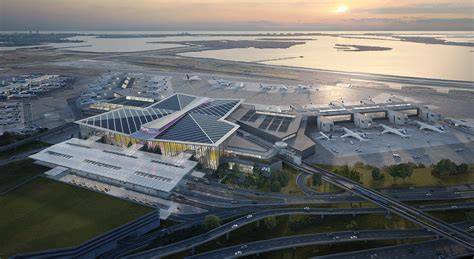
What makes the JFK project particularly interesting is that the transformation extends beyond passenger buildings. A redesigned roadway system is intended to simplify vehicle circulation, while improvements to the AirTrain are planned to increase capacity and modernize stations and rolling stock. The Port Authority has also used barges to transport construction materials and remove waste, reducing hundreds of thousands of potential truck movements through surrounding communities.
The finished airport should therefore feel substantially different from today’s JFK. Instead of simply adding gates, the redevelopment is attempting to make the airport easier to navigate while creating larger, newer international terminals capable of supporting the region’s long-term aviation demand. For one of the world’s most important city gateways, that distinction matters.
4. Los Angeles International Airport — $30 Billion
Los Angeles International Airport is undergoing one of the most comprehensive airport transformations in the United States. The overall modernization program is valued at approximately $30 billion, and its scope extends well beyond terminal construction. LAWA is simultaneously rebuilding passenger facilities, transportation links, roadways, rental-car infrastructure, and connections to regional public transportation.
One of the most visible projects is SkyLink, the automated people mover designed to connect airport terminals with parking, ground transportation facilities, the Rental Car Center, and regional transit. LAWA describes the system as a fully electric train intended to provide predictable travel times regardless of traffic. The airport’s modernization also includes the massive Consolidated Rent-A-Car facility, new transportation infrastructure, and extensive roadway improvements.
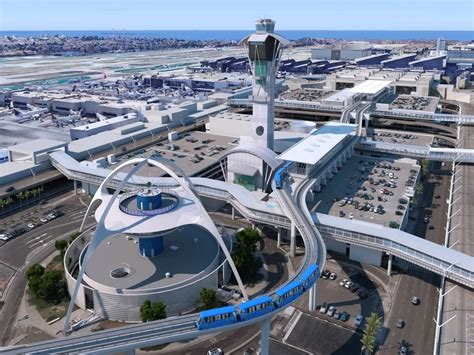
The scale of the landside work is especially important because traffic has historically been one of LAX’s biggest problems. The airport is reconfiguring 4.4 miles of roadway to separate airport traffic from surrounding neighborhood traffic, while elevated access routes are being constructed to improve vehicle circulation. LAWA received another $289 million in federal funding in August 2026 to support new airport access roads.
Inside the airport, the transformation continues with terminal modernization. Terminal 4 reached a major structural milestone in May 2026 when crews installed its final structural steel beam, with interior finishes and mechanical systems still to follow. LAWA has also continued work on other terminal and concourse projects, reinforcing the idea that LAX is being rebuilt as an entire airport rather than simply receiving a new terminal.
The timing is equally significant. Los Angeles is preparing for major international attention surrounding the 2028 Olympic and Paralympic Games, as well as the 2026 FIFA World Cup. The airport’s modernization is therefore both an infrastructure investment and an attempt to improve one of America’s most recognizable gateways before a period of unusually high global visibility.
3. King Salman International Airport, Riyadh — $30 Billion
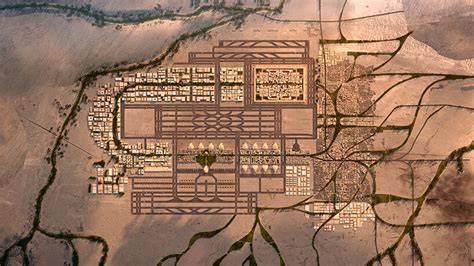
Saudi Arabia’s King Salman International Airport represents a fundamentally different approach to airport expansion. Rather than simply extending an existing terminal, the Kingdom is developing an enormous aviation complex around Riyadh’s existing King Khalid International Airport.
The project is planned to cover approximately 57 square kilometers and include six parallel runways, extensive support infrastructure, commercial facilities, logistics assets, residential areas, and recreational developments. Saudi Arabia’s Public Investment Fund says the airport is designed to accommodate up to 120 million travelers by 2030 and as many as 185 million passengers by 2050.
That ambition is closely connected to Saudi Arabia’s wider economic strategy. Riyadh is being positioned not only as a destination but also as a major connecting hub between Asia, Europe, and Africa. The development of Riyadh Air adds another important piece to that strategy, because a large new hub requires airlines capable of generating substantial international connectivity.
King Salman International Airport is also intended to function as an aerotropolis, meaning aviation infrastructure is integrated with commercial, logistics, residential, and leisure development. That makes the project much larger in economic terms than the passenger terminals alone suggest.
Sustainability is another prominent element of the masterplan. PIF says the airport is intended to pursue LEED Platinum certification and incorporate renewable energy. The scale of the project nevertheless means that its ultimate success will depend on whether passenger demand, airline growth, tourism, and economic diversification develop quickly enough to justify its enormous capacity.
2. King Abdulaziz International Airport, Jeddah — $31 Billion
Just ahead of Riyadh is King Abdulaziz International Airport in Jeddah, where Saudi Arabia is investing an estimated $31 billion in a broad expansion program. The project is particularly important because Jeddah is a major gateway for visitors traveling to Mecca and Medina, giving the airport a role that extends well beyond ordinary commercial aviation.
The expansion includes a new Terminal 2, an expansion of Terminal 1, a fourth runway, additional taxiways and aprons, and a major logistics development. The overall program is intended to increase airport capacity dramatically, with the long-term target reaching approximately 114 million passengers annually.
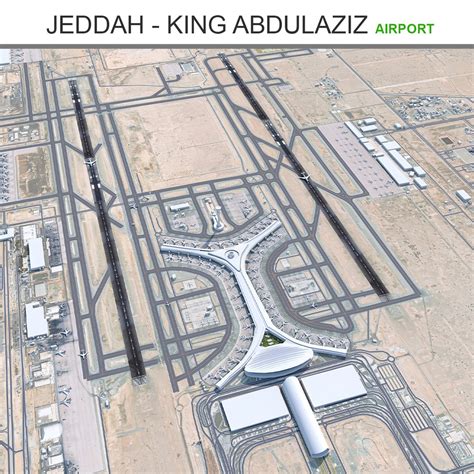
Construction activity has already moved into several major phases. The fourth runway project is progressing toward its planned 2029 completion, while construction of the new Terminal 2 began in 2026. The logistics area is also part of the broader strategy, reflecting Saudi Arabia’s intention to develop Jeddah as an aviation and freight hub rather than simply a passenger airport.
The project’s passenger numbers are especially striking. Increasing capacity toward 114 million passengers would place Jeddah among the world’s largest airports by potential annual throughput. The airport is also developing additional facilities for international low-cost carriers; its redeveloped Terminal 4, for example, has been designed to serve up to 15 million passengers annually.
Jeddah therefore illustrates how Saudi Arabia is pursuing multiple aviation strategies simultaneously. Riyadh is being developed as a new global connecting hub, while Jeddah is being expanded to support tourism, religious travel, logistics, and growing international demand. Together, the two projects represent one of the most aggressive airport infrastructure programs underway anywhere in the world.
1. Al Maktoum International Airport, Dubai — $35 Billion
At the top of the list is Al Maktoum International Airport, also known as Dubai World Central or DWC. With an approved expansion investment of approximately $35 billion, it is currently the most expensive airport expansion project among the five examined here.
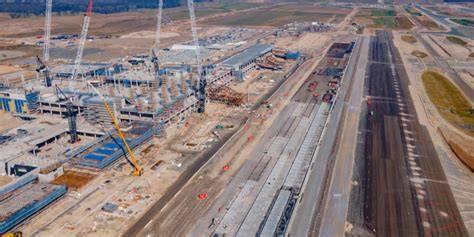
The ambition is enormous. Dubai Airports says the second-phase expansion is designed to create capacity for 150 million passengers annually within the next decade, eventually increasing to 260 million passengers and 12 million tonnes of cargo per year. The masterplan includes five runways, more than 400 aircraft contact stands, multiple processing terminals and satellite concourses, automated people-mover systems, and an integrated ground transportation hub.
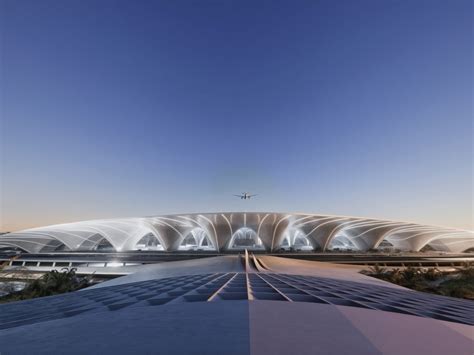
The reason Dubai needs such a colossal project is simple: Dubai International Airport is running out of physical room to grow. DXB remains one of the world’s most important international hubs, but its location and two-runway configuration impose significant constraints. Instead of trying to force endless expansion into the existing site, Dubai is building its next aviation system farther south.
The long-term plan is for DWC to become Dubai’s primary passenger airport, with Emirates and flydubai eventually moving their operations from DXB. Dubai Airports currently describes DWC as the future hub, with the airport ultimately designed to become the world’s largest in terms of capacity.
This makes Al Maktoum different from almost every other project on this list. JFK and LAX are fundamentally modernization programs. Jeddah and Riyadh are major capacity expansions tied to national economic strategies. DWC is effectively the creation of Dubai’s next-generation global aviation platform.
Why These $145 Billion Airport Projects Matter
Taken together, these five projects represent approximately $145 billion in stated investment, although the figures are not perfectly comparable because each program covers a different combination of terminals, runways, transportation infrastructure, logistics facilities, and supporting development.
Their common theme is capacity. Global aviation is becoming increasingly concentrated around large connecting hubs, while governments are also betting heavily on international tourism, trade, logistics, and business travel. Airports are therefore being treated as strategic economic infrastructure rather than passive facilities that simply respond to airline demand.
There is also a clear geographic pattern. Saudi Arabia and the Gulf states dominate the most ambitious projects, reflecting a desire to diversify national economies and capture a larger share of global travel. In the United States, meanwhile, the emphasis is more heavily focused on replacing aging infrastructure and improving passenger flow at airports that already handle enormous volumes.
The most important question is not whether these airports can be built. Modern engineering can accomplish remarkable things when governments and private investors commit billions of dollars. The harder question is whether passenger traffic, airline networks, tourism, and economic growth will expand quickly enough to fill all that new capacity.
If the forecasts are achieved, however, the impact will be enormous. By the 2030s, travelers may find themselves moving through airports that are vastly larger, more automated, more interconnected, and more commercially integrated than today’s facilities. The airport expansion boom of 2026 is not merely about building bigger terminals—it is about deciding where the world’s aviation hubs will be for the next generation.